Roof Systems

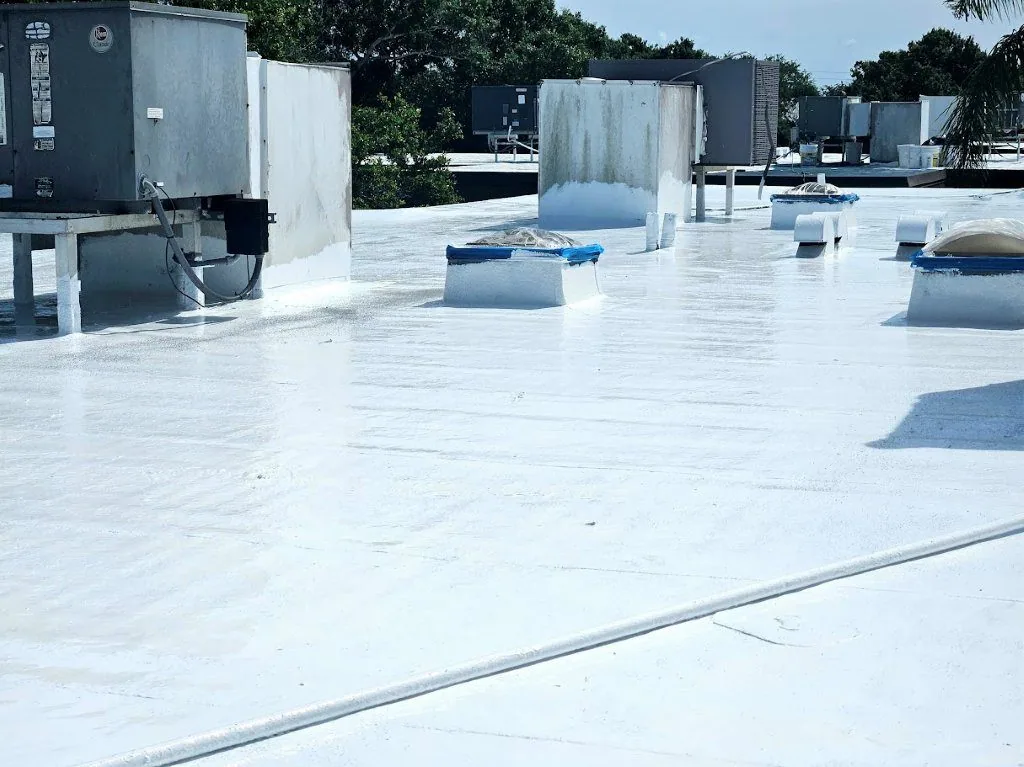
Review silicone roof coating eligibility in Torrance with adhesion assessment, moisture boundaries, reinforced details and an explained restoration scope.
A proposed silicone restoration allowance during a Torrance, CA refinancing review should show the roof corrections included beneath the new coating. Commercial Roofing Torrance assesses the receiving material and identifies moisture, attachment and detail concerns before presenting a coating option. The asset manager receives an explained scope with suitable retained construction, required repairs and the application conditions the selected material needs.
The current retail identity of Del Amo Fashion Center offers a Torrance orientation point. It helps locate a nearby assignment without establishing that building's membrane or eligibility for coating. The actual property and roof examination determine whether restoration is a supported alternative to other construction.
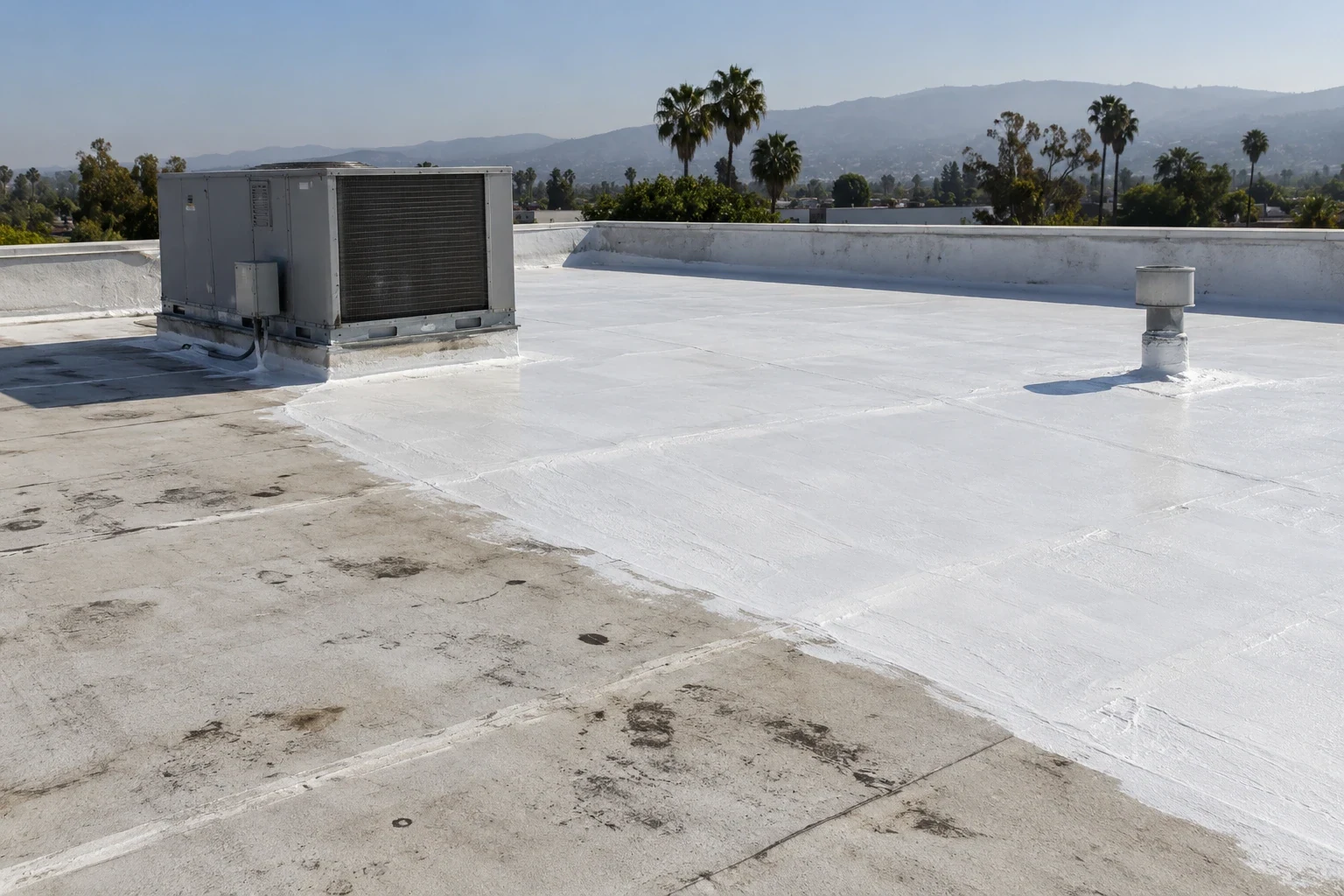
Silicone roof coatings are liquid-applied protective and waterproofing materials used within suitable restoration assemblies. Eligibility depends on the actual substrate, existing treatment and selected product requirements. We identify exposed materials and earlier coating where possible, then examine whether cleaning, priming and a suitable bond can be established.
Adhesion checks need prepared test locations that represent the question being answered. A satisfactory result on one clean area cannot establish attachment over every differently treated section. The report records the tested surface, preparation and scope of the conclusion, retaining another examination where the receiving material changes.
A comparison with acrylic restoration materials examines suitability, application and continued exposure rather than only product price. Silicone selection must be connected to the roof and detail requirements, not a general claim that a particular coating is suitable for all commercial roofing.
A coating operation should not conceal wet insulation, deteriorated foam or an inadequately attached receiver. We compare accessible findings with leak circumstances and appropriate moisture assessment. Where additional examination is authorized, we establish its location and closing method before opening the roof. The final retention decision follows the evidence needed for the proposed scope.
For a foam roof receiving a protective finish, coating condition and foam condition remain separate findings. Damaged foam can need removal and reconstruction before a new coating reaches sound adjoining material. Surface renewal cannot independently establish the condition of another concealed layer.
We distinguish confirmed repair quantities from a provisional allowance that depends on further investigation. That separation helps an asset manager assess a restoration budget without assuming every uncertainty has been priced as a small patch. Extensive receiving work may change the comparison with replacement.
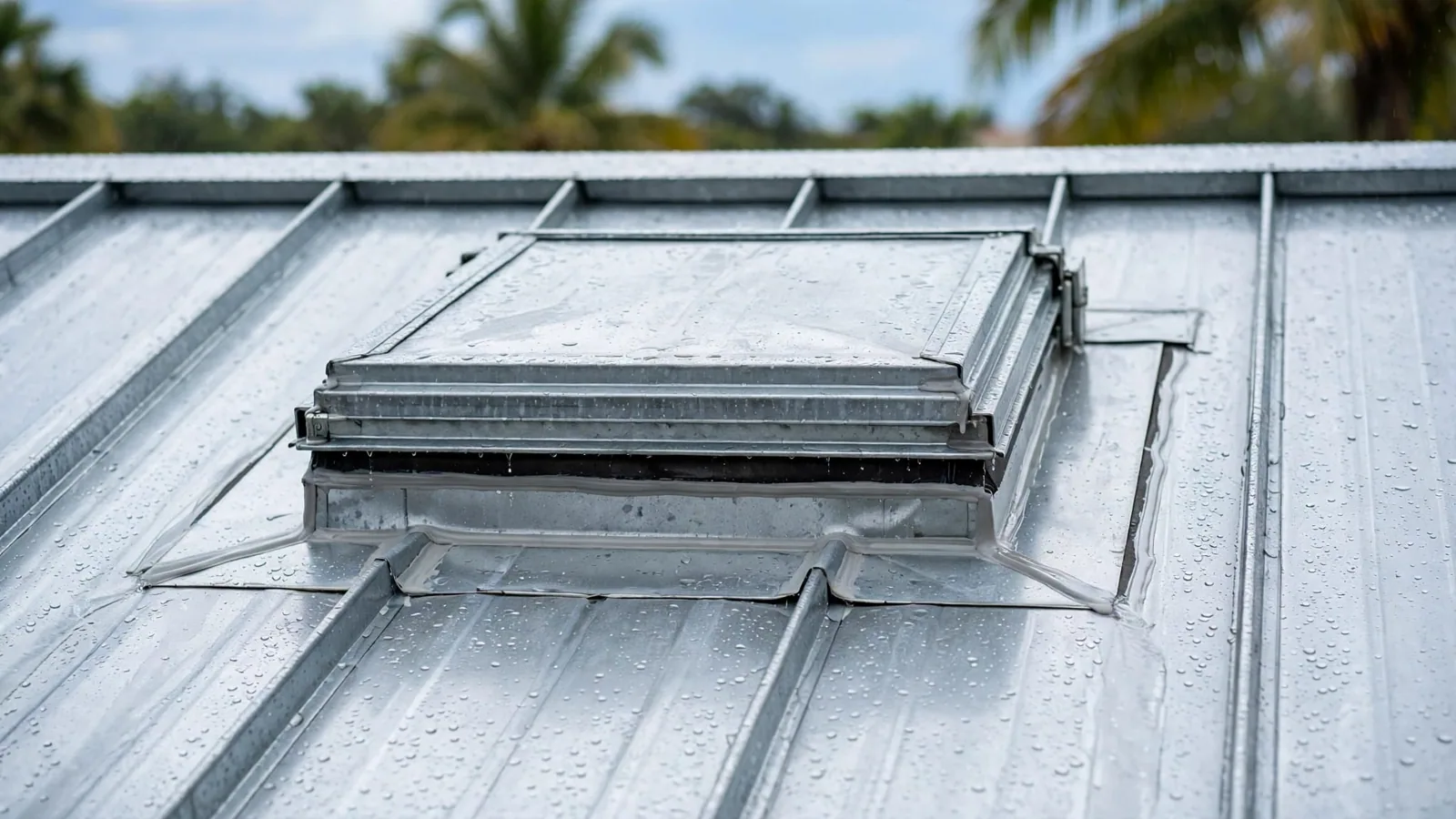
A split seam, deficient curb flashing and loose upper termination need defined corrections. We photograph each detail with its adjoining roof location and identify compatible preparation. The coating field is only part of the restoration assembly; transitions can require different treatment, reinforcement or construction before the final application.
Flashing repair at located defects establishes sound receiving material and the completed termination. A liquid coating applied over an unsuitable connection can hide its appearance while leaving movement or attachment unresolved. We include reconstruction where the existing detail cannot support the selected treatment.
Metal interfaces receive attention to actual material, finish and movement. Equipment or plumbing work stays assigned to the responsible participant. Resolve these tasks before daily sequencing assumes every junction can be coated in the same operation as the field area.
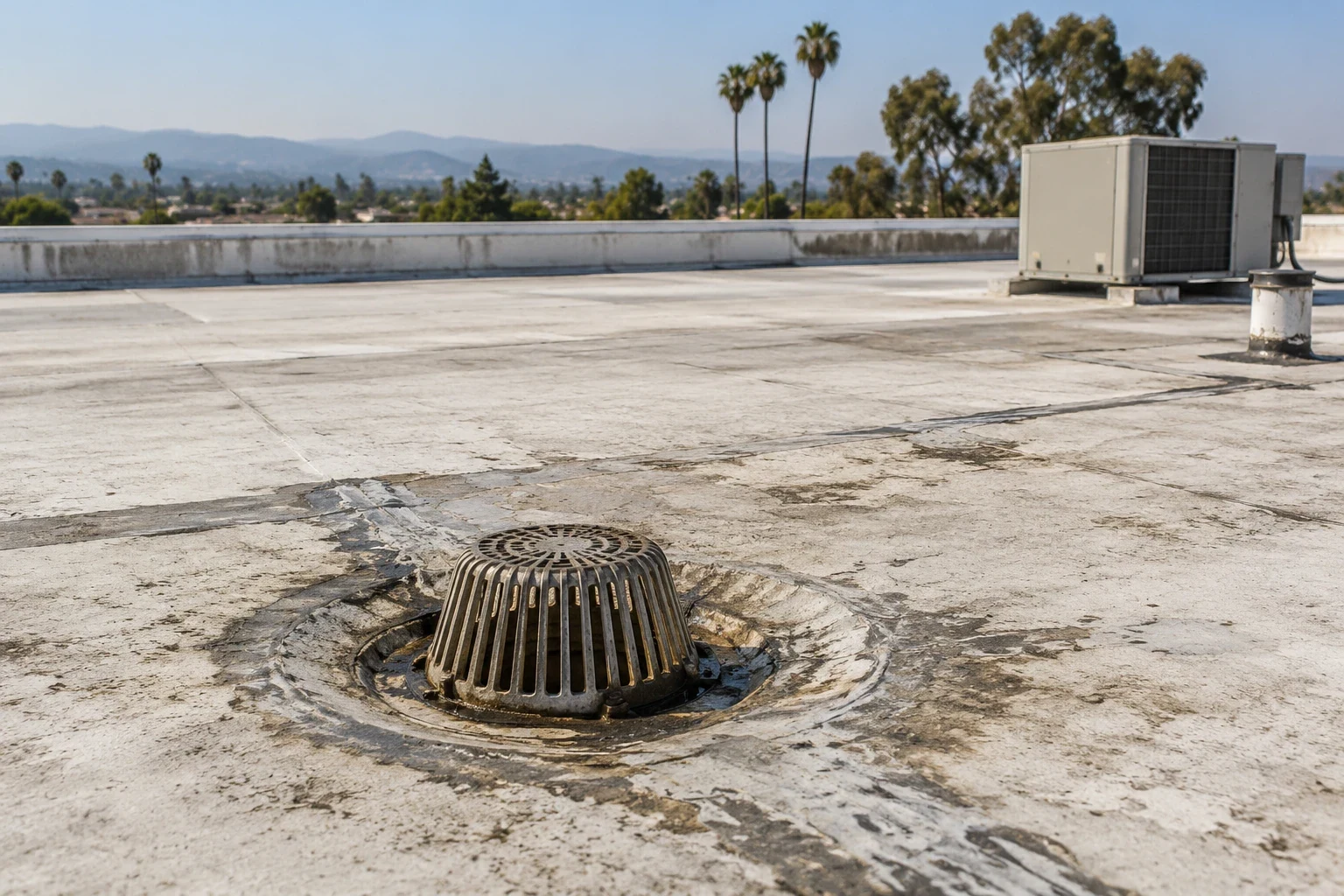
Water held on the roof needs an examination of outlet access, receiving elevations and the supporting condition. Some silicone products permit certain ponding exposure, but product suitability does not correct a blocked outlet or establish that the assembly beneath it is sound. We separate exposure requirements from the drainage task.
With roof drainage correction planning, the scope identifies actual outlet and adjoining roofing work. Concealed plumbing or support questions receive qualified assessment where necessary. A new coating allowance should include supported repairs rather than assume the finish will change the water discharge geometry.
The operator also needs a suitable access route. Finished coating can require specific traffic protection, especially where equipment service repeatedly crosses the same area. We coordinate the selected material's care requirements and avoid treating a reflective surface as evidence of energy compliance or an assured utility saving.
Torrance Commerce Center's dated industrial-development announcement is useful local orientation for a commercial roof discussion. The subject building establishes current receiving activity, roof materials and occupied areas. For Torrance Industrial Area, the authorized contact identifies cleaning discharge constraints and affected entrances or equipment intakes.
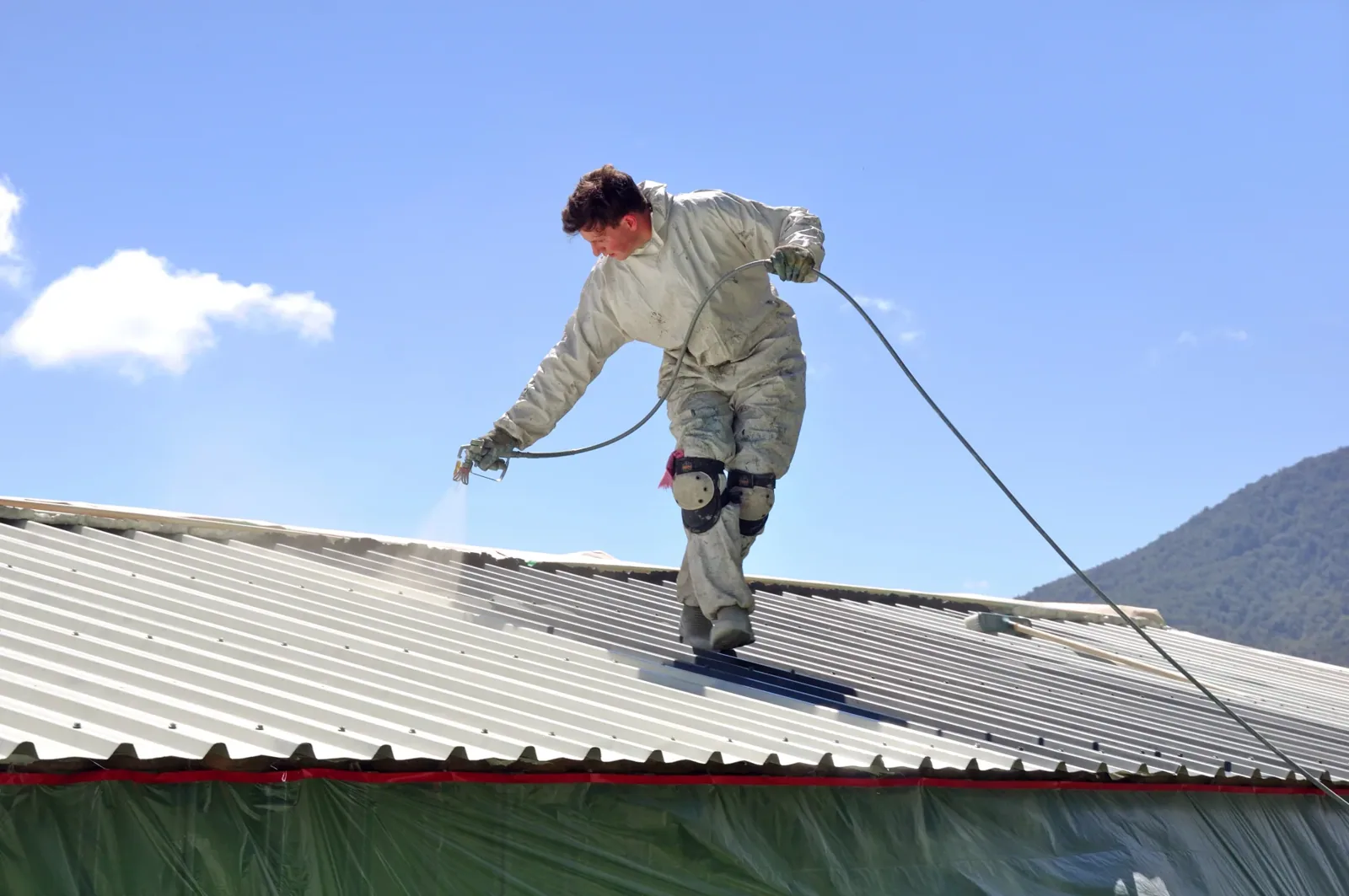
Cleaning must prepare the roof without damaging material or carrying uncontrolled debris into discharge components. We define that operation with application protection, staging and waste handling. Surface readiness is evaluated at the actual roof under the selected product requirements rather than inferred from a regional season or a dry-looking photograph.
Application and curing need their prescribed conditions. Limited access, changed surface moisture or interruption of a permitted work period can affect completion. The estimate includes protection and repeated setup where the accepted sequence requires them, giving the asset manager a construction amount instead of a coating-material allowance.
Retain preparation images, adhesion findings, installed materials and application assessment before finished coating obscures earlier repairs. The construction record should show the boundaries of receiving replacement and completed reinforced details. Check coverage is described plainly so another reader can distinguish an examined installation from assumed uniform conditions.
Restoration condition reporting connects the baseline with finished findings and pending responsibilities. Any issued warranty registration or notice follows the actual document and issuer process. A submission or final walk does not determine another party's acceptance requirements.
Continued care examines surface damage, coating wear, transitions and outlets under appropriate product instructions. Record later equipment alterations and their effect on the finished surface. A future renewal decision then compares actual current condition with the installed restoration assembly, rather than assigning remaining service life solely from the coating name or its appearance.
Silicone coating work begins with a decision about what remains beneath the proposed surface. Map wet areas, loose coating, incompatible repairs, grease and drainage concerns before defining preparation. An adhesion test should use the actual substrate and cleaning method, and its result should be recorded with the selected system. Detail reinforcement at penetrations and transitions separately from the field application. Confirm forecast and cure conditions against current product requirements, then measure installed coverage where the project calls for it. A reflective finish can improve surface condition but does not correct a depressed deck or concealed moisture; state those limitations and provide a separate repair option when evidence supports it.
A new coating cannot establish or correct concealed moisture condition by itself. Examine the retained assembly and remove unsuitable material where required. We identify confirmed receiving repairs and further assessment before restoration becomes the selected construction option.
Keep product exposure requirements separate from drainage performance. Evaluate outlet obstruction, geometry and supporting condition even where a selected silicone permits particular water exposure. Required drainage corrections remain part of the roof work rather than disappear from the allowance.
Record the receiving material, test preparation, location and observed result. Explain which construction decision it supports and where differently treated surfaces remain unexamined. A successful local test is useful evidence, but its coverage must match the conclusion being drawn.
Compare completed construction: receiving removal, compatible repairs, details, drainage tasks and occupied-area controls as well as the field material. Restoration and replacement may have different boundaries. We explain those differences so an apparent price gap does not conceal omitted work.