Roof Systems
Evaluate PVC roofing in Torrance with compatibility review, weld checks and drainage measurements that define the complete commercial roof assembly.
A proposed tenant use change in Torrance, CA can put new rooftop discharge, service traffic or equipment onto an existing PVC roof. The asset manager needs to know whether the existing details can receive those changes and which material contacts need review. We examine the assigned area, identify accessible construction and explain the work required before approving a roofing alteration. A membrane type alone does not answer a chemical exposure or equipment support question.
The current retail identity of Del Amo Fashion Center provides local context for commercial spaces whose operating requirements can change. It does not establish what is installed on the roof of any subject property. We connect the roof proposal to that property through measurements, located photographs and the actual proposed use. PVC selection then becomes an assembly decision with defined interfaces, rather than a promise that the sheet can accommodate every discharge or future alteration.
A rooftop discharge should be described by its actual substance, temperature and route. We review the available equipment information and identify where it reaches the membrane or flashing. PVC products have material-specific compatibility limits, so suitability must be checked for the selected sheet and exposure. A generic description of chemical resistance cannot substitute for that review. Existing staining is recorded as an observation until its cause and significance are assessed.
Equipment service may also bring hoses, pads, repair compounds and temporary supports into contact with the roof. We compare those contacts with the installed material requirements. A KEE membrane option and TPO roof construction have their own properties and details, which must remain distinct in a comparison. The owner receives the relevant compatibility questions, including which participant supplies discharge information. A material choice is finalized from those inputs and the receiving construction, rather than from the tenant business description alone.
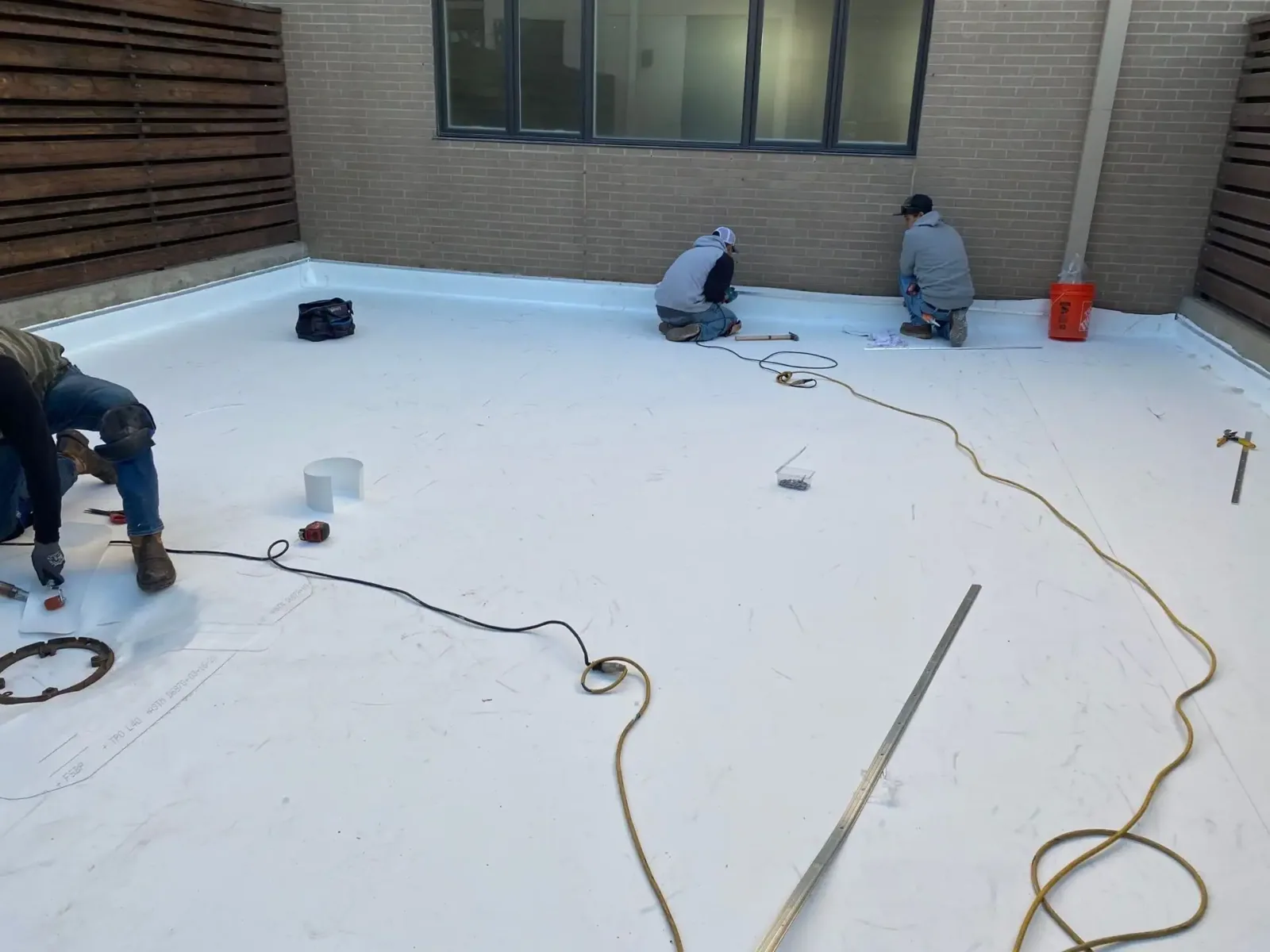
A PVC repair depends on compatible surfaces that can form a reliable connection after preparation. We examine the membrane around the defect, its flexibility and accessible welds. Prior coatings, contamination or incompatible patch materials can change the practical repair boundary. We locate those conditions and identify whether preparation trials are appropriate. A clean-looking surface is not sufficient evidence that an aged sheet will receive a sound new weld.
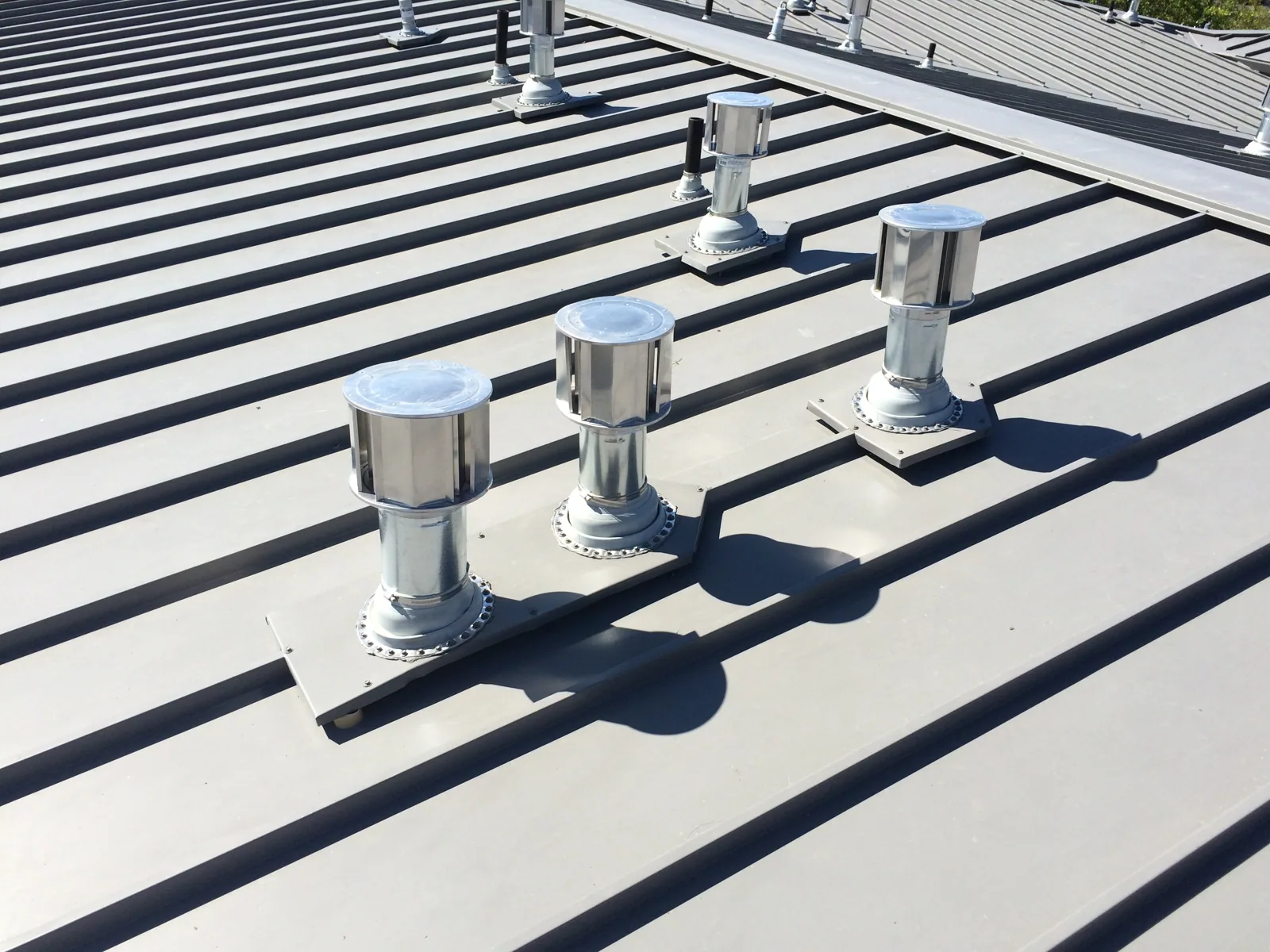
Corners and transitions deserve separate attention because several sheet layers and movement conditions meet there. Repairing flashing at penetrations may require rebuilding the complete connection rather than closing only an exposed edge. We record the receiving height, termination and the condition of the underlying curb. A damaged metal surface may need correction before new membrane is installed. The resulting scope tells the asset manager whether the work is a localized sheet repair, a detail reconstruction or a wider replacement of unsuitable receiving material.
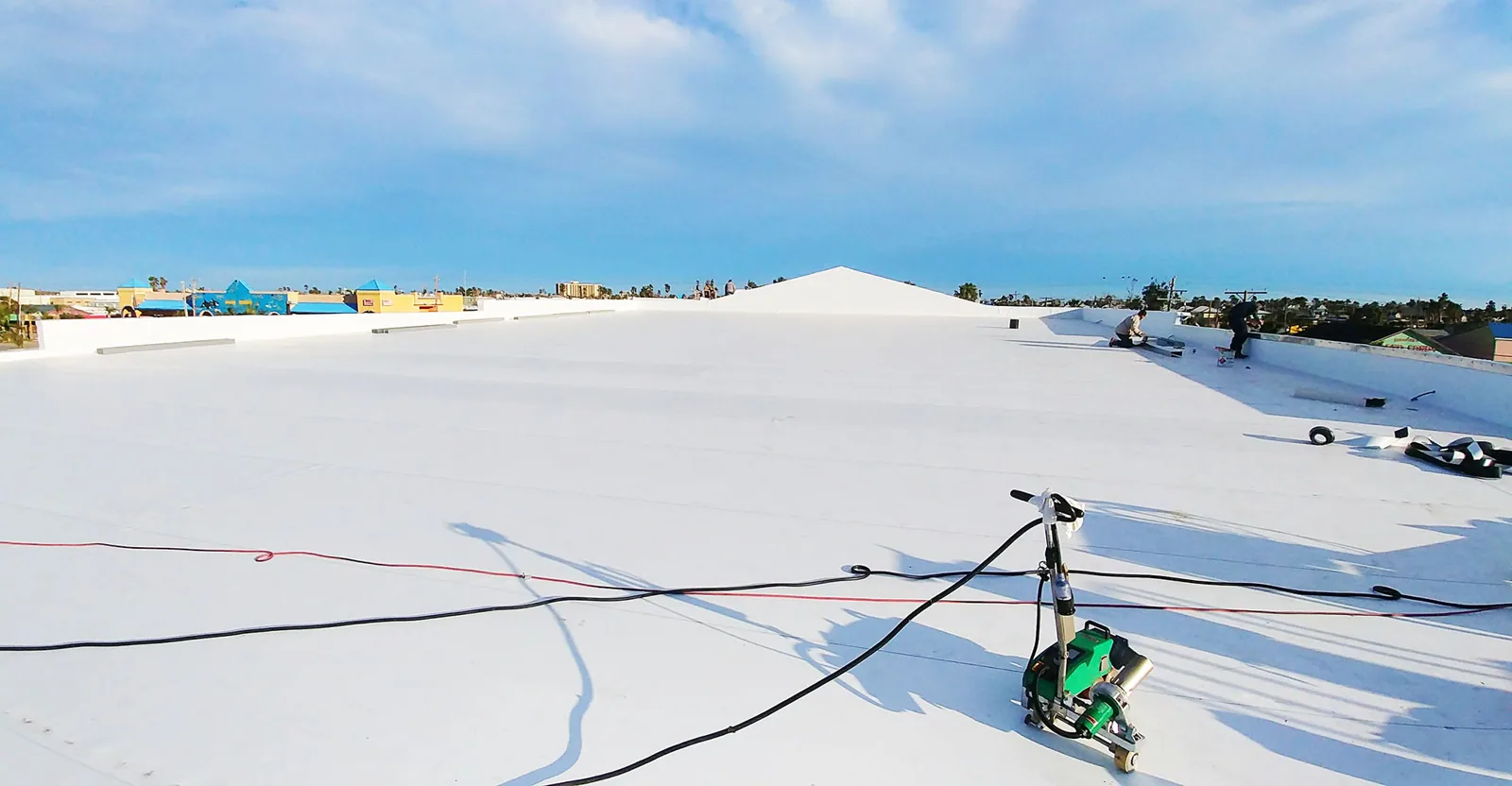
A proposed PVC installation has to address the deck, insulation, separator where required and cover board before the membrane is laid. We review material compatibility through the whole assembly. Retained roofing or insulation can require separation or removal, depending on the selected system and project requirements. Moisture assessment determines whether concealed wet areas need to be opened rather than buried beneath new construction. The removal boundary is located and measured.
Receiving-layer construction also influences resistance to service traffic and the stability of the finished surface. Attachment is selected for the actual substrate and governing design inputs. The 2021 Torrance Commerce Center account supplies historical industrial development context, but it does not identify a present deck or membrane. A subject industrial asset needs its own examination. We keep those measured findings beside the assembly proposal, so the material choice and the retained layers can be reviewed as a single construction decision.
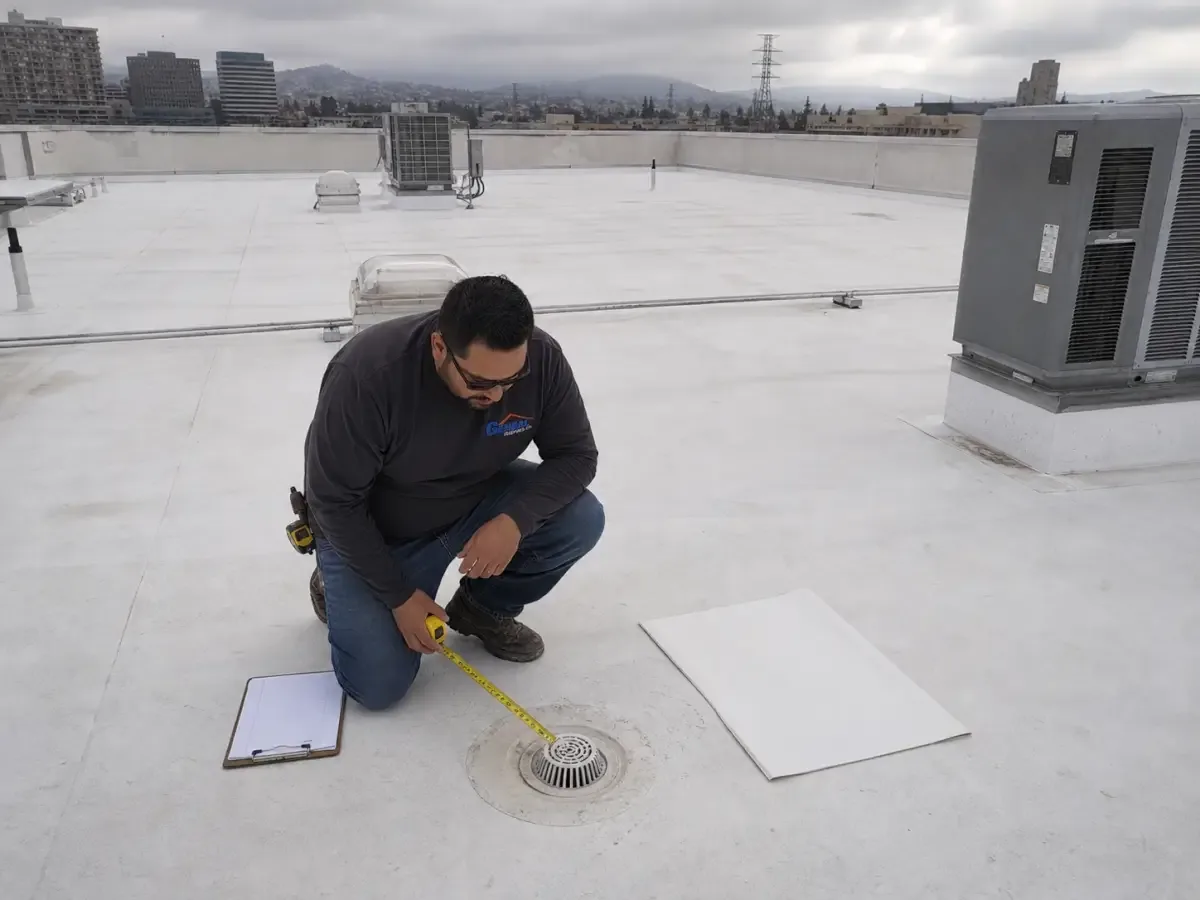
A new receiving-layer thickness changes the relationship between the roof surface and its drains, curbs and parapets. We measure the existing elevations and identify which connections need rebuilding. Tapered insulation may improve drainage while reducing the exposed height of a curb. A drain detail may need a different receiving arrangement to let water reach the outlet without an obstructing ridge. These interfaces are resolved before the field sheet is installed.
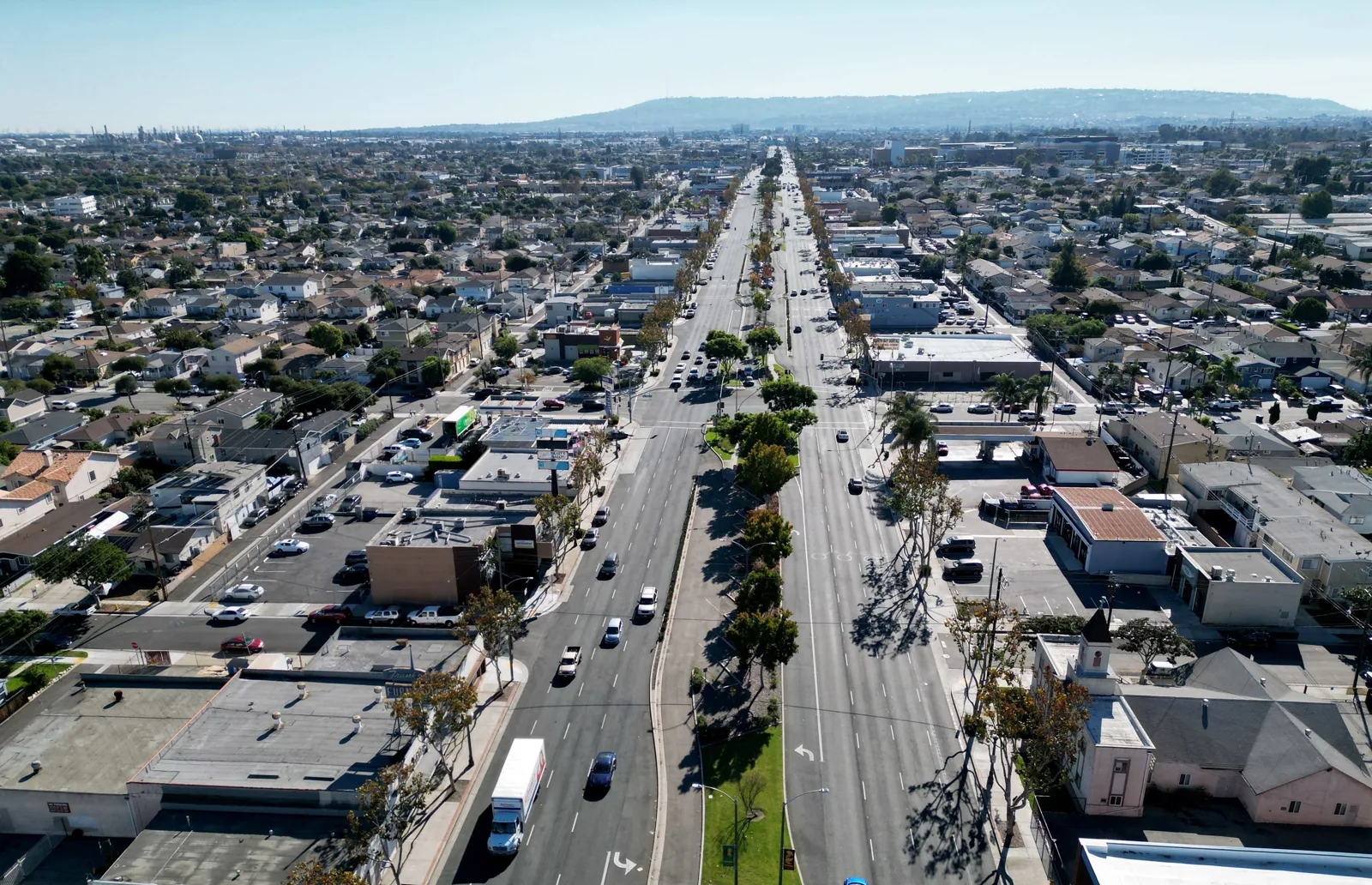
Perimeter metal corrections are evaluated for compatibility with the selected edge detail and attachment. Metal deterioration is photographed where observed, without assigning a cause from regional exposure alone. A property near Hawthorne Boulevard Corridor receives a measured detail plan for its own roof. The local retail setting can affect work scheduling; it does not establish uplift demand, corrosion or existing assembly quality. Each necessary correction remains tied to the condition or design requirement that makes it part of the scope.
The installed PVC roof needs a practical maintenance route and a clear method for later alterations. We identify accessible outlets, protected service paths and the components used at repairs. Staff should know which contacts require review before equipment, cleaning compounds or temporary supports reach the sheet. A later tenant change can create a new compatibility question even where no roof penetration is proposed.
The closeout package identifies the assembly, located details and approved construction changes. Weld checks and unfinished corrections are recorded within the actual inspection extent. Issued warranty requirements are handled through their own documents and review process. We explain the status of required submissions without calling unfinished administration complete. With those distinctions preserved, the asset manager can connect a future defect or equipment alteration to the material actually installed. The roof file remains useful because it records construction and responsibilities, rather than treating PVC as a universal answer to all rooftop conditions.
A PVC roof review should identify the membrane generation, reinforcement and existing accessory family before a repair is selected. Inspect the weld, adjoining field sheet and nearby flashing for contamination, embrittlement or incompatible prior work. At an equipment curb, show the corner transitions and clearances needed to complete and inspect the new flashing. A test weld can help establish a field method but represents only the tested conditions. Record preparation, seam checks and any area that could not be evaluated. If a warranty response is relevant, request direction for the actual detail and proposed alteration rather than assuming that a product description alone confirms coverage.
Review the actual discharge and selected product before making that choice. We identify where the discharge lands, how it drains and what information the equipment participant can supply. Compatible flashing and protection may be needed even where the sheet is suitable. The tenant use label cannot establish chemical composition, temperature or the condition of an existing membrane.
Previous treatments can interfere with the receiving surface or complicate preparation. We examine the affected area and determine whether a compatible repair can extend beyond it. Preparation trials may be required before selecting the boundary. Where sound weldable material cannot be established, the proposal identifies removal and reconstruction instead of repeated surface patching.
Those layers address compatibility and the receiving surface required by the selected assembly. We explain what can remain and where additional protection or separation is necessary. The choice is based on actual materials and construction requirements. A layer that improves traffic resistance still cannot compensate for wet insulation or a deck requiring repair.
Compare the proposed supports, discharge and access with the installed assembly. We identify the roofing changes and compatibility questions before equipment placement. The responsible designer reviews loads, while equipment participants confirm operating information. Keep accepted detail changes in the property file so maintenance staff can distinguish the original construction from the altered area.