Commercial Roofing Services

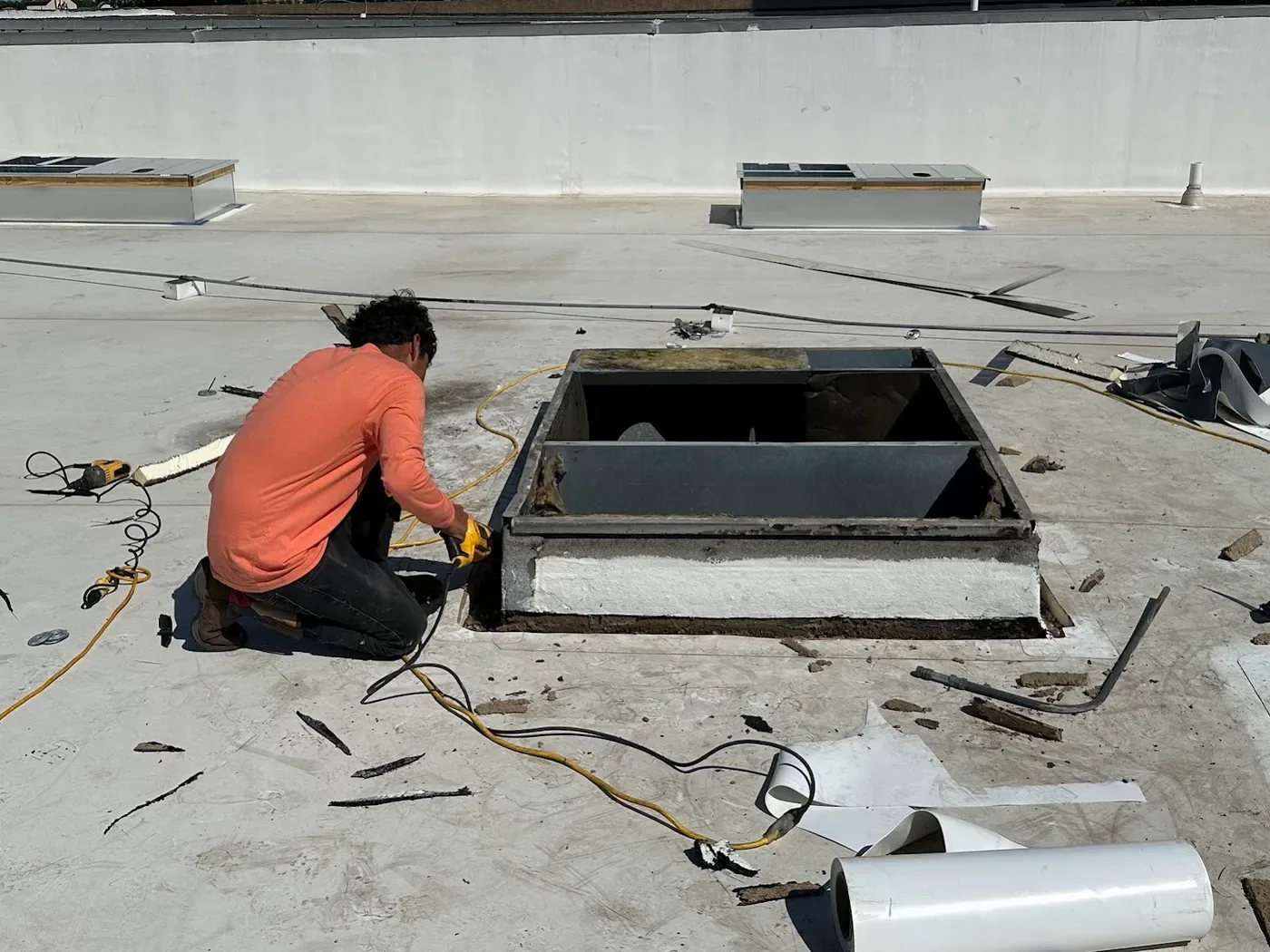
Keep Torrance commercial roof care tied to observed defects, completed corrections and assigned follow-up, with maintenance records for asset decisions.
A refinancing allowance for a Torrance, CA building should distinguish routine roof care from defects that already need construction. A maintenance budget can include drain clearing, seam examination and selected minor corrections, but those tasks do not establish that concealed insulation is dry or that a deteriorated edge remains secure. We begin with the portions under management and the decision their condition must support. The asset manager receives a baseline identifying what can be maintained, what needs a separate repair and where another examination remains necessary.
Del Amo Fashion Center provides a retail reference for that planning; the property's actual store access and service arrangements decide the visit. An industrial assignment near Torrance Commerce Center begins with its own operating information, rather than a presumed campus roof inventory.
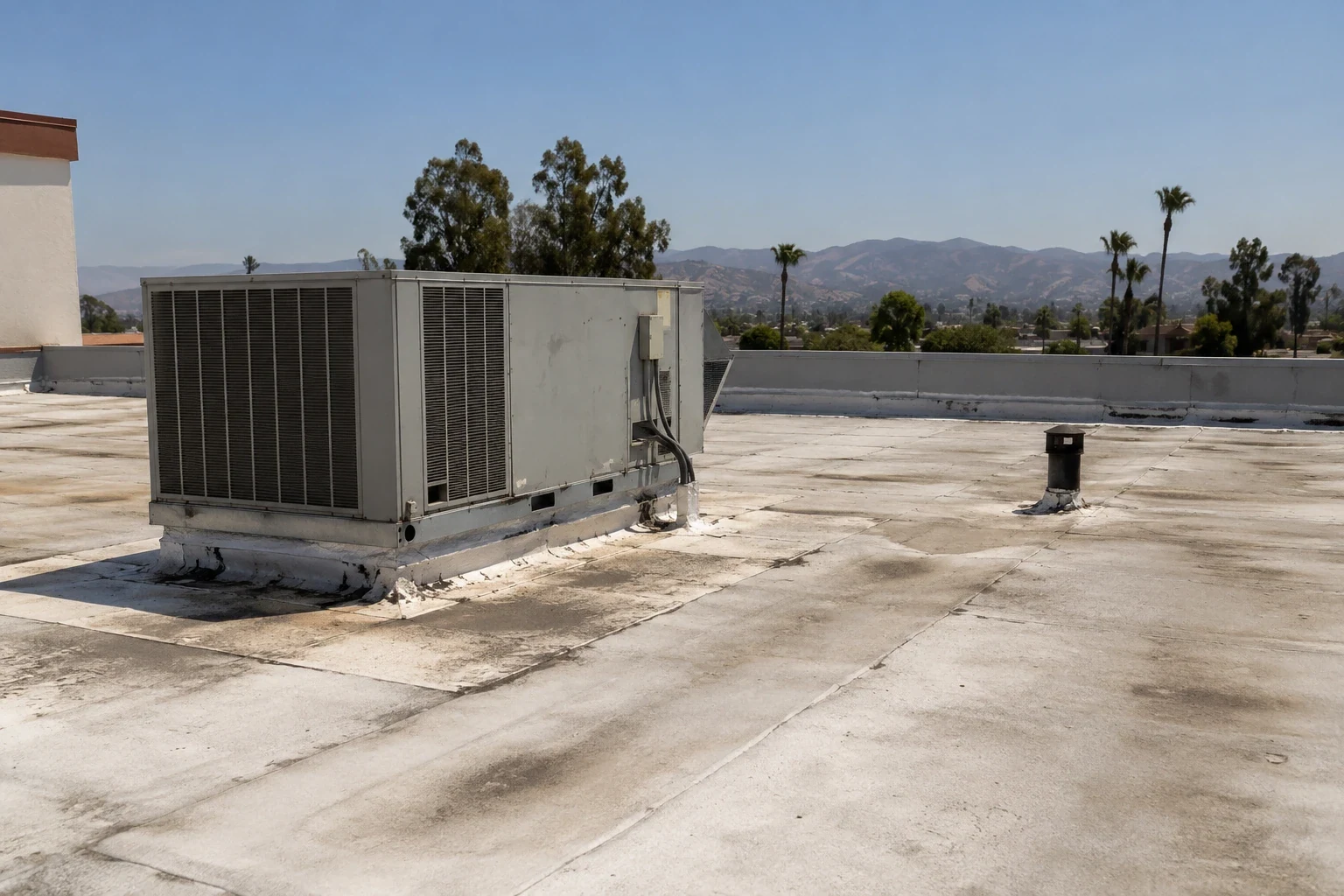
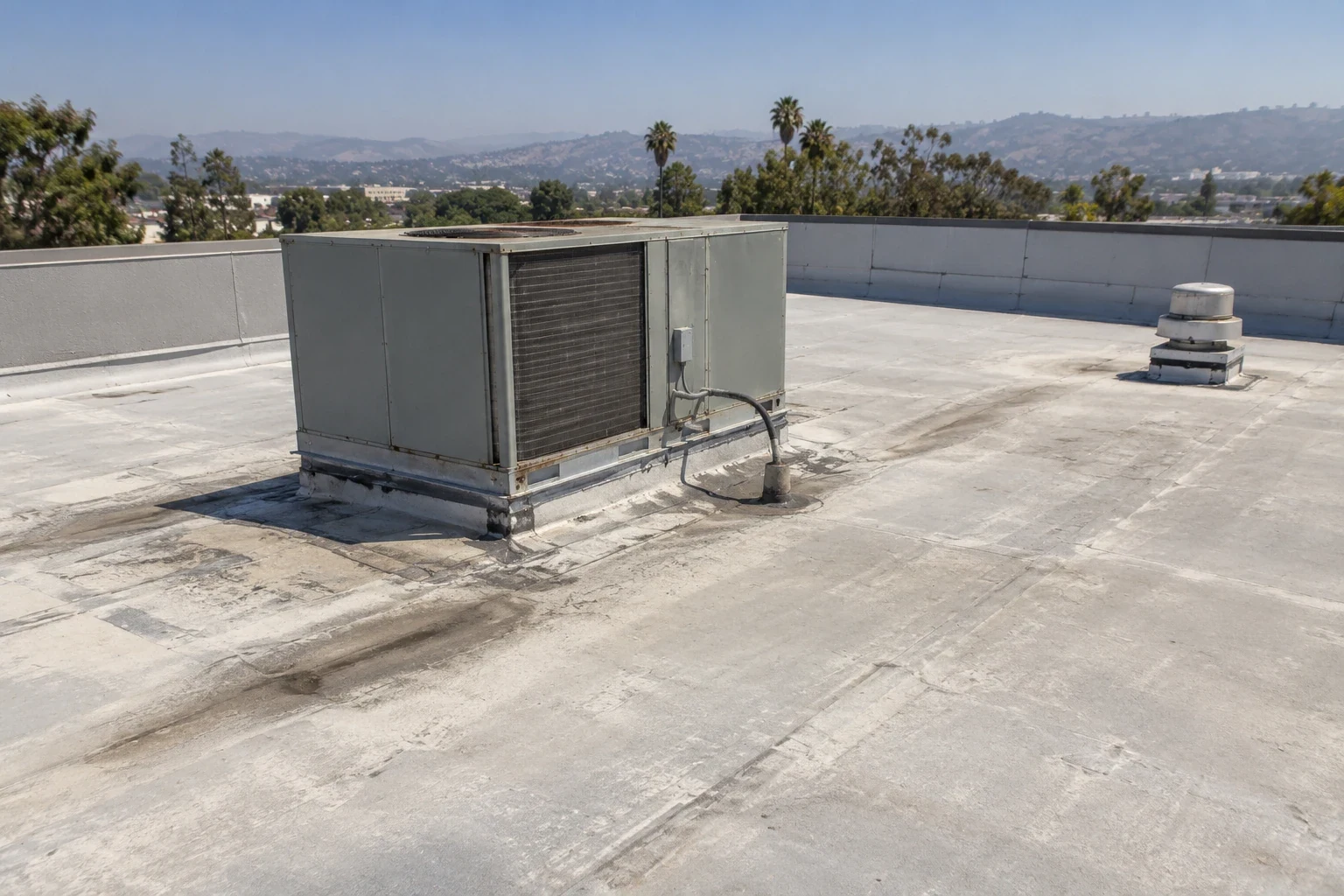
A drain strainer, an equipment technician's route and a tenant-installed pipe can fall under different responsibilities. We compare the maintenance assignment with available roof drawings, issued warranty provisions and the operator's access rules. Identify the roof areas to be visited, equipment that must remain untouched and the person who can approve additional construction. A routine service authorization should not silently become permission to open the assembly.
Care requirements in the issued warranty help identify notice or approval steps that must precede alterations. We retain the actual document and response rather than infer that ordinary maintenance preserves every provision. For the manager, the useful boundary is practical: which tasks the visit includes, which conditions trigger a separate amount, and who receives an urgent finding before the crew leaves.
A seam that separates during examination deserves a located image and a receiving-material assessment. A checked box saying seams inspected cannot explain the length of correction or the preparation needed beside it. We compare accessible seams, flashing terminations, perimeter metal and traffic paths with the previous baseline, then describe changes at recognizable positions. Earlier photographs are useful only when their location and date can be related to today's examination.
An initial roof condition walk can establish those references where a maintenance program is beginning. Subsequent visits need not invent a new condition grade for unchanged construction. Record the accessible findings, limitations and recommended action, including the areas a locked enclosure or unsafe access prevented us from examining. That distinction keeps an incomplete visit from becoming a whole-roof assurance.
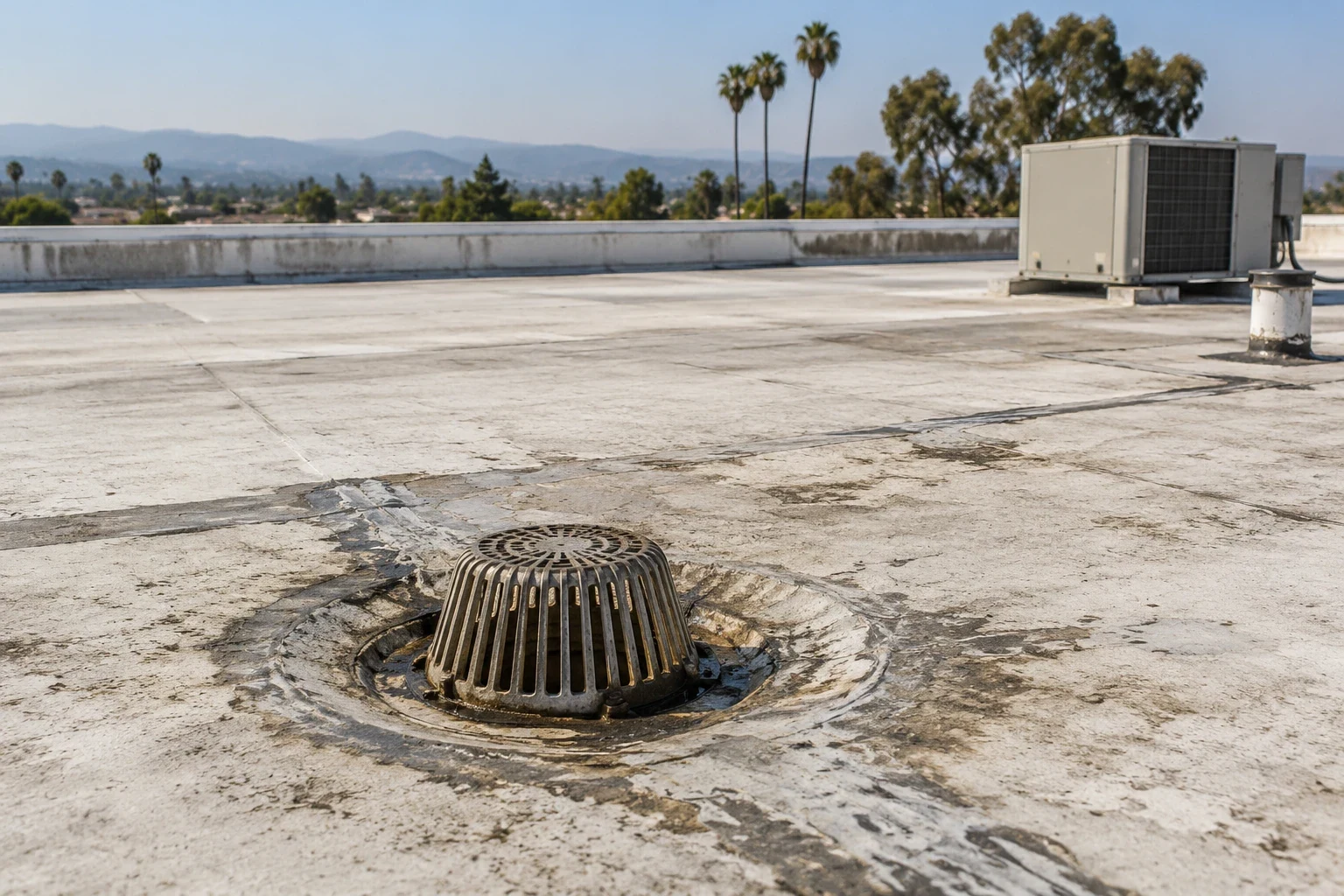
Leaves and loose packaging can collect at an outlet, while a damaged drain connection needs a different correction. We remove accessible debris within the agreed service, inspect the surrounding waterproofing and keep disposal away from the drainage system. Where safe and suitable, a limited flow check helps evaluate the cleared route; its result does not prove the condition of all concealed piping or the capacity of the design.
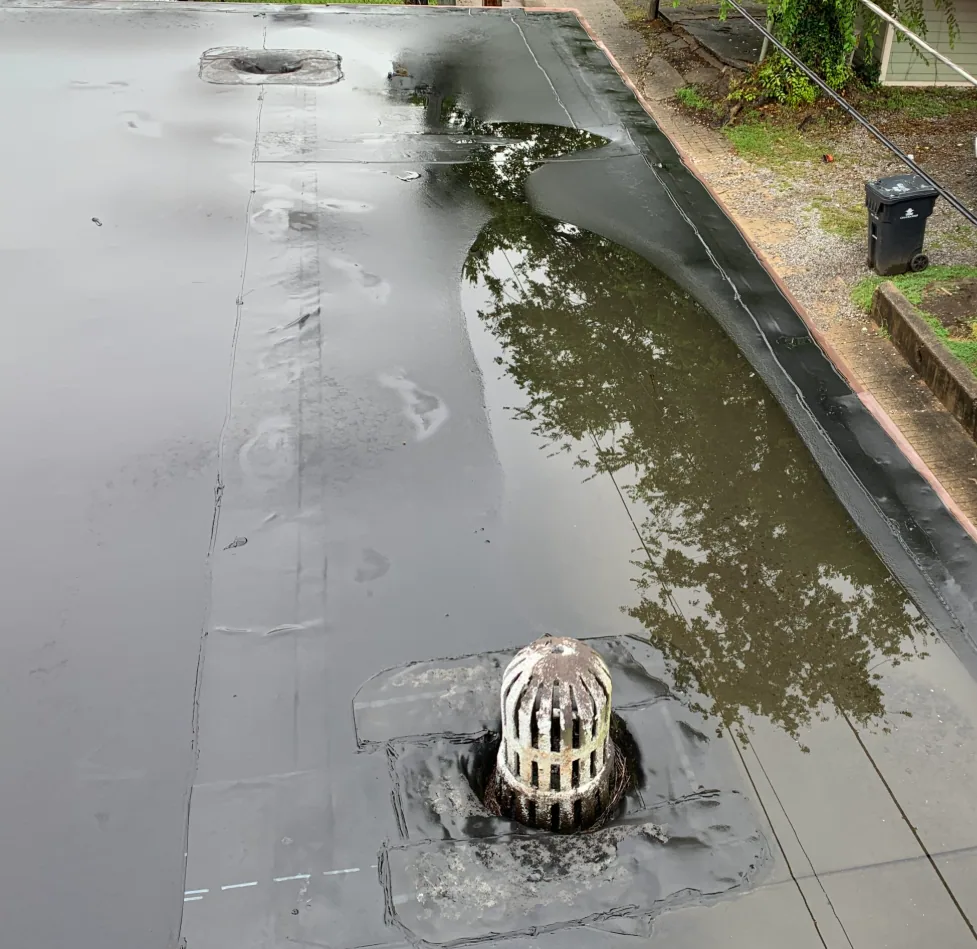
Outlet and scupper corrections receive their own scope when clearing cannot finish the work. A recurrent low area also needs attention to slope and receiving elevations. We separate persistent water-retention assessment from housekeeping so the property does not repeatedly pay to remove debris while the physical drainage problem remains. The manager sees both the completed task and the unanswered construction question.
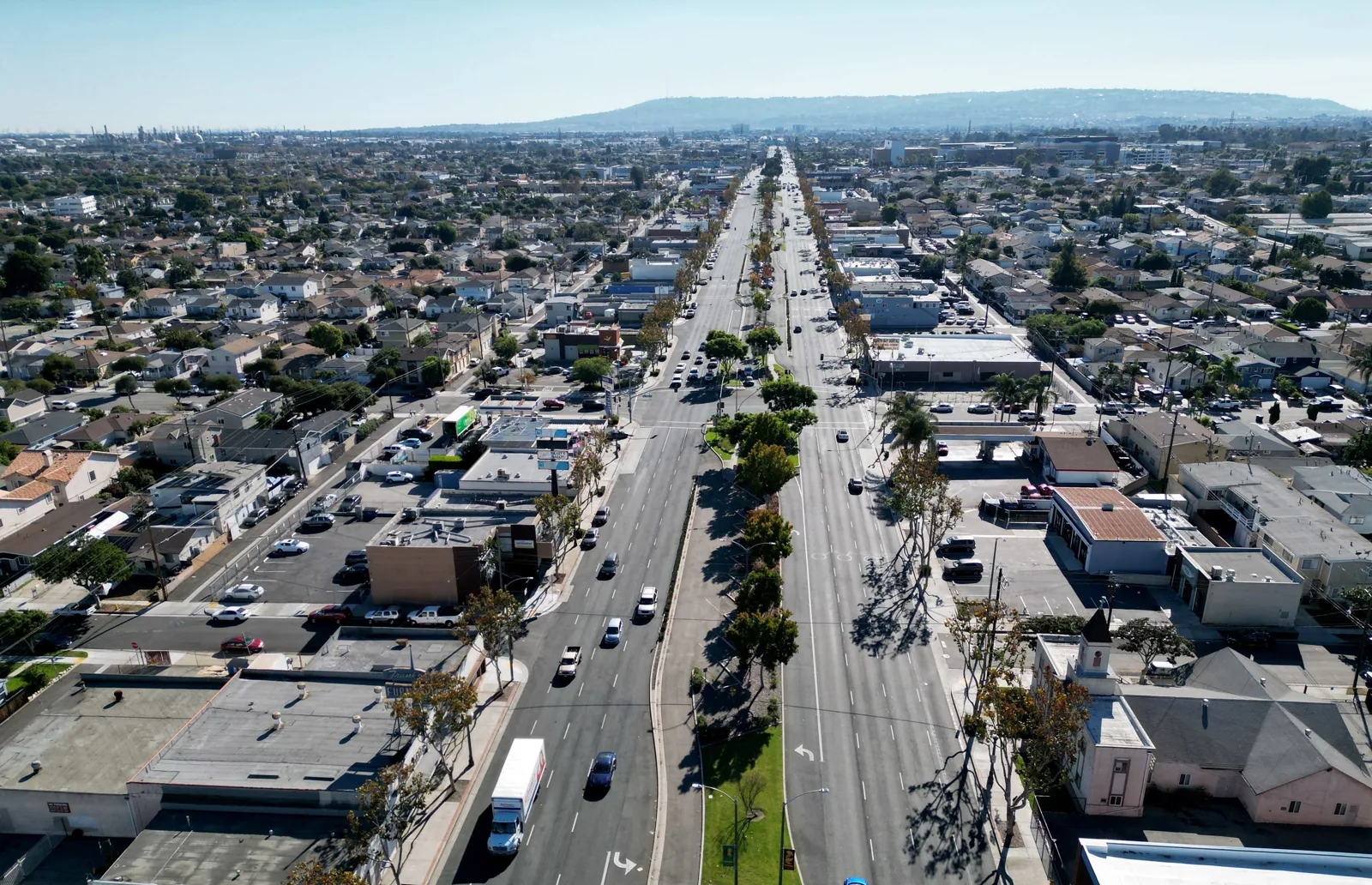
Del Amo Fashion Center's retail identity makes customer access an appropriate planning consideration for a nearby shopping property. Confirm delivery movements, opening periods, rooftop service routes and permitted debris handling with the operator. For a building in the Hawthorne Boulevard Corridor, cones or a lift position may affect a public route even when the roofing task itself is small. Establish those arrangements before the service date.
The dated industrial-development account for Torrance Commerce Center offers a different orientation. At the assigned industrial building, obtain the actual loading and production schedule. Equipment clearances and approved access decide how far a maintenance visit can proceed. We do not derive today's roof assembly or its service needs from a development announcement. Repeated restricted access should lead to a planned return or another safe method, with the outstanding portion kept identifiable.
A maintenance amount should name the expected access, examination and routine tasks. Separate a defined allowance for minor compatible repairs from larger work requiring removal, new metal, insulation replacement or another participant. Material compatibility, extent of preparation and access can change the construction amount even when two defects look similar in a photograph. We explain those drivers before extending the service authorization.
A measured repair scope identifies the surrounding material needed to finish a defect permanently. Where deterioration affects broader roofing, retain that larger decision in the roof capital allowance. A preventive program helps find changing conditions; it cannot assign remaining service life solely because visits are scheduled. Recommendations for continued use remain connected to the condition examined and the next review that could alter the recommendation.
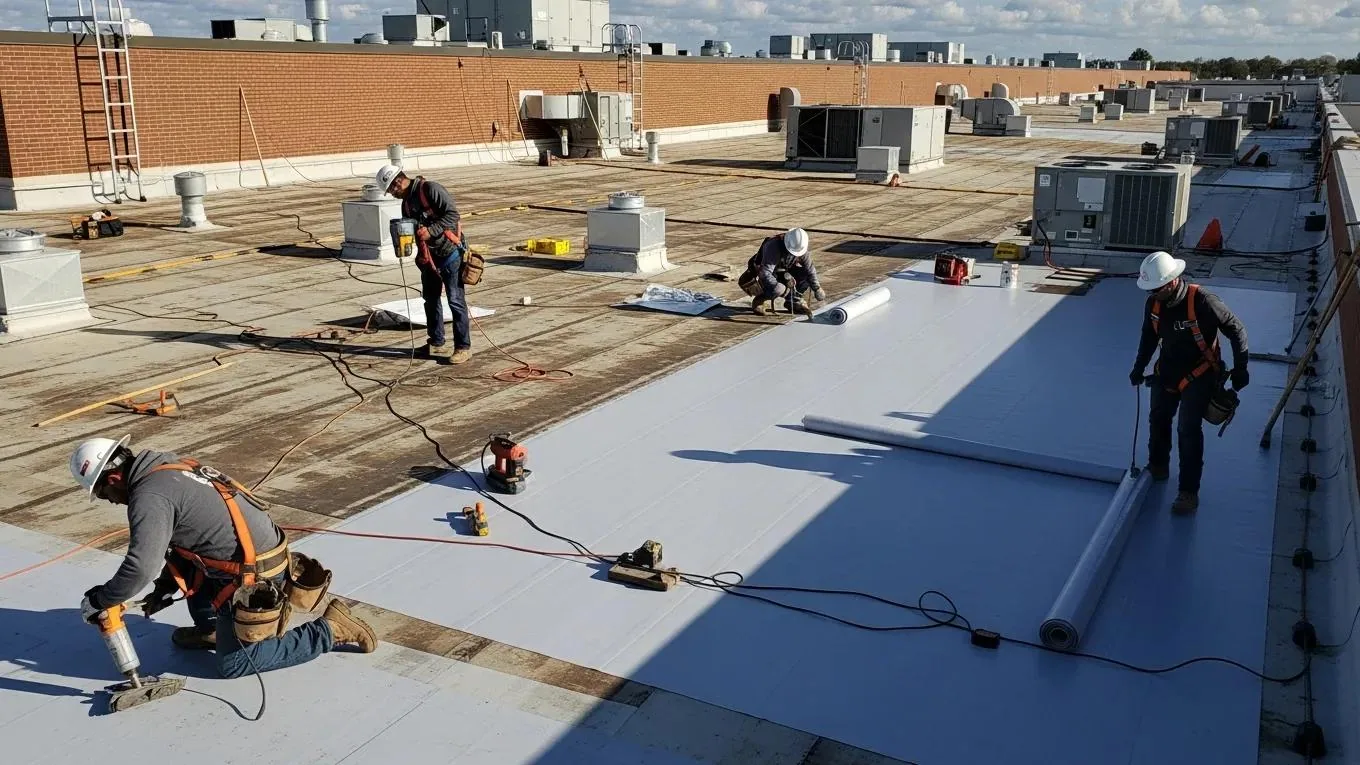
The visit closes with the areas reached, tasks completed, located findings and separately proposed corrections. Include the material used for any approved patch and the condition of its receiving surface. A temporary measure needs its purpose and follow-up date retained; it should not appear as a completed permanent repair in the property file. Changes to access or equipment routes also belong with the next service instructions.
The asset manager can then assign responsibility without reconstructing a conversation. A drainage concern goes to the person responsible for its next assessment, a roof alteration keeps its required approval and a completed repair has recognizable finished references. We recommend the next visit interval from the assembly, exposure, traffic and issued care requirements at the actual building. New leakage or equipment work can justify an earlier review than the planned calendar visit.
A useful maintenance visit follows the roof's actual drainage and equipment layout rather than a generic checklist. Confirm which areas are included, what the owner may authorize during the visit and how urgent findings should be communicated. Inspect drains, scuppers, seams, penetrations and accessible edge metal, removing only debris that can be cleared safely within scope. Photograph new conditions and distinguish routine cleaning from corrective construction. Do not alter drainage elevations, coatings or attachment without a separate approved work order. End with a prioritized list that identifies the location, likely next step and timing basis, then update the property record so the next visit can compare conditions.
Define the included correction allowance and approval limit before service begins. We can address agreed minor defects with compatible materials, but removal, concealed investigation or broader construction needs an explained scope. Keep an urgent communication route available so a discovered opening can receive a prompt decision rather than wait for the next routine report.
Recurring water retention after accessible debris removal calls for an assessment of slopes, outlet elevations and the downstream route. Recommend that investigation before renewing the same housekeeping instruction. A clean strainer cannot correct a depressed roof area or establish that hidden piping will carry the required flow.
Fresh penetrations, relocated supports or displaced traffic protection warrant a targeted roof review. Compare the changed detail with approved equipment work and available warranty requirements. Photograph the receiving construction and identify any roofing correction before treating the alteration as ready for ordinary scheduled care.
Match each finding to a consistent position and review its examination limits. A dated image of the same detail is useful evidence of change; an unlabeled close view is not a reliable comparison. We recommend retaining completed tasks, material information and unresolved assessments together so an apparent improvement does not conceal an unvisited area.