Industries We Serve
Torrance insurance restoration roofing separates temporary protection, examined damage and complete reconstruction. Get located quantities and trade tasks.
Reviewing an issued warranty after a reported roof loss requires identifying the altered connection before another repair is committed. Commercial Roofing Torrance examines commercial roofs in Torrance, CA and explains the physical reconstruction required for the observed damage. We locate temporary measures, define usable receiving material and retain concealed conditions that still need investigation. The owner and restoration team can then coordinate a permanent scope while the responsible insurance participants assess their separate coverage and payment questions.
An occupied property near Del Amo Fashion Center needs its current customer-route and handling restrictions established. An industrial assignment in the Torrance Commerce Center setting may have different equipment and loading responsibilities. We keep the subject property's actual instructions with its examined assembly so the reconstruction quantity describes work that can be performed within the approved operating boundaries.
A temporary cover can change the view of a damaged connection before the wider reconstruction is assessed. We collect safe locating and detail observations where access permits, then identify the intervention performed and the material concealed by it. The record distinguishes the reported sequence from the construction examined. Staff should not approach unsafe areas solely to obtain another photograph; the available evidence and inspection limitation remain identified.
Construction information for an insurance-related roof review explains the affected material and its correction rather than treating the reported event as proof of every defect. Earlier deterioration, a displaced detail and hidden moisture can require different findings. We describe which relationship the examination supports and which remains an investigation task. That gives the restoration team a physical basis for its proposed work without turning an unresolved cause into an asserted coverage outcome.
Useful observations remain tied to the assigned roof portion. A close image without a recognizable position cannot reliably explain a wider removal quantity.
An active opening may need prompt safe protection while the permanent detail is being resolved. We identify the reachable task and the limits of the temporary measure. Overnight, weekend and holiday emergency availability supports that assessment, with site hazards and permitted entry governing what can proceed. Electrical, structural or equipment hazards require their appropriate personnel before roofing access is treated as available.
Immediate roof weather protection should retain the follow-up removal and reconstruction needed to finish the assembly. A stopped drip does not establish the condition of insulation beneath a cover or the suitability of a damaged receiver. We record the temporary material, its location and the remaining examination. The owner can distinguish urgent protection from a complete repair decision and avoid closing the task prematurely.
Permanent quantities need their own construction basis. The emergency amount and later reconstruction can be related without presenting them as the same installed detail.
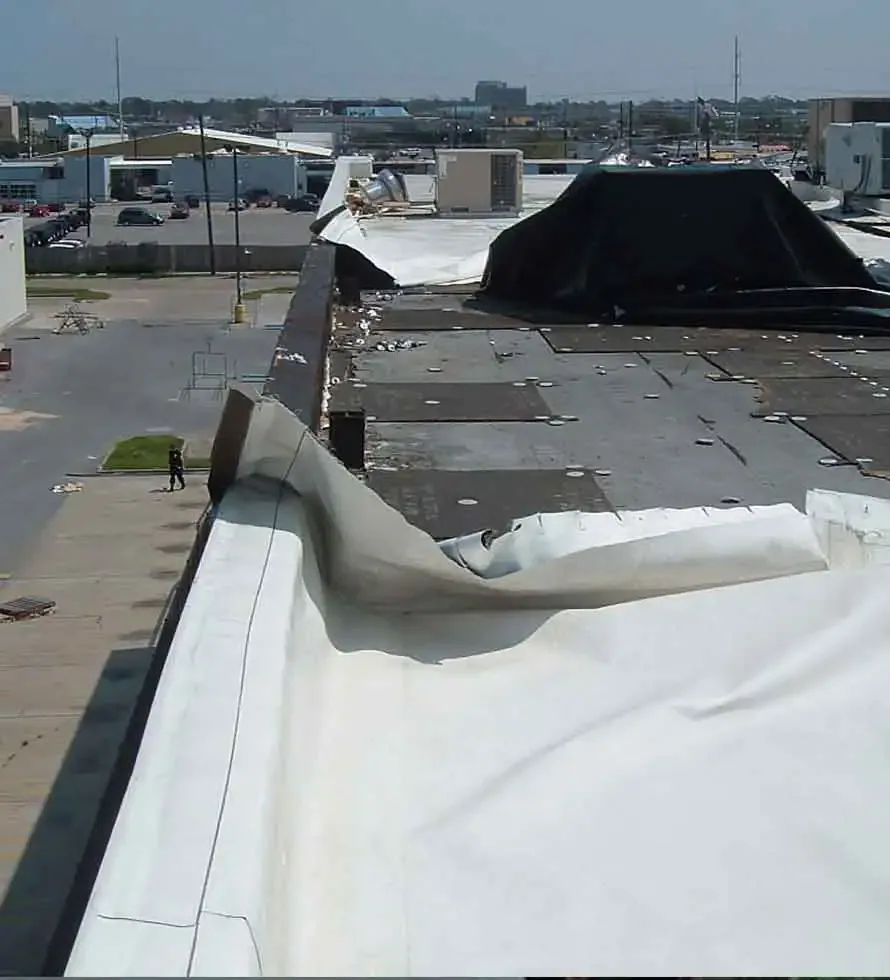
A torn field sheet needs sound adjoining material for its permanent joint. We examine the visible opening and accessible layers, then identify removal and preparation required to reach a usable receiver. Wet or deteriorated supporting material may extend beyond the exposed split. Suitable investigation should support that boundary before it becomes a firm quantity, with inaccessible portions and provisional allowances kept distinct.
Reconstruction at a damaged membrane opening includes its compatible connection and any supporting task necessary for the defined repair. A curb or equipment service issue remains assigned to the responsible trade. The roofing package describes the weather seal without representing that its finish resolves structural suitability or an uncompleted mechanical correction.
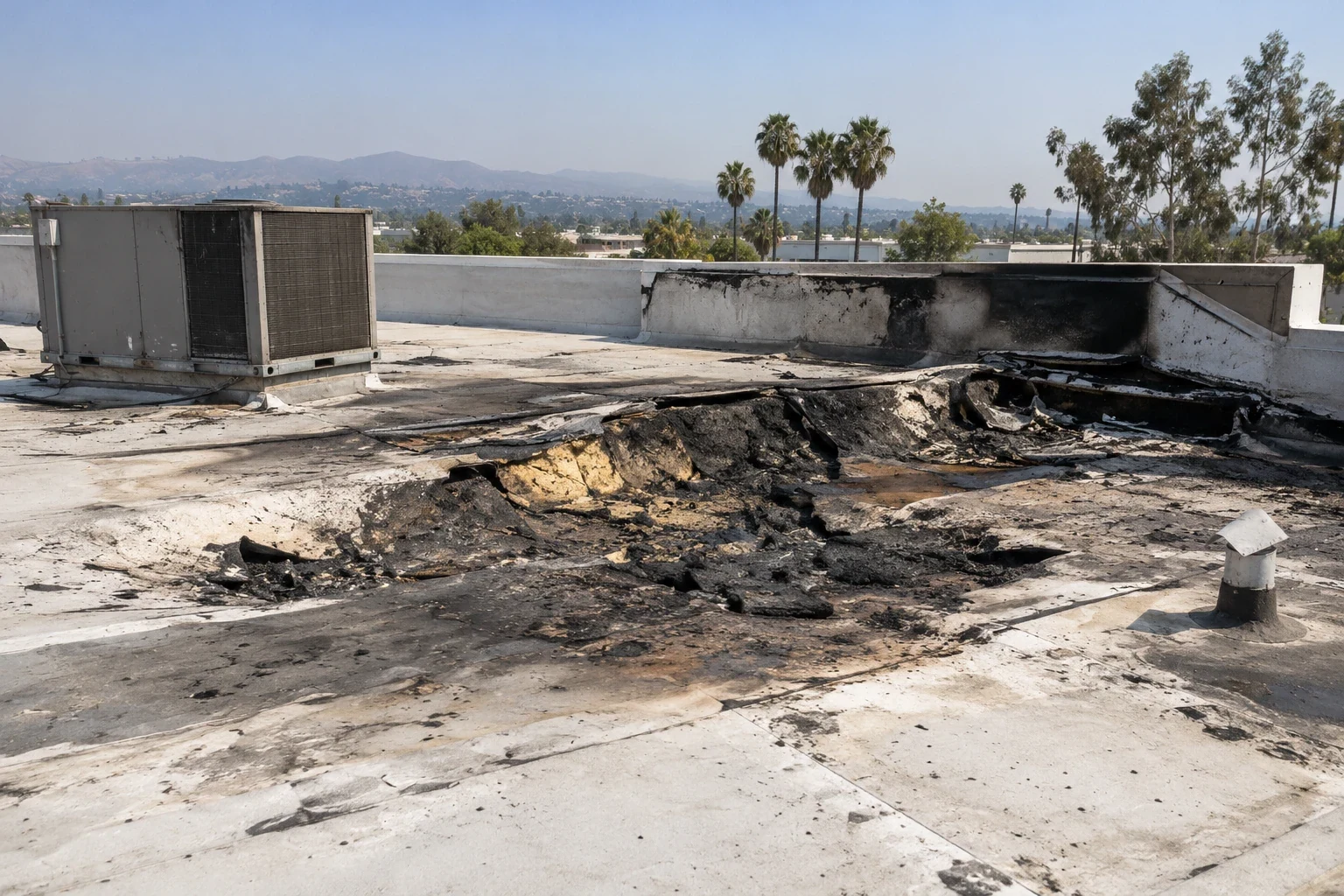
For a fire-affected roof reconstruction assessment, the responsible safety and professional review establishes access and the supporting questions that can be examined. Visible surface condition alone cannot supply clearance to enter or a conclusion about concealed structure.
An occupied store can require repeated protective setup around public movement, while an industrial operator may restrict equipment isolation or receiving access. We obtain those requirements for the actual building and record how they affect removal phases and daily closure. The reconstruction comparison needs handling, protection and related trade visits alongside the material quantity. Otherwise, two similar roofing descriptions may omit different portions of the task.
At a premises in the Hawthorne Boulevard commercial corridor, current management permission establishes the usable route. Another property in the Torrance Commerce Center setting keeps its own authority for lifting and material storage. Nearby access cannot be assumed available. We identify unfinished operator confirmation with the schedule rather than hide it inside a proposed installation date.
Equipment changes also need the restored roof detail reconciled with the final service arrangement. Closing the covering before that decision can leave another opening to rebuild when the related trade returns.
A permanent reconstruction option needs the accepted project authority and actual alteration scope established before its material choice is finalized. The city's adopted 2025 California construction codes and local amendments inform the applicable restoration review. The submitted work and responsible reviewing participants determine relevant application. The restoration team should keep that project basis with the roofing specification rather than rely on another property's earlier repair approval.
Applicable fire and energy design require the proposed assembly and building information assessed through the appropriate route. Insulation, surface performance and detail requirements need their supported exceptions and compliance method considered for the alteration. The survey identifies existing construction and any layer question still requiring confirmation. Those findings support design without representing that a familiar covering product resolves the whole review.
Regional coastal conditions are useful context for looking at actual corrosion and application dryness. They cannot establish incident causation or the depth of deterioration at an individual metal connection.
An additional receiving defect exposed during removal needs its location and corrective task documented before the permanent quantity is revised through the authorized process. We explain the change against the examined assembly and retain its relation to the earlier allowance. The final amount should have a physical construction explanation, rather than a larger total disconnected from the findings that required it.
The contractor coordinating restoration trades needs completed roofing and outstanding equipment responsibilities distinguished. An associated property management handoff after restoration should retain the located installed detail, material information and remaining care tasks. Actual issued warranty requirements govern relevant notices and upkeep; the package cannot establish coverage merely because a manufacturer name appears in the scope.
We identify the correction accomplished and any separate task still awaiting its responsible party. The physical account supports further review while acceptance, reimbursement and owner operating decisions retain their respective requirements.
Identify its material, location and remaining permanent task separately. The initial response can limit immediate exposure while supporting-condition investigation and final reconstruction quantities are still being resolved.
Locate the newly exposed condition and explain the material that needs correction. Keep the change connected to the earlier provisional allowance and process it through the authorized review rather than treat concealed deterioration as a finding already established.
The examination needs evidence supporting the particular condition and mechanism. We distinguish reported timing, observed displacement and earlier deterioration, retaining investigation where the available findings cannot settle their relationship.
Distinguish the installed roofing from equipment service, structural questions and operating releases assigned elsewhere. The completion evidence explains the physical correction; relevant insurance and warranty decisions retain their own reviewing requirements.