Roof Systems
Review KEE roofing in Torrance with membrane identification, compatible repair details, moisture assessment and an explained installation scope.
A proposed tenant equipment change raises a specific KEE roofing question in Torrance, CA: which membrane and connection details will the new penetration interrupt? Commercial Roofing Torrance begins with the installed material, accessible construction and any issued assembly information. The asset manager receives a located comparison between the proposed alteration and the surrounding roofing rather than a recommendation based only on the initials printed on an earlier invoice.
Del Amo Fashion Center provides a local retail reference for identifying the assignment. Its retail identity does not supply the membrane at a nearby building. We identify the actual property and equipment work before compatibility, access or an existing warranty becomes part of the construction decision.
KEE is a flexible polymer used in certain reinforced thermoplastic roofing membranes. Product construction and formulation matter: calling an assembly KEE does not make every sheet, adhesive or accessory interchangeable. We obtain available product information, inspect exposed surfaces and examine prior patches. A distinct backing or earlier treatment can affect attachment and preparation even where the top surfaces look similar.
Compare the candidate with PVC membrane construction on the requirements of this roof, including the selected material, attachment and detail instructions. Roof appearance is insufficient identification. An authorized sample or other appropriate examination may be needed before we rely on welding or adhesion to an uncertain surface.
Record that identification in the survey file. The asset manager can then understand which material the repair price includes and which surrounding material must be established before ordering.
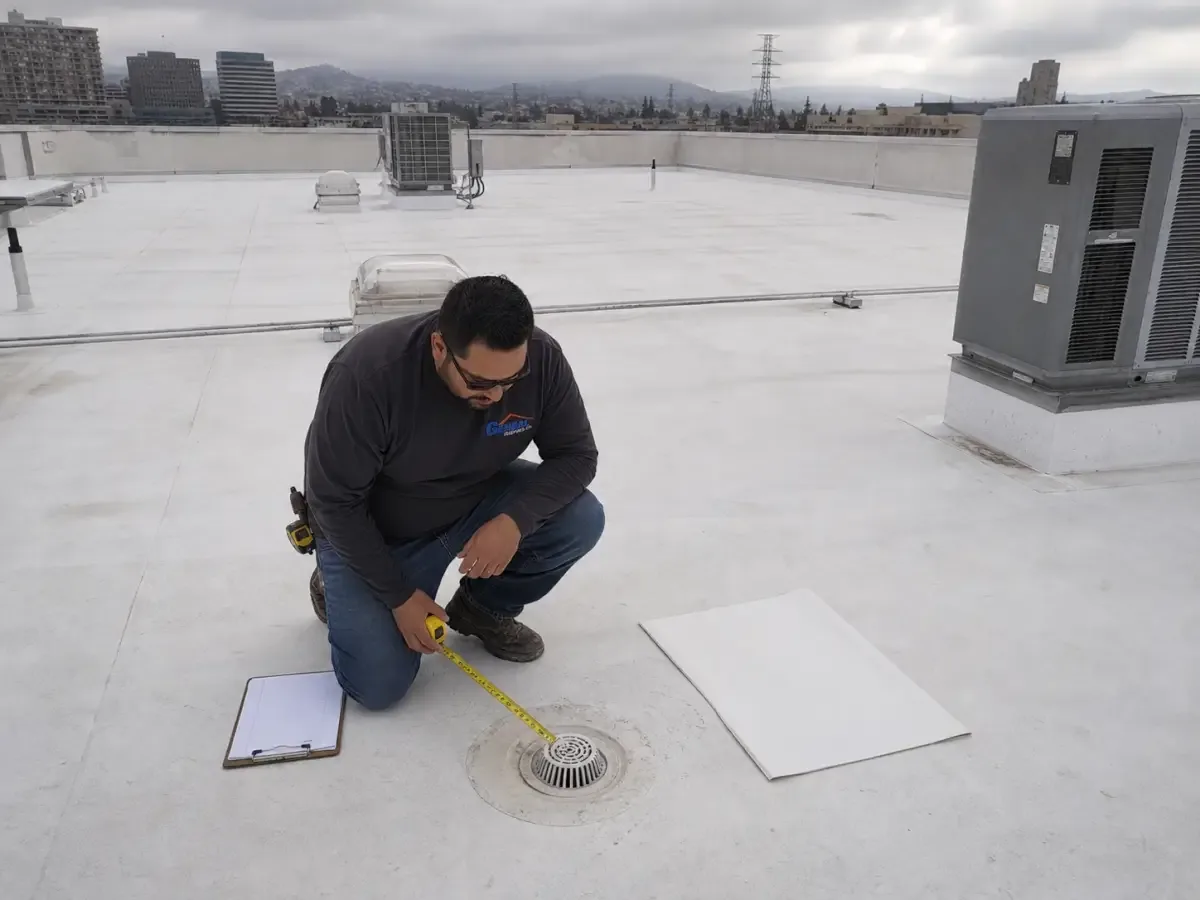
An accessible seam inspection looks at lap continuity, corner intersections and transitions where sheets meet metal or vertical flashing. Dirt, incompatible treatments and deteriorated surface material can interfere with the receiving bond. We locate these conditions with wide views followed by detail photographs, keeping each proposed correction tied to the examined area.
A suitable test weld helps establish preparation and equipment settings for the selected product under actual application conditions. It does not substitute for assessing the membrane beneath another patch. With seam correction at identified laps, the scope may extend to removal, fresh receiving material or reconstruction of a junction that cannot support a durable connection.
KEE flexibility does not eliminate movement problems at a rigid curb. Changes in elevation, unsupported flashing and poorly arranged terminations need their own detail review rather than a larger field patch laid over the same unresolved geometry.
A firm exposed sheet can conceal damaged insulation. We compare surface findings with leak information, available assembly records and an appropriate moisture examination. Thermal patterns are indications requiring suitable interpretation and confirmation; the sampling coverage must support the particular retain-or-remove decision. We explain what the investigation establishes at each examined location.
The extent of insulation and cover-board work affects thickness, attachment and transition heights. Retaining wet or unsuitable material beneath a new sheet leaves a receiving problem in place. Deck deterioration or unusual supporting conditions retain qualified assessment before the new roof arrangement relies on them.
An alternative such as TPO roofing with a separate assembly selection should be compared by the finished construction it provides. Material names alone do not account for removal, drainage correction, edge work or the ability to prepare the retained surface.
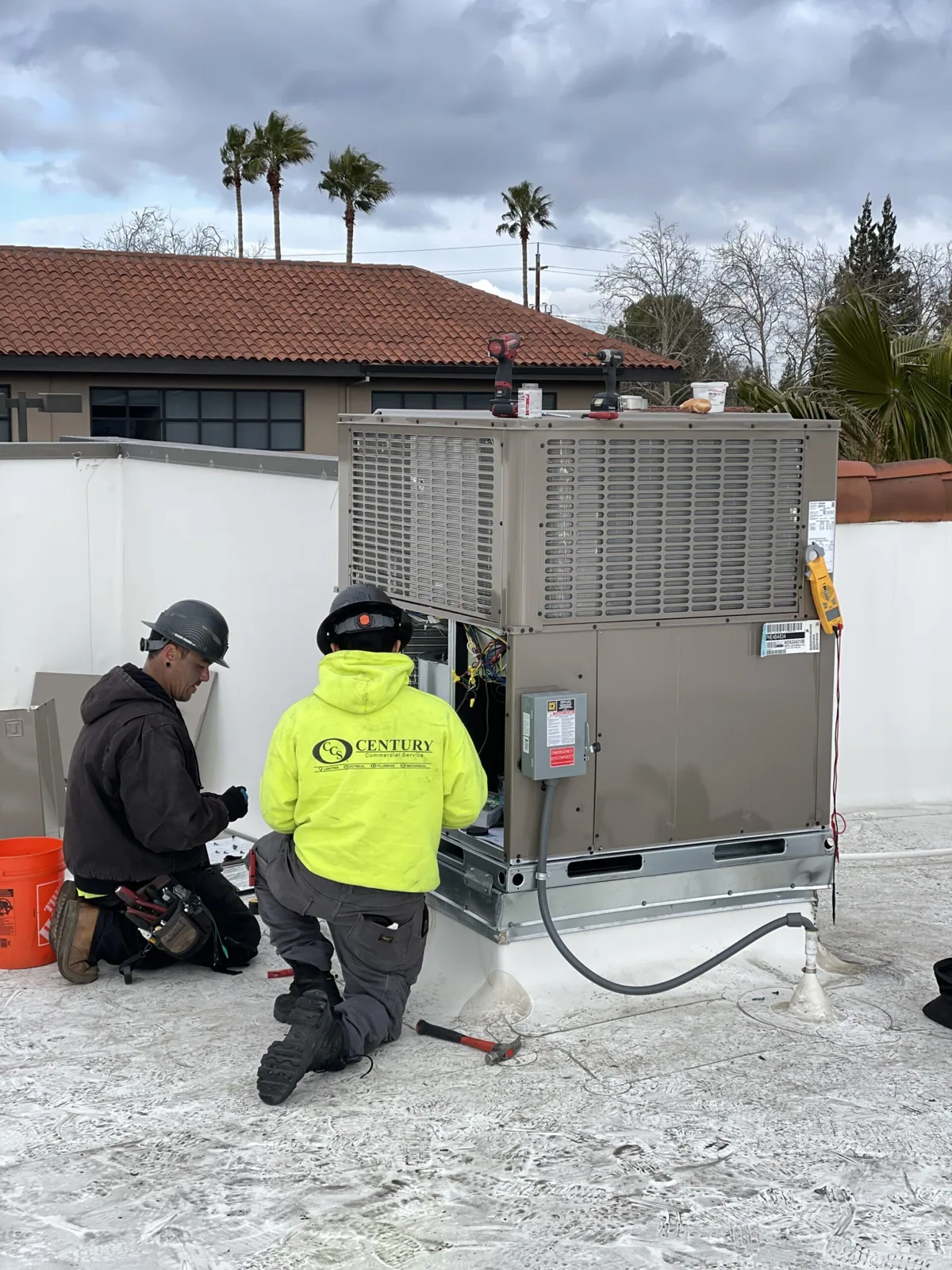
A curb alteration needs adequate room to complete the flashing, compatible surrounding roofing and an upper connection that remains accessible for care. We measure the actual curb and adjoining surface rather than take equipment dimensions as flashing quantities. The scope assigns equipment disconnection, support modifications and roofing to the participants responsible for those tasks.
Use equipment curb coordination before installation sequencing depends on an unconfirmed support or opening. A temporary closure can be necessary between trades, and the operator needs its responsibility and removal point identified. Permanent work should not assume that another participant will finish an unspecified exposed junction.
At perimeter metal, inspect the relationship between membrane securement, metal fabrication and the underlying receiver. Photographs of the visible edge do not establish concealed attachment. Resolve necessary design inputs before a field crew must improvise a connection that affects the complete assembly.
Torrance Commerce Center was described in a dated industrial-development announcement. That history is a useful industrial reference for the local discussion, while the subject building supplies the actual receiving operations and roof configuration. For Torrance Industrial Area, we obtain permitted handling areas, affected rooms and operating restrictions directly from the authorized contact.
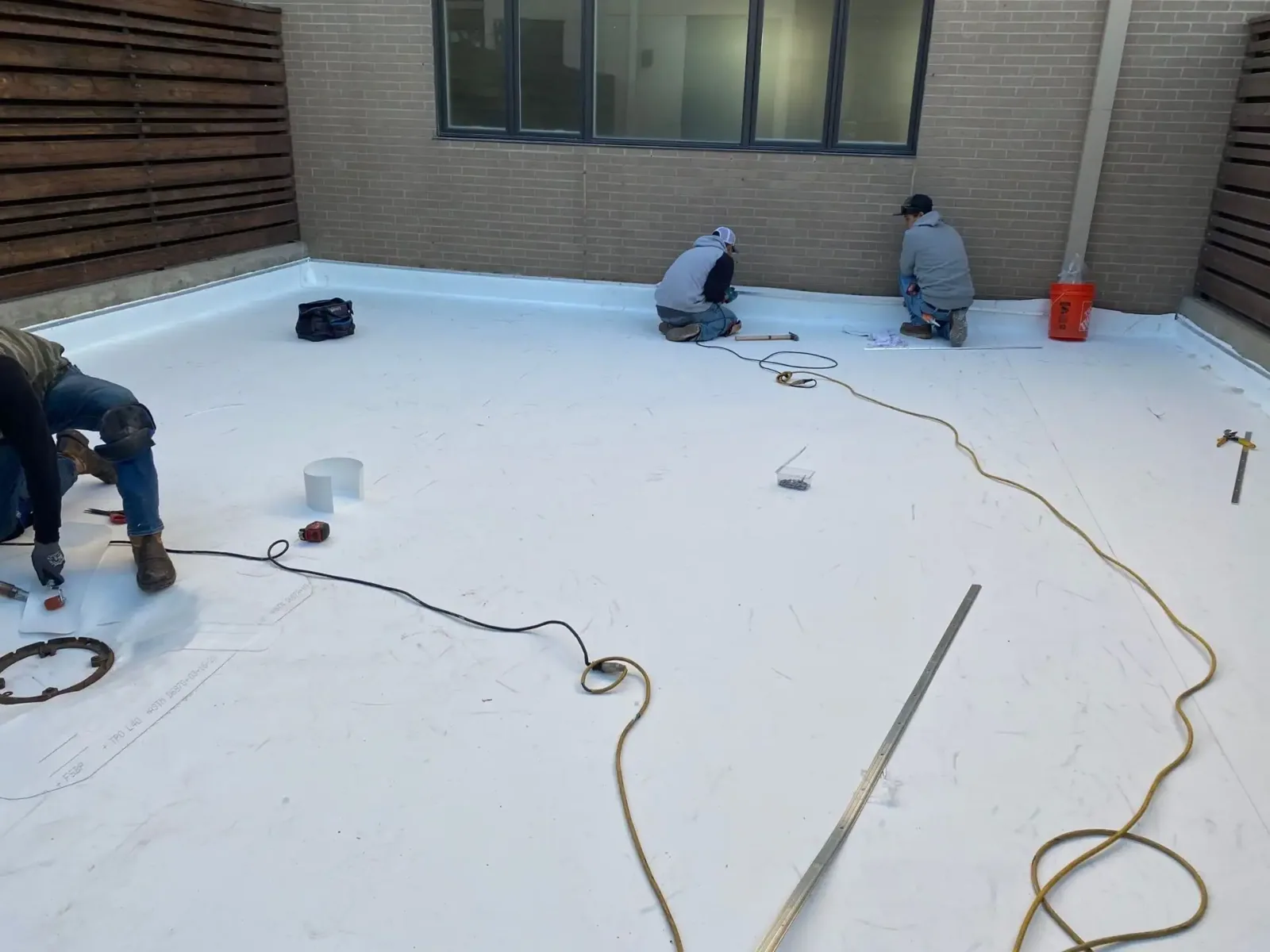
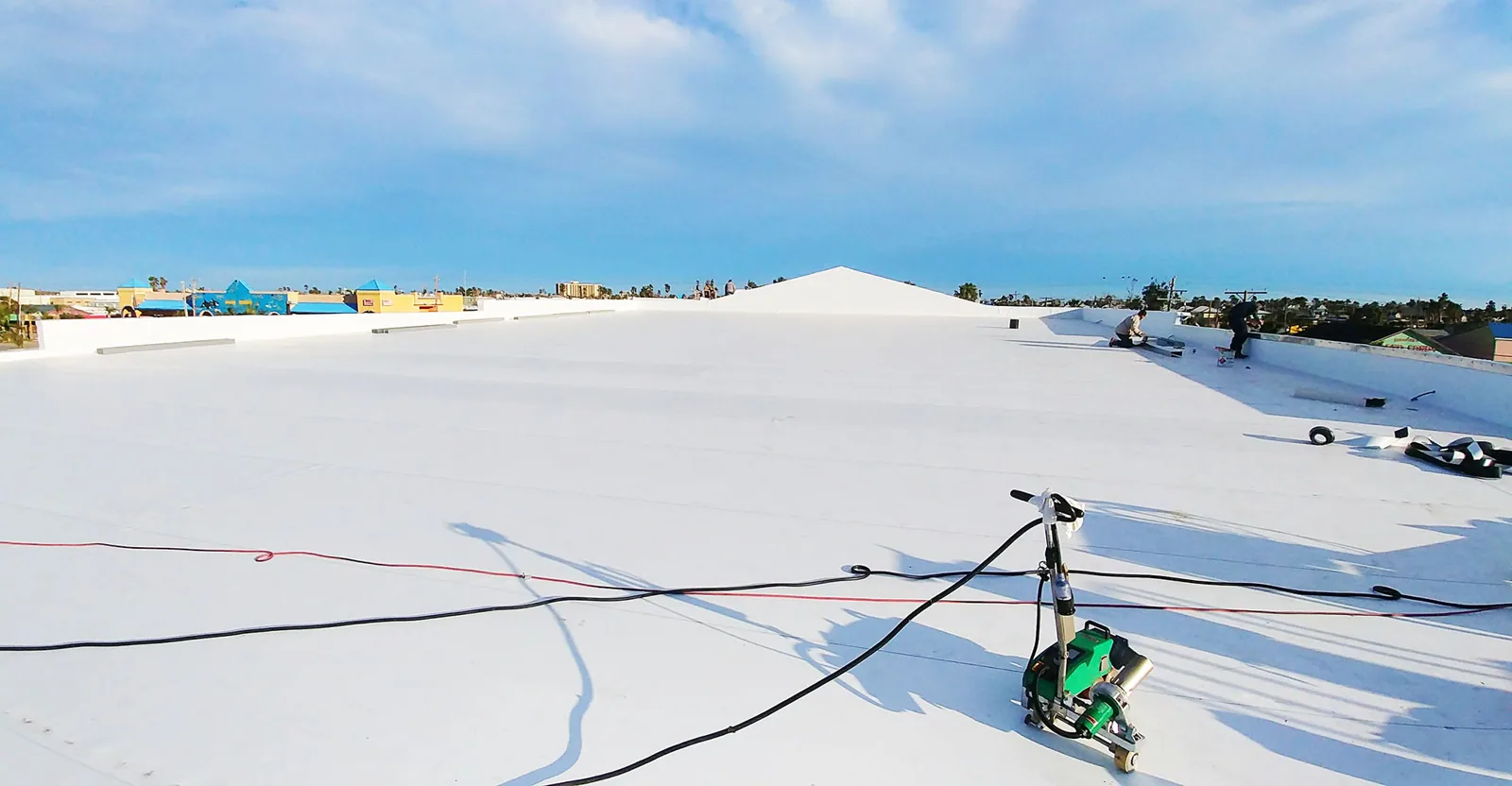
KEE application planning identifies staged materials, exposed areas, temporary closures and the sequence for welded details. Access around active equipment can reduce the portion completed in a single operation. Repeated setup, special protection and coordination belong in the estimate because they change the installation effort even where the membrane quantity remains unchanged.
Confirm applicable project requirements before selecting the full roof build-up. Energy review, attachment requirements and any needed design participation depend on the actual alteration and accepted application basis. A reflective appearance cannot independently establish compliance.
A finished KEE field receives inspection of accessible welding, terminations and transitions under the selected installation requirements. We preserve preparation references and finished views so the closeout package explains changes made during construction. Check descriptions identify their actual coverage; a clean surface photograph does not prove every concealed layer.
With issued warranty requirement review, notices and alteration requests follow the actual document. Acceptance remains with the issuer. Product information, relevant responses and agreed care tasks stay with the asset manager, including access routes that protect the membrane from equipment service traffic.
Later observations should distinguish a newly reported condition from an earlier completed detail. Record its position, surrounding treatment and circumstances before deciding whether it is a local repair, another trade question or a broader assembly concern. That comparison gives the next allowance a physical basis.
Before specifying a KEE membrane repair or recover, verify the product identity and full existing assembly. Similar-looking PVC materials may require different preparation or accessories, so use records or markings to confirm the receiving sheet. At penetrations, check that cleaners, primers, sealants and flashing components are appropriate to the identified membrane. Define the test area and acceptance method if compatibility or weldability is uncertain. During installation, record the seam locations, environmental conditions and transitions into metal or other roof materials. Keep current product instructions with the field record; do not treat a generic KEE reference as confirmation that a specific assembly carries a particular warranty.
Settle the opening, support and flashing arrangement first. We need the actual membrane identification and enough receiving space to complete compatible connections. Assign temporary closure and equipment responsibility before a cut creates an exposed area between trades.
A label is useful supporting information, but product formulation, backing and earlier surface treatment still matter. Match the proposed patch to the identified installed product and required preparation rather than purchasing by the polymer initials alone.
Assess the retained assembly, including moisture and supporting condition. An intact surface cannot establish dry insulation or suitable attachment beneath it. We explain confirmed removal boundaries and additional examination needed before a recover amount becomes final.
Preserve installed product identification, preparation and finished detail positions, accepted construction changes and issuer responses where required. Keep ongoing access and care responsibilities with those records so a later service visit can protect the completed flashing.