Roof Systems
Review EPDM roofing in Torrance through seam preparation, movement details and receiving-layer checks before setting a commercial repair or replacement scope.
A buyer reviewing an EPDM roof allowance in Torrance, CA needs to separate visible rubber condition from the connections holding the assembly together. The field sheet may remain flexible while a seam, curb transition or perimeter termination needs reconstruction. We examine those elements individually and explain which can be repaired within sound adjoining construction. The acquisition discussion then has measured work boundaries rather than a single age-based replacement assumption.
Torrance Commerce Center has a dated industrial development account that supplies local context for evaluating commercial property. It does not establish the type or installation date of a subject roof. We identify the assembly through the available material information and accessible construction. EPDM decisions follow those findings, including attachment, drainage and later equipment access. The proposal states what was examined, what further investigation is needed and how each option changes the retained roof.
EPDM is a rubber membrane whose seams and details rely on the selected compatible preparation, tape or adhesive system. We examine accessible laps for lifting edges, loss of bond and stress near changes in plane. The receiving surface must be suitable for the proposed repair. Dirt, earlier incompatible compounds and weathered material can make a simple patch inadequate, so we establish the preparation method and sound repair boundary before specifying the work.
Curb corners and perimeter terminations are assessed for restraint and movement. We look for sheet pulling away from a detail, displaced components and loose attachment where accessible. Rebuilding a penetration transition may address a larger connection than the apparent open edge. The scope explains the new seam, termination and adjoining sheet work separately. It also identifies where underlying construction must be examined. Flexible field material cannot be treated as evidence that every connection remains suitable for continued service.
An EPDM system can use different attachment arrangements, each with its own deck, perimeter and maintenance considerations. We identify the actual arrangement before recommending a recover or a changed service route. For a ballasted roof, the visible stone layer can limit examination of the sheet and its seams. Any displacement needed for assessment is planned with appropriate handling and loading review. The resulting report states which construction was accessible.
Built-up roof construction and PVC assemblies provide different alternatives where replacement is under consideration. We compare the complete installed systems rather than assuming one is better because its surface is easier to photograph. Attachment requirements depend on the selected assembly and governing design inputs. A proposed change that removes ballast or adds equipment must address those inputs through the responsible project review. The asset manager receives the consequences for construction and access before approving the alteration.
An intact rubber surface can conceal insulation that needs investigation. We examine drainage patterns, soft areas and prior repair boundaries, then identify a suitable method for assessing possible moisture. Targeted openings can clarify the layers and receiving condition where other observations leave uncertainty. The scope keeps tested locations distinct from unexamined areas. Removing wet material requires a measured boundary and a compatible reconstruction, not simply resealing the opening used for the test.
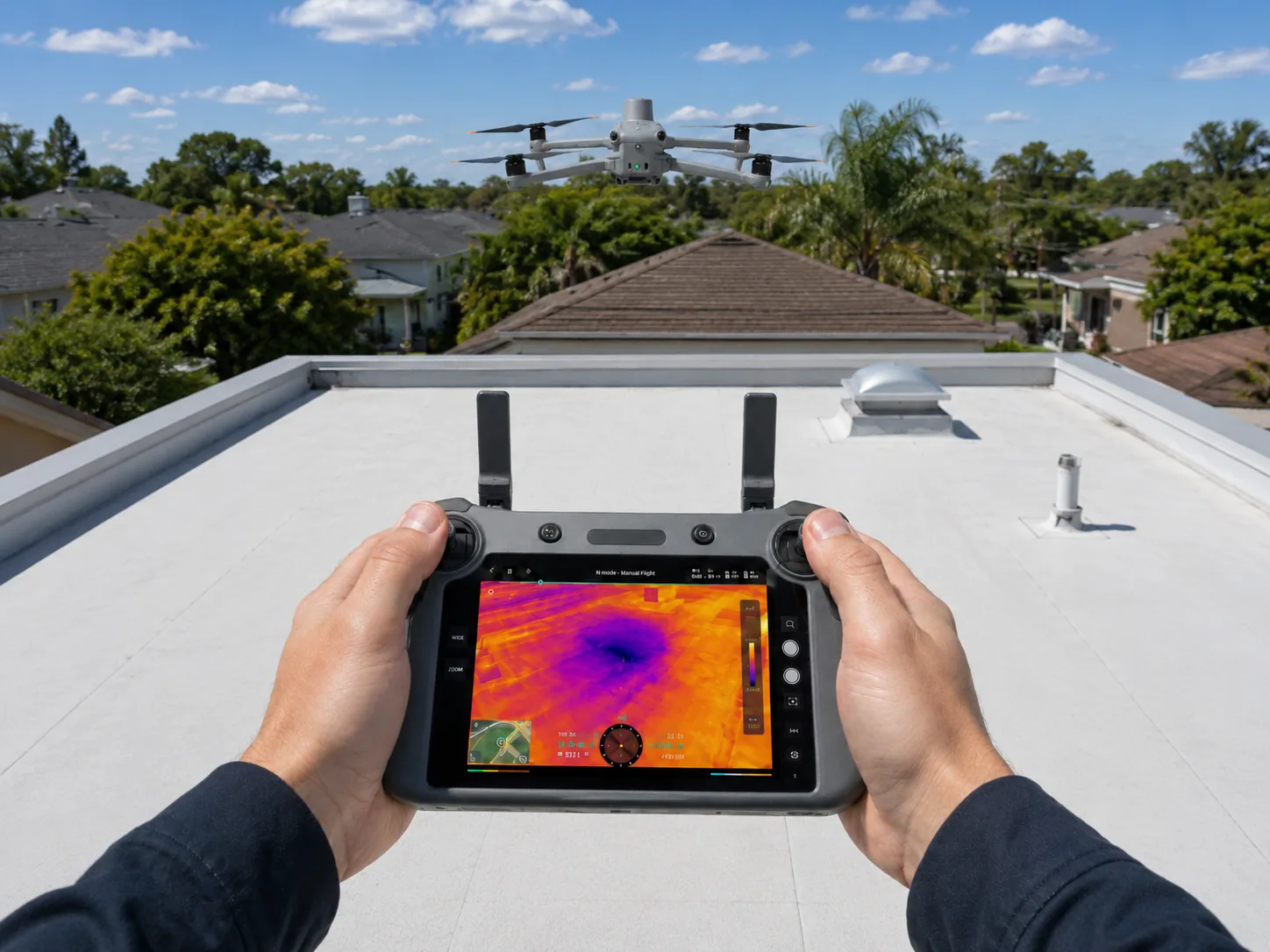
An infrared moisture assessment may assist under suitable survey conditions, with its indications evaluated before removal quantities are treated as established. New insulation and cover board can be included where the selected construction requires them. Del Amo Fashion Center supplies a current local retail identity, but neither retail use nor industrial setting establishes concealed moisture. We assess the subject roof from its own accessible conditions and investigation results. Those findings determine which retained layers can remain in the proposed assembly.
A replacement or recover can increase finished surface height beside drains, curbs and edges. We measure these connections and identify where additional flashing work or outlet reconstruction is needed. A new membrane should not leave the original drain recessed behind a poorly formed approach or reduce usable termination height. Drainage corrections are designed with the receiving layers, so the completed surface sends water to the intended outlet.
Outlet and scupper work is recorded as a defined construction item. We also locate protected routes for servicing equipment, particularly where repeated travel could abrade or puncture the sheet. For properties in Torrance Industrial Area, access and present roof conditions come from the actual assessment. Industrial development context does not establish ballast suitability or roof load capacity. Any structural question remains assigned to its responsible reviewer, while the roofing scope explains the compatible drainage and flashing connections.
The closeout package identifies EPDM materials, repaired areas and the preparation used at their connections. Located photographs show seams, curbs, drains and perimeter details within the finished scope. We distinguish retained construction from new components so later maintenance does not apply the wrong repair method to an altered area. Outstanding inspection or administrative items remain listed with the participant responsible for their resolution.
Roof asset records should retain that material identification alongside future equipment changes. Maintenance staff need a defined service route and guidance for reporting punctures or displaced details. An active leak can be reported to our response service during nights, weekends and holidays as well as ordinary work hours. Repair planning still follows the actual receiving condition. The asset manager can then assess future expenditures from located construction findings, while an issued warranty and any receiving-party acceptance retain their own requirements. The record supports those reviews without determining their outcome.
For an EPDM roof, identify the existing membrane type, seam tape or adhesive system, and prior repairs before selecting a patch or flashing. Surface preparation and splice condition determine whether a new connection can bond as intended. Inspect terminations, drains and penetrations adjacent to the reported area because water can travel beneath the sheet before appearing inside. Define the patch size and tie-in at the sound boundary, then document cleaning, primer use and completed seams under applicable product instructions. If membrane age, oxidation or contamination prevents a reliable connection, present a broader option rather than promising a localized patch will resolve an unverified condition.
Retention is possible where the adjoining material and receiving layers remain suitable for a compatible connection. We examine the perimeter stress and identify its cause where the findings support a conclusion. The repair boundary must include sound sheet and an accepted termination detail. A flexible field is useful information, but cannot by itself establish the suitability of the whole assembly.
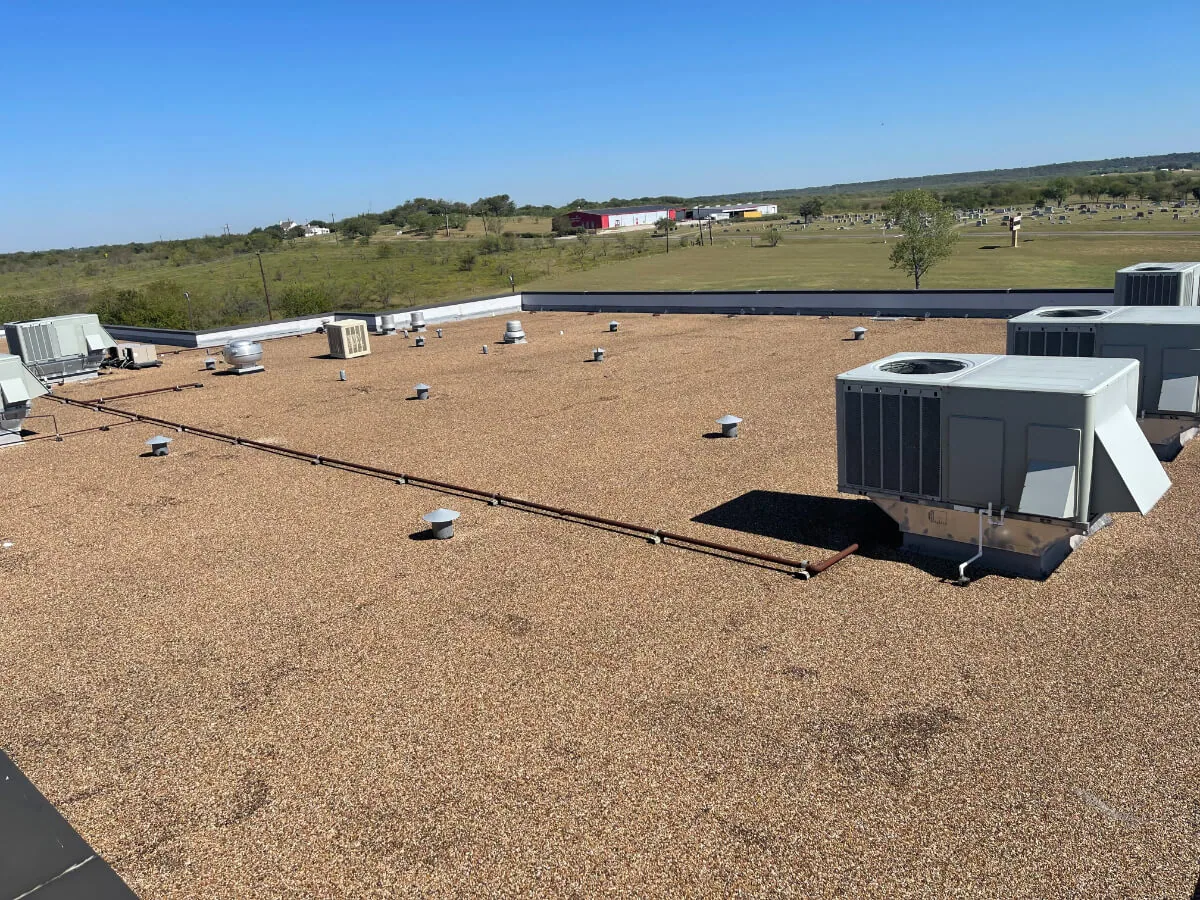
Ballast can limit direct access to the sheet, seams and drainage connections. We plan any necessary displacement with handling and loading constraints identified. The assessment records what was actually exposed and examined. An overview of the stone surface should not be presented as a complete membrane inspection when underlying details remain inaccessible.
Color alone is not a condition assessment or a compliance decision. We examine the assembly and review applicable project requirements before comparing replacement options. A reflective alternative may be appropriate for the proposed work, but it still needs a suitable deck, insulation and flashing plan. The comparison explains those construction differences and any required energy review.
Retain the location, membrane identification, preparation method and receiving-layer findings for each completed repair. We distinguish tested areas from conditions that remain unexamined. A buyer can then see which work addressed a seam or detail and which work changed the assembly. The buyer and its reviewers determine their own acceptance and any additional examination needed.