Commercial Roofing Services

Investigate roof moisture in Torrance with thermal observations, located samples and interpreted boundaries tied to repair and capital allowances.
An acquisition reserve in Torrance, CA can change materially if concealed insulation requires removal. The asset manager needs an investigation that distinguishes temperature patterns from confirmed material findings. We review the assembly, plan suitable thermal observation and agree on confirmation methods before describing a moisture quantity. The survey file carries interpreted areas, sampled positions and the limits that affect a repair or recover decision.
A useful moisture allowance retains its measurement basis. Unexamined construction remains a separate question.
Thermal observation depends on the construction and the conditions during capture. Solar exposure, wind, surface water, shaded areas and different material thicknesses can affect temperature behavior. We evaluate whether those conditions can support the proposed interpretation, then select suitable timing or another method. A dry-looking surface alone does not establish that concealed materials are dry.
The survey plan identifies coverage and the information needed to check anomalies. Equipment heat, patches and changes in construction may require comparison areas. When contrast is inadequate, the file describes that limitation rather than presenting an indistinct image as a completed moisture assessment. Selected sampling or another appropriate investigation can address the unresolved question.
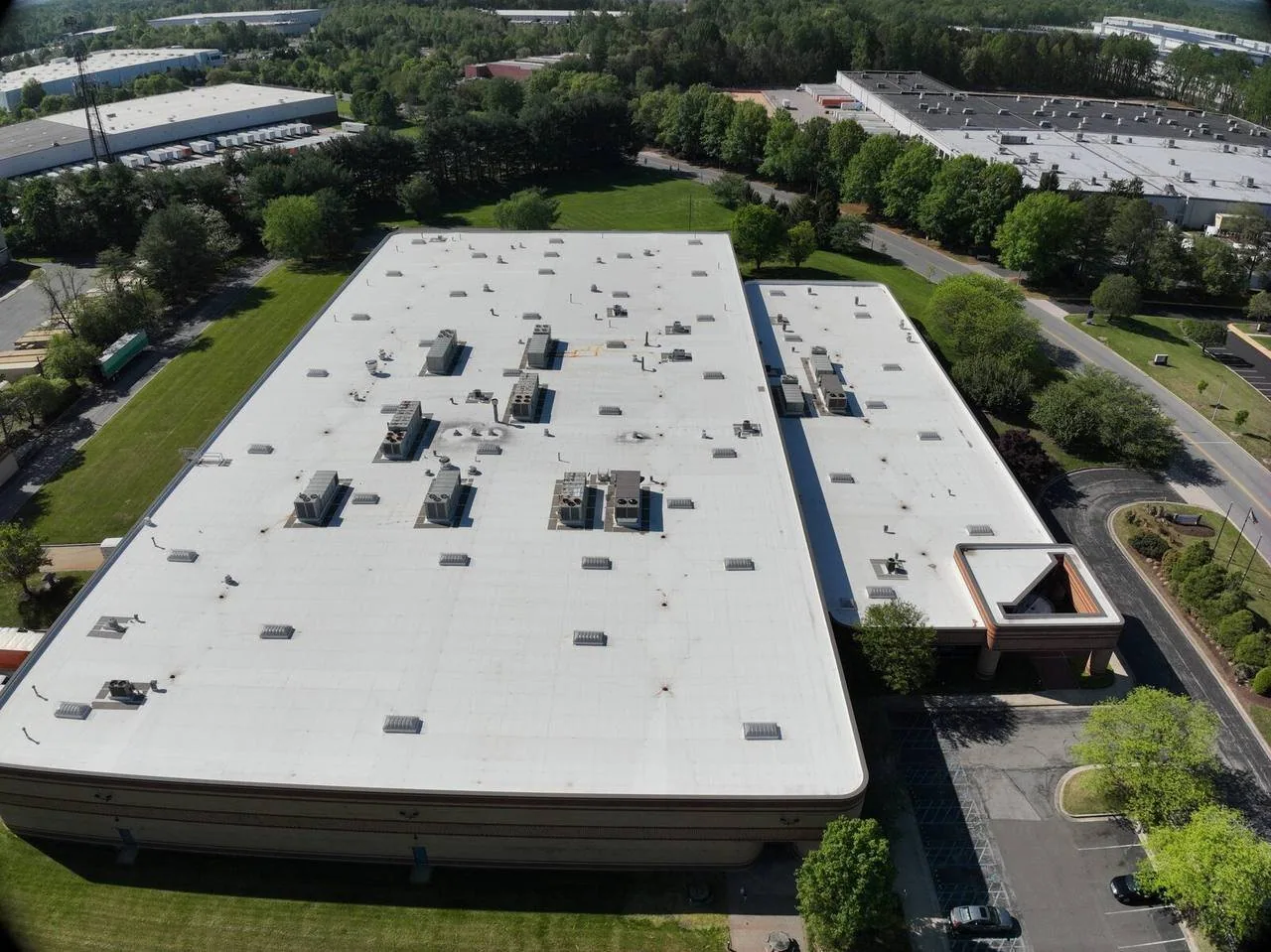
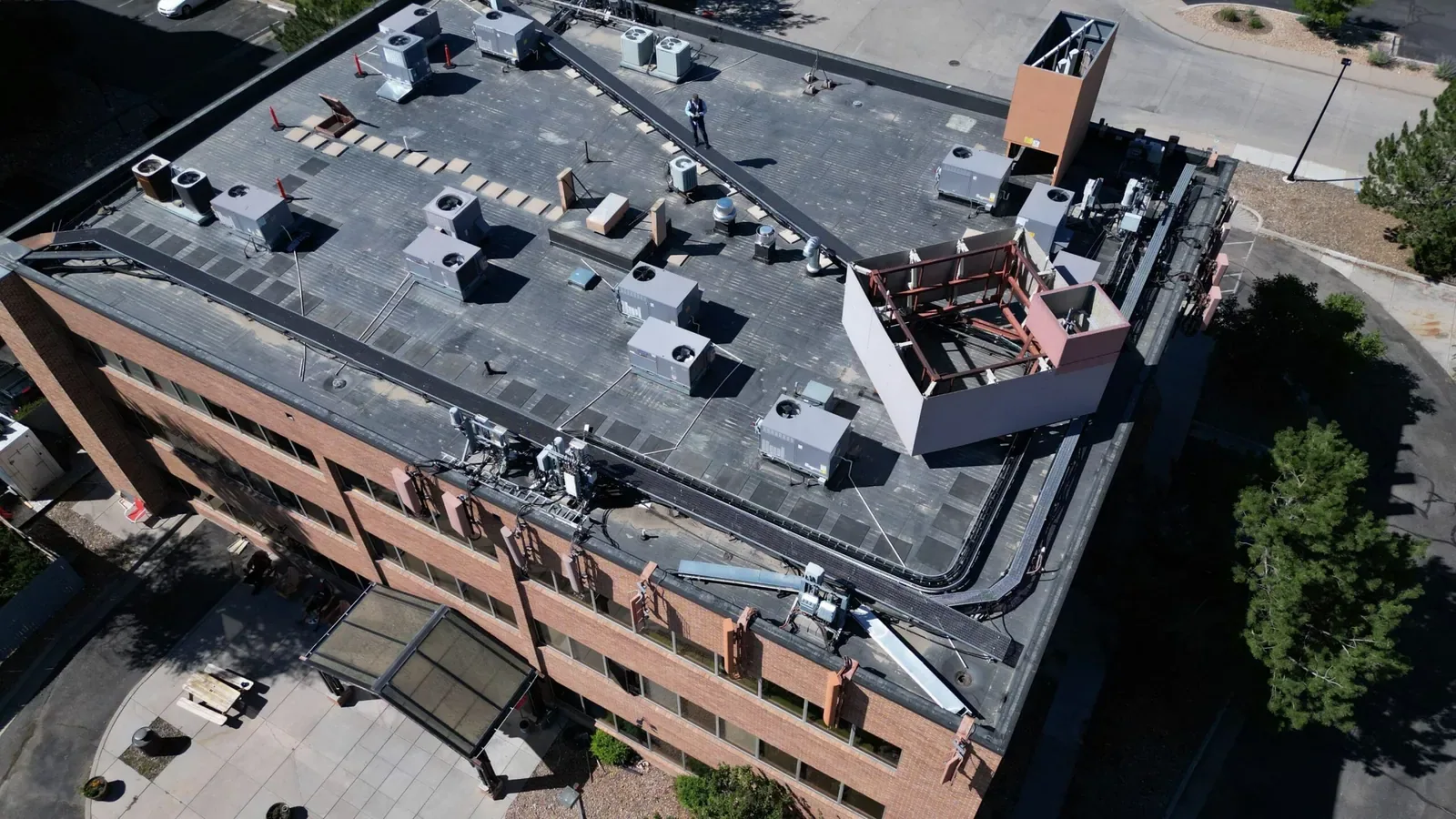
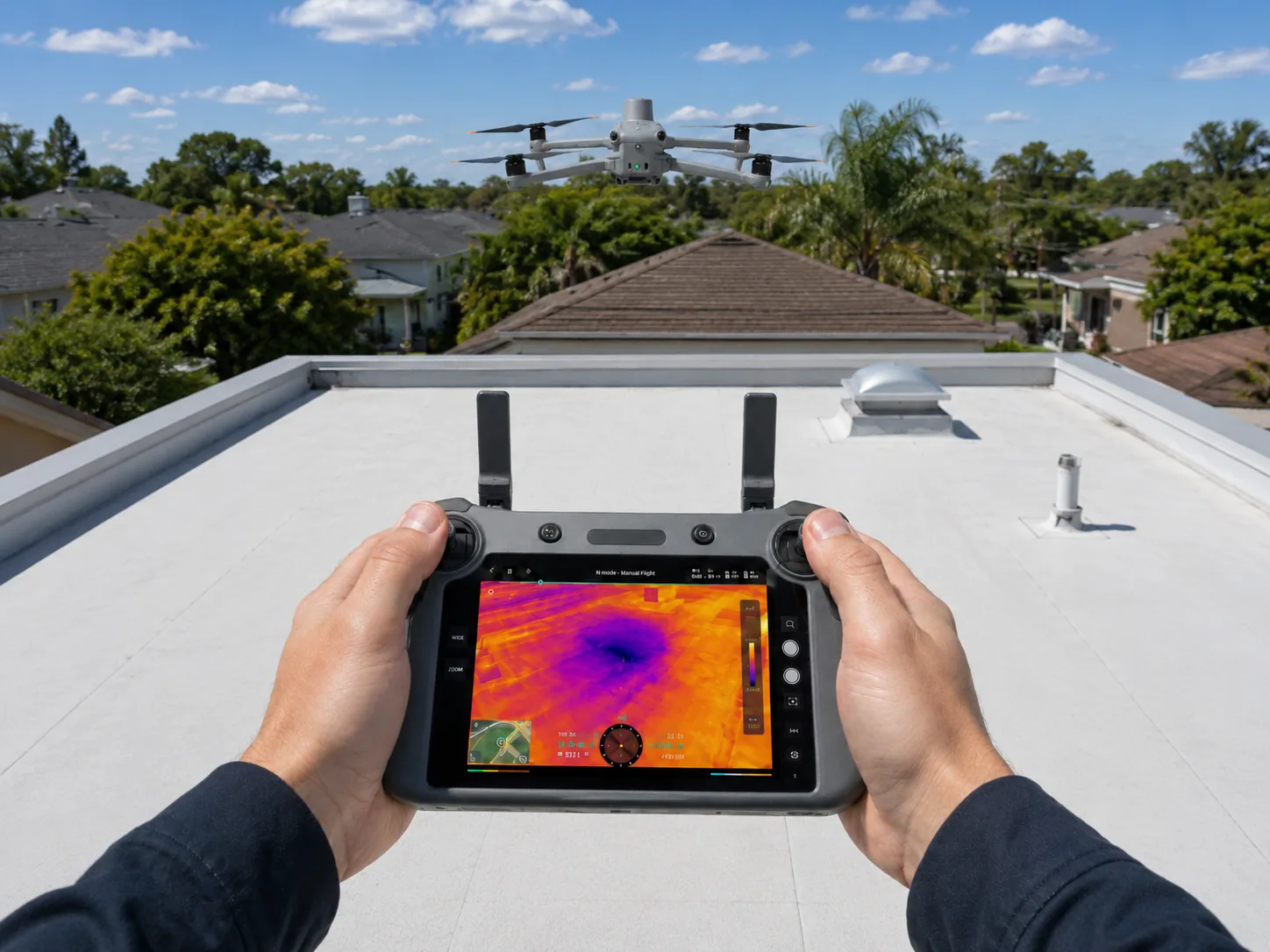
The scan begins shortly after sunset, when the roof starts cooling. The operator walks the roof, or flies it with a drone-mounted camera, in overlapping lines within the agreed coverage and accessible operating limits. Warm patterns that persist longer than the surrounding roof are candidates for wet insulation. The operator records competing explanations for those patterns before recommending confirmation.
This process treats the camera as a locator, not a verdict. Every marked area is a hypothesis that the next step must test.
A core exposes the layers at its own position. We select confirmation and comparison locations to investigate the thermal interpretation, photograph the materials and use suitable assessment methods for the assembly. Permission for openings and compatible closure are resolved before cutting. The file locates each sample, describes its findings and records how the opening was repaired.
The interpreted boundary remains distinct from the measured condition at a sample. Additional locations may be needed where materials change or results conflict. Those distinctions matter for a recover decision and for an acquisition due diligence survey. The asset manager sees which quantities are supported, which are provisional and what further investigation could change them.
An opening may reveal a limited portion of the deck or receiving substrate. We locate and photograph visible corrosion, damaged material or suspect attachment, while recording where the deck remains inaccessible. A moisture finding does not establish the remaining strength of that supporting construction. Concerns about section loss may need measurement or qualified structural assessment before a removal scope can be finalized.
This evidence informs deck allowances but cannot eliminate every concealed repair risk. The proposed work explains which observations support a localized treatment and which areas require further opening. Coastal location alone does not establish corrosion or its cause. The cost discussion follows the material examined at the subject roof.
The Torrance Industrial Area 2021 Phase II announcement identifies planned industrial development. A survey of a subject industrial property still needs its current assembly and assigned roof portion established. The dated account supplies local context without determining present moisture, retained layers or roof age. Each assessed section retains its own coverage and confirmation record.
The Carson Street location places Del Amo Fashion Center in a retail setting relevant to occupied-property sampling. For an occupied property near the center, the sampling plan must account for permitted access and the areas beneath proposed openings. Findings used in roof capital planning keep interpreted quantities and construction allowances separate, so an asset manager can revisit the reserve when further examination improves the information.
The report lists the interpreted suspect area of each section, the confirmed sample findings and investigation limits and a recommendation: repair the wet zone, recover the dry portion or replace the section. Costs are expressed in the drivers that matter, such as how much insulation must be removed, whether the deck needs work and how the new roof must tie into the old.
Where the wet area is small, a targeted repair may address the confirmed affected construction. Where it is extensive, the map supports the case for replacement. Either way, the survey pairs naturally with a hands-on inspection and a drone survey when the owner wants the related accessible findings in one survey file.
Infrared findings are patterns that guide confirmation, not a direct measurement of water content. Plan the scan for suitable thermal conditions and document recent weather, roof construction, surface type and any operational heat source that could affect contrast. Mark anomalies on a roof plan, then select confirmation points based on the decision they support. State the sampling method, depth and limits, and do not extrapolate a small sample to untested areas without a defensible basis. If removal is authorized, record the exposed layers and moisture condition at each location. The final report should distinguish scan coverage from confirmed wet material and link any proposed removal quantity to its evidence.
Surface water, shielding, limited solar exposure and some assembly configurations can prevent a meaningful distinction between suspect and comparison areas. We evaluate those constraints before selecting coverage and timing. If the method cannot answer the assigned question, the report states why and identifies another useful assessment. Inadequate contrast is a limit of the investigation, not proof that the concealed insulation is dry.
Distinct patterns, changes in construction and the decision being supported influence the sample locations. We include appropriate comparison positions and revise the plan if results conflict. There is no universal count that proves moisture extent across every assembly. The file explains each location, its material finding and the interpreted area it helps investigate, with additional sampling identified where useful.
The quantity should retain its status as confirmed, interpreted or provisional. We connect removal and replacement allowances to the supporting observations, then separate deck uncertainty and receiving details that remain unresolved. An asset manager can update the reserve as further work improves the boundaries. That approach preserves the evidence behind the estimate without treating an image-derived polygon as an exact demolition quantity.
Moisture observations alone may not establish how the material became wet. Thermal patterns, samples, interior conditions and construction details contribute different evidence. We identify when the question requires another qualified assessment or additional examination. The roofing recommendation addresses supported material findings while the explanation of moisture origin remains separate if the available information cannot resolve it.
The response depends on material condition, extent, assembly and the proposed construction. We examine whether retention would leave unsuitable material beneath the repair or new roof, then define removal where appropriate. Any drying proposal needs its own supported method and acceptance criteria. The asset manager receives an explained scope for the affected construction rather than a universal promise that drying or replacement fits every finding.