Commercial Roofing Services

Local weather advisory
The National Weather Service has issued a coastal flood advisory covering Torrance. Heavy rain and drainage loading can expose roof leaks, blocked drains, and ponding water. This is a weather exposure advisory; it does not establish damage to a specific roof.
Do not access a roof during hazardous weather. Protect people first, avoid water near electrical equipment, and request roofing help when conditions permit.
National Weather Service · Updated Oct 27, 2026, 1:54 PM UTC
Arrange emergency roof repair in Torrance with safe stabilization, located temporary closures and an explained next assessment for permanent construction.
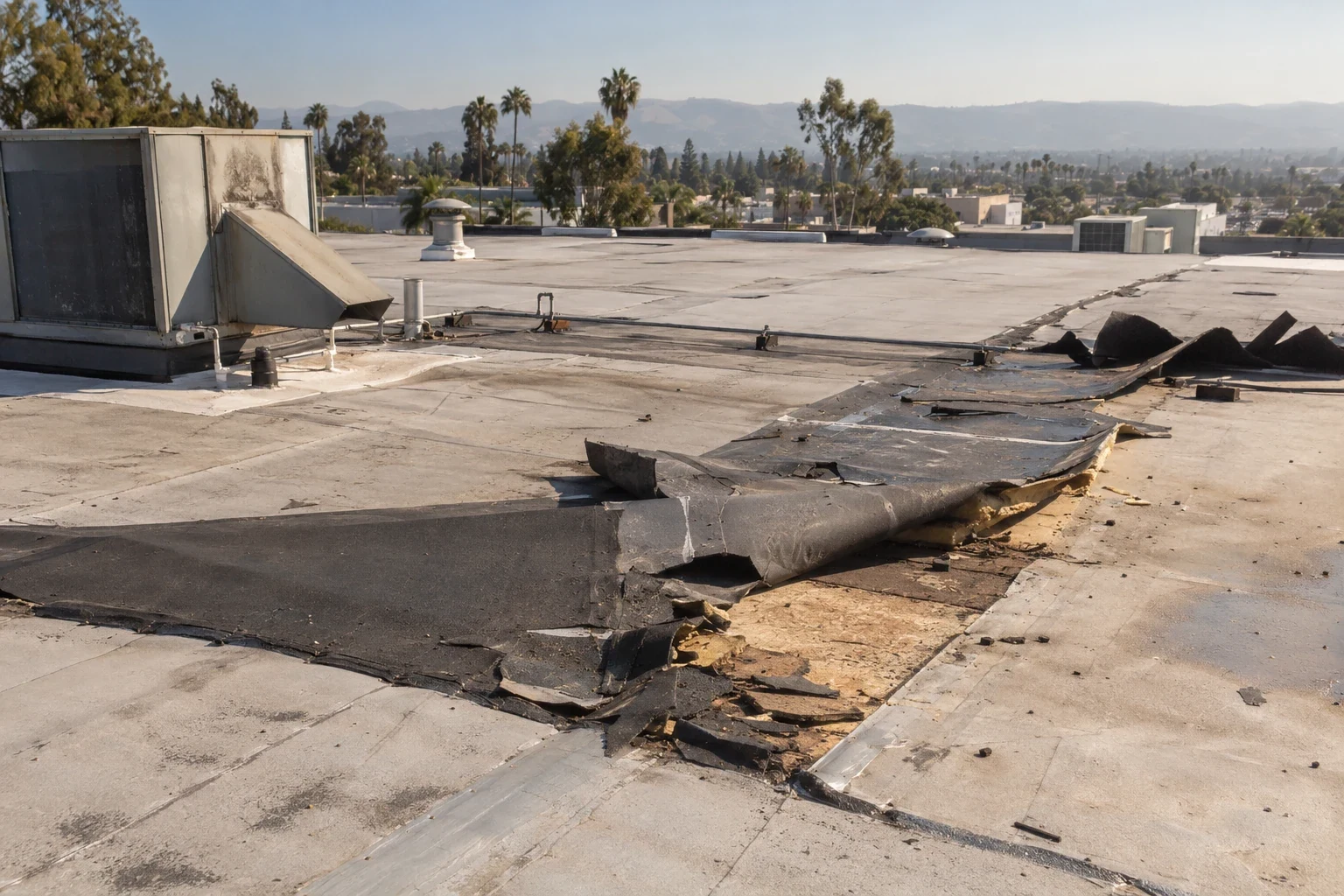
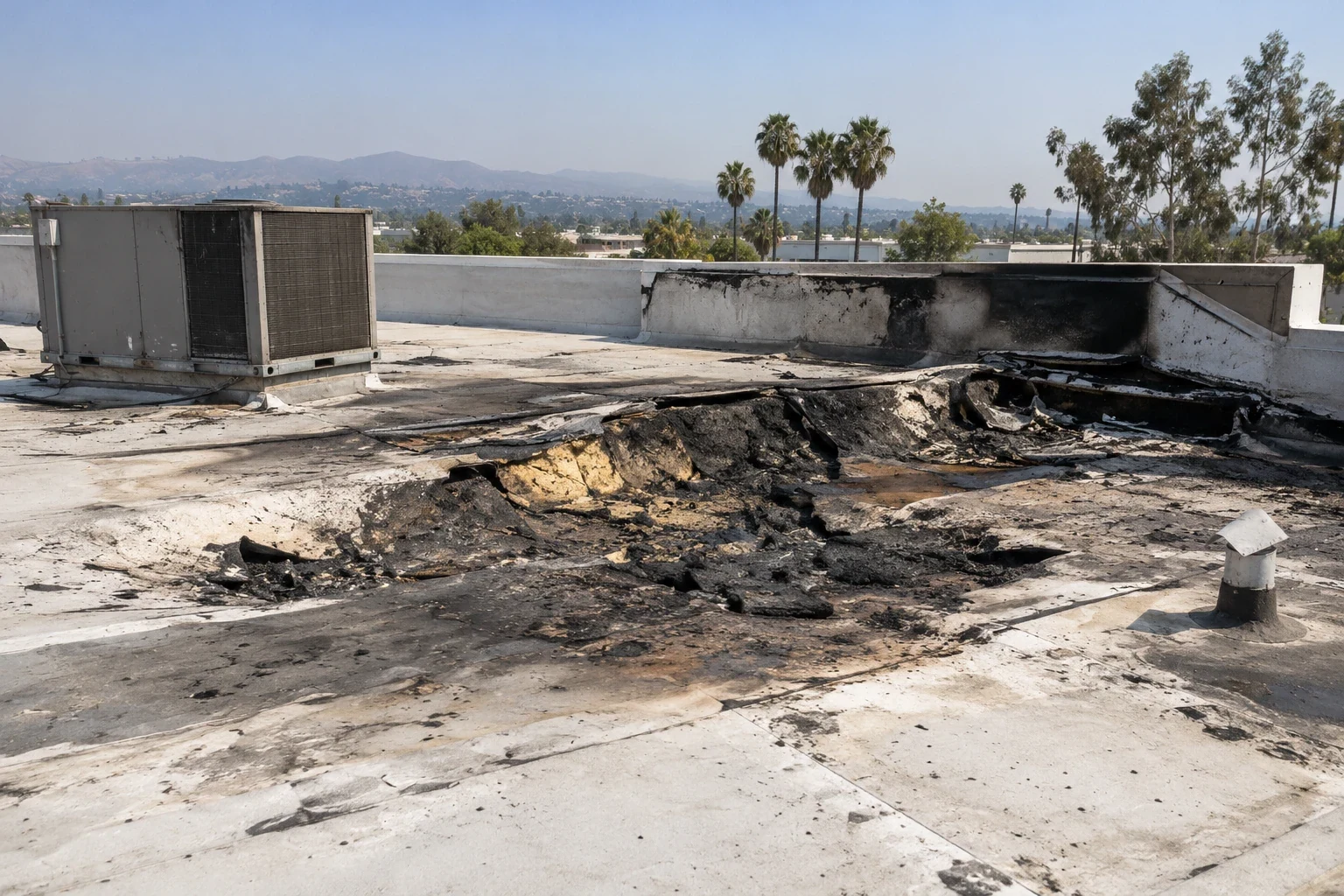
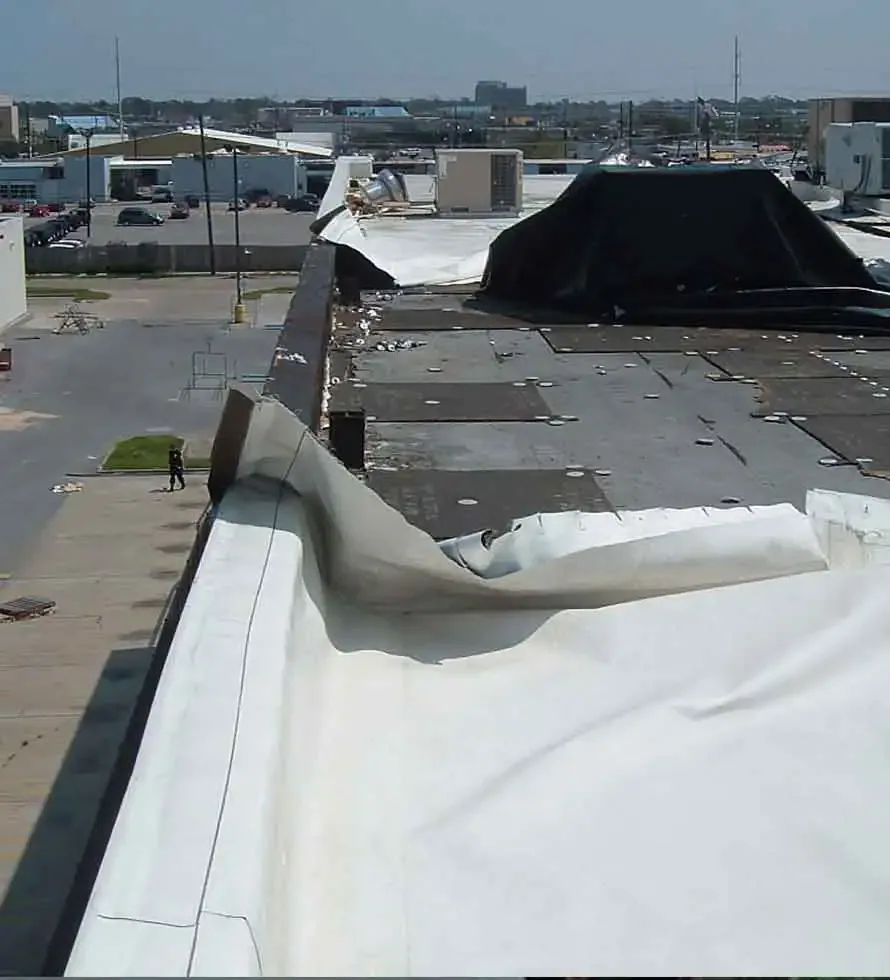
An active roof opening during a property assessment in Torrance, CA changes the immediate decision from estimating future work to limiting present exposure. The asset manager needs safe stabilization and a clear record of what remains provisional. We identify the affected interior area, assess available roof access and distinguish visible damage from an assumed cause. Located observations support the repair plan, while unsafe or inaccessible conditions remain explicit.
Our emergency contact is available overnight, on weekends and on holidays. The response scope still follows the conditions found at the building.
An accessible opening should be photographed before it is covered when that can be done safely. We record its location, visible damage and the condition observed below it. Wide images relate the affected area to roof features; closer images describe exposed materials. Available drawings can improve location references, and an initial sketch can identify the inspected portion when drawings are unavailable.
Time, reported history and current conditions belong in the same record but retain separate meanings. Arrival observations do not establish when hidden damage began. The report names a supported or suspected water path without treating a weather report as proof of causation. That distinction gives later assessment a useful starting condition.
Temporary protection must match the roof geometry, receiving substrate and safe handling conditions. A membrane patch, suitable cover or another provisional closure may be appropriate; a tarp is not automatically suitable for a low-slope assembly. Attachment and ballast require evaluation so stabilization does not add punctures, unsupported load or loose material. Interior protection is coordinated with the property team, including hazards that require other qualified responders.
Roof access pauses where structural instability, electrical exposure, fire conditions or unsafe footing prevents suitable work. The record explains those limits and the next useful action. Once the accessible area is stabilized, examination can distinguish a damaged perimeter from another opening, while fire-affected construction may need separate assessment before permanent roofing proceeds.
A provisional closure needs inspection and a defined transition to permanent work. To keep that transition visible, each emergency visit produces a short description listing what was installed, where, with which materials and when it should be replaced. The list is given to the owner and kept in the survey file. A lender or insurer reading the file later should be able to tell which parts of the roof are permanent, which are provisional and what remains proposed for permanent correction.
The follow-up scope is built at the same moment. If the cause was a single failed detail, a planned leak repair may finish the job. If further assessment supports storm-related damage, storm damage repair and the claim process move together, and we list the items with the photographs that match each one.
An emergency opening can expose supporting material that normally remains covered. We photograph accessible deck surfaces and locate visible corrosion, movement or missing support. The observation establishes what was visible during stabilization, not the strength of every concealed area. Suspect construction may require a qualified assessment before the permanent detail can be attached.
Additional substrate repairs are described separately from the temporary closure. The owner sees the affected location and the reason for the next evaluation before choosing a final scope. A Torrance address does not establish corrosion, and a dry-looking surface does not clear concealed moisture. Permanent work follows the examined condition rather than a general expectation about coastal roofs.
The retail setting near Del Amo Fashion Center in Torrance makes coordination of affected access routes useful. An emergency at a commercial property in its vicinity can affect receiving routes, suites or public access. The property team identifies those constraints, while the roof scope locates the opening and safe material placement. A temporary closure above an operating area also needs a clear follow-up responsibility.
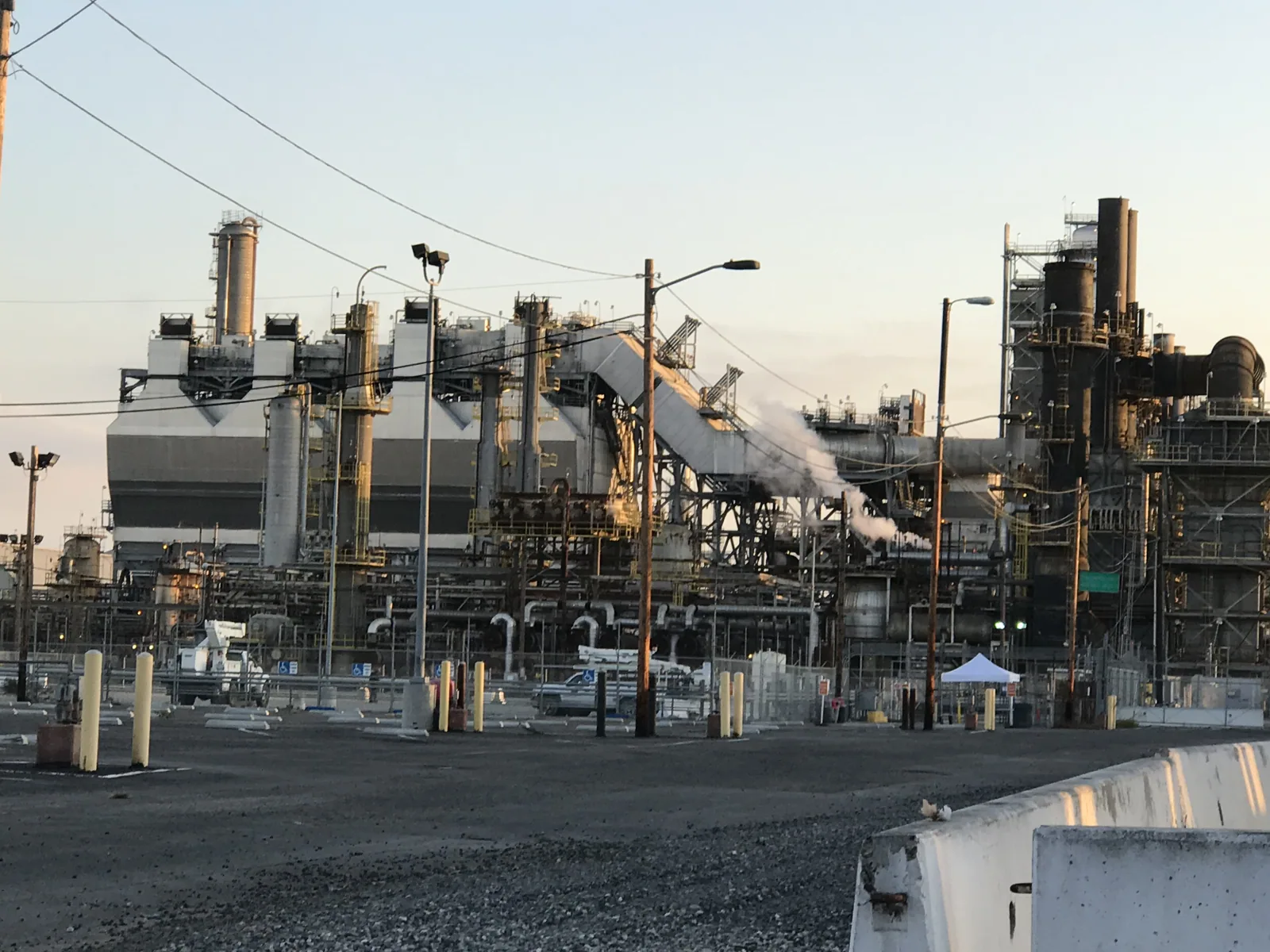
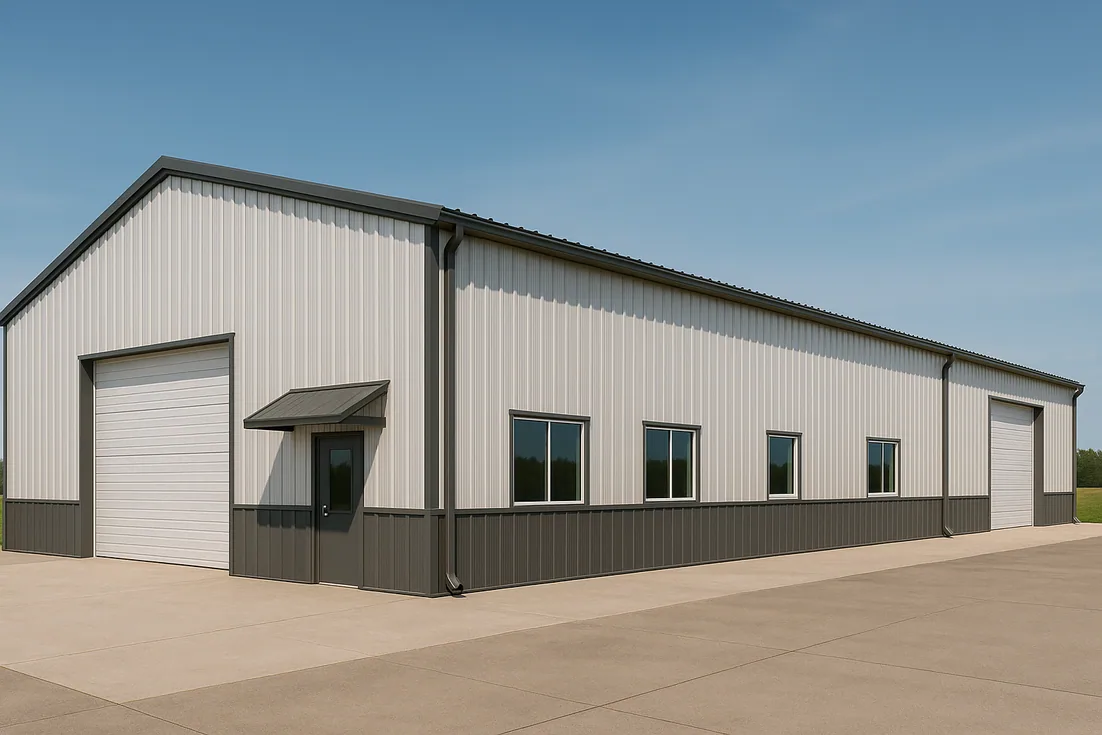
The Torrance Industrial Area 2021 Phase II announcement describes planned industrial development. At a subject industrial property, stored goods and operations below an opening determine protection priorities only after the site team confirms them. Work on warehouse roofs must relate the repair location to current building operations rather than converting development floor area into assumed roof quantities.
At the end of an emergency response the owner receives a single bundle: the arrival photographs, the dry-in photographs, the list of temporary materials, the identified or suspected cause, and the recommended permanent scope with a suggested order. If an insurance claim is open, the same bundle supports it. Our team can also assist with the claim documentation so the loss is stated in terms an adjuster can verify. The City places the Del Amo Fashion Center and financial center in West Torrance, useful local orientation that does not establish access or occupancy restrictions at another property.
When the roof is back to a stable, dry condition, the temporary work is replaced on a schedule the owner approves, and the closeout adds the permanent repair to the same file.
An emergency response should stabilize the active exposure while preserving evidence for a permanent decision. Confirm the person authorizing access, the affected interior area and any immediate safety restriction before crews climb. Photograph the opening and surrounding details first when conditions allow, then install protection with a defined boundary, attachment and reinspection plan. Tell the owner what the temporary work can withstand and what conditions require another call. Once stable, schedule a separate investigation to identify the receiving layers and permanent correction. The service record should distinguish emergency labor from future construction, list materials left in place and identify any area that remains exposed or inaccessible.
Accessible images of the opening and affected materials establish a useful starting point. We connect them to a roof location and record current conditions, while reported history remains identified separately. Interior observations should be obtained without exposing occupants to roof or electrical hazards. The resulting record supports further evaluation, but it does not determine when concealed damage started or decide the cause of loss.
Temporary protection has material, attachment and exposure limits. We describe the installed measure and recommend follow-up based on its actual condition. Changes in weather or visible movement can require reassessment sooner. The asset manager should keep responsibility for monitoring and permanent correction assigned. A completed provisional closure is a stabilization milestone, not a promise of performance through an unspecified future storm.
Written contacts, site access information and approval limits can reduce uncertainty during an urgent call. The authorization should distinguish immediate stabilization from investigation and permanent construction. We confirm the person able to approve the requested work and record limitations that affect response. A standing contact list remains useful only while the property team keeps it current and available outside normal office hours.
Warranty conditions depend on the issued document and the work performed. We preserve a description of temporary materials and alterations so the owner can meet relevant notice requirements. Permanent repairs receive their own material and participation review. The documentation helps explain the intervention, while coverage remains a separate decision under the actual terms rather than an automatic result of photographing the work.
The response begins with conditions that can be addressed safely, including coordination of interior protection where appropriate. Roof stabilization waits for suitable access and handling conditions, and other hazards may require qualified specialists. We explain the limitation and proposed next step to the authorized contact. The record keeps the inaccessible opening visible so a delayed roof intervention is not mistaken for completed stabilization.