Commercial Roofing Services

Local weather advisory
The National Weather Service has issued a coastal flood advisory covering Torrance. Heavy rain and drainage loading can expose roof leaks, blocked drains, and ponding water. This is a weather exposure advisory; it does not establish damage to a specific roof.
Do not access a roof during hazardous weather. Protect people first, avoid water near electrical equipment, and request roofing help when conditions permit.
National Weather Service · Updated Oct 27, 2026, 1:54 PM UTC
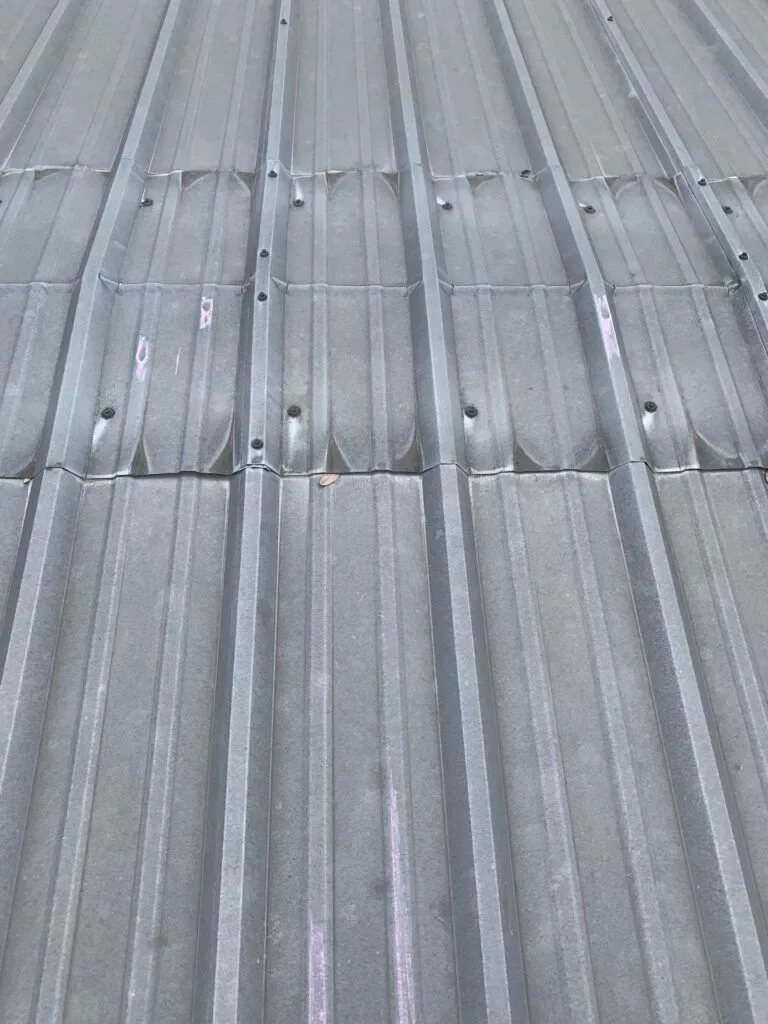
Document Torrance storm-related roof findings, stabilize exposed areas and define permanent repairs from examined materials, with clear construction limits.
A refinancing review interrupted by roof damage needs two decisions: how to protect the building now and what permanent construction the observed damage supports. For a Torrance, CA property, we locate exposed areas, evaluate safe access and distinguish emergency measures from the repair that must follow. The event date belongs with the condition report, but it does not explain every older defect found during the inspection.
Del Amo Fashion Center is a retail orientation point for planning around public access. Torrance Commerce Center has a dated industrial-development identity useful for locating another assignment. At either type of premises, the actual operator supplies affected rooms, protected activities and access restrictions before the roof response proceeds.
A loose sheet, displaced coping or opening above occupied space can require immediate protection. Our response is available through nights, weekends and holidays. The first assessment identifies hazards, the portions that can be reached safely and the temporary treatment appropriate to exposed construction. Building management retains interior safety decisions, including restrictions around electrical equipment and unstable ceilings. Staff should not enter a roof to collect evidence while its condition is uncertain.
Urgent exposure control is recorded by location, material and purpose. We retain views before disturbance where safe, then show the temporary condition after treatment. A stabilization measure may reduce further entry without resolving saturated layers or damaged attachments. Those questions remain assigned for permanent assessment instead of disappearing beneath a completed emergency service entry.
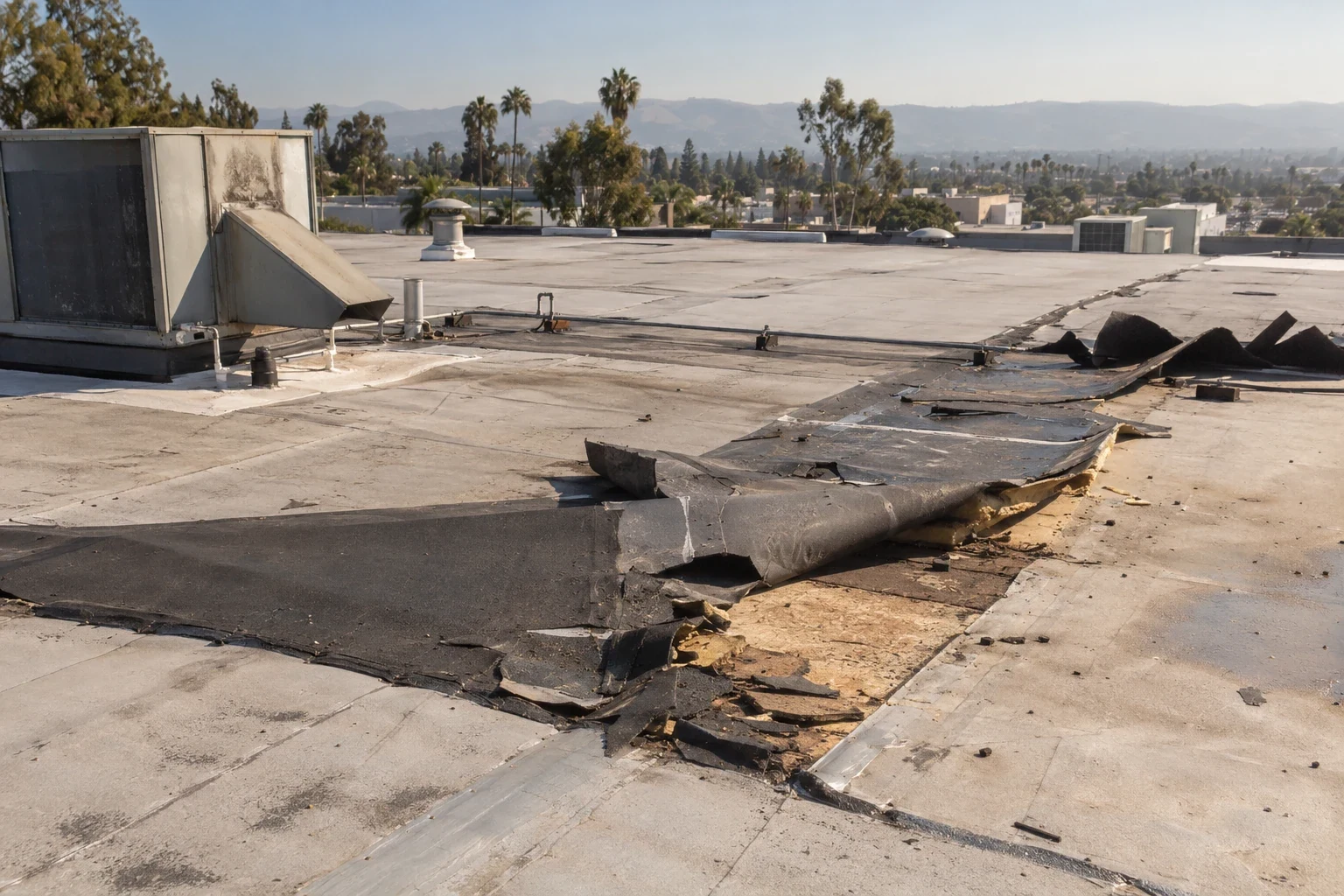
A fresh tear beside an older repair can involve more than one condition. We compare roof observations with the reported timing, available earlier inspections and the physical relationship between the opening and adjoining material. Describe loose attachment, displaced components and visible breaks directly. Where evidence cannot establish cause or timing, retain that limit rather than attribute the entire roof condition to the reported storm.
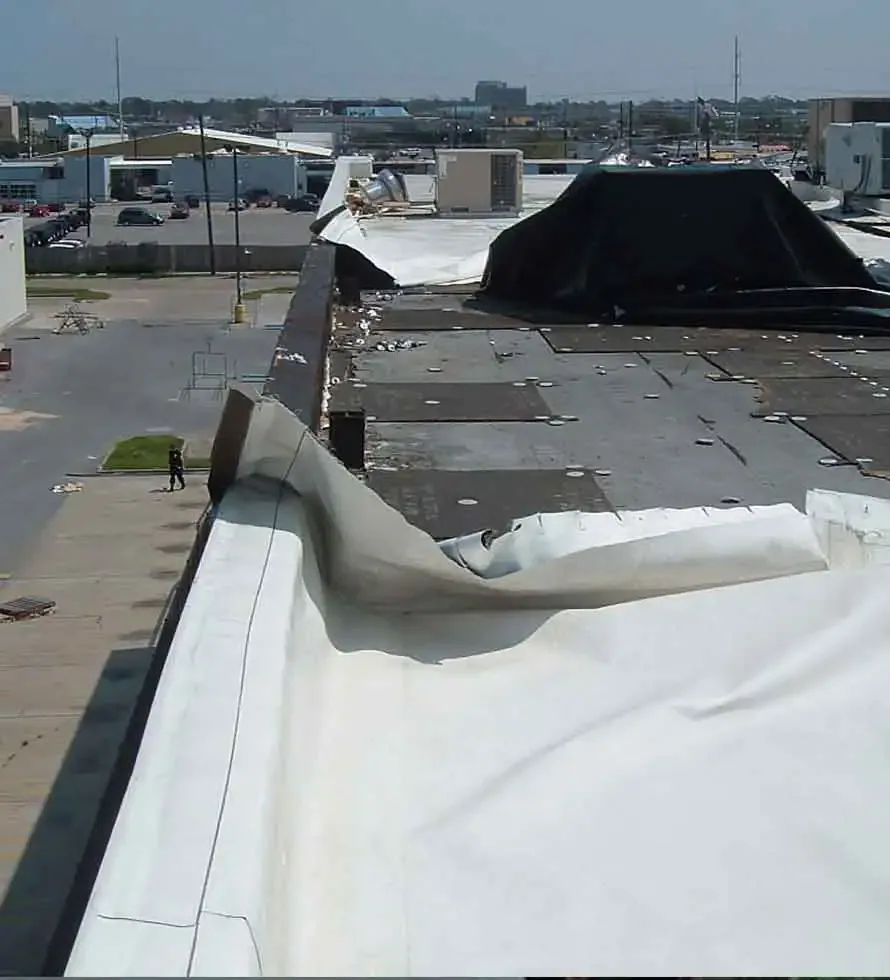
Displaced membrane and edge assessment addresses the construction affected by movement. We photograph wide views and close details, mark their positions and identify accessible receiving material. The survey file separates what was observed from what requires opening or specialist review. An asset manager can then explain why one item needs immediate repair while another predates the incident or remains unresolved without relying on a generalized event description.
Wet insulation can extend beyond the visible breach, while interior staining can occur away from the exterior opening. We map reported room locations, examine accessible roof details and select closer investigation suited to the assembly. Appropriate moisture screening helps identify suspect areas; confirmation and adequate coverage determine what the findings support. Any authorized opening includes a suitable closing method so investigation does not create another exposure.
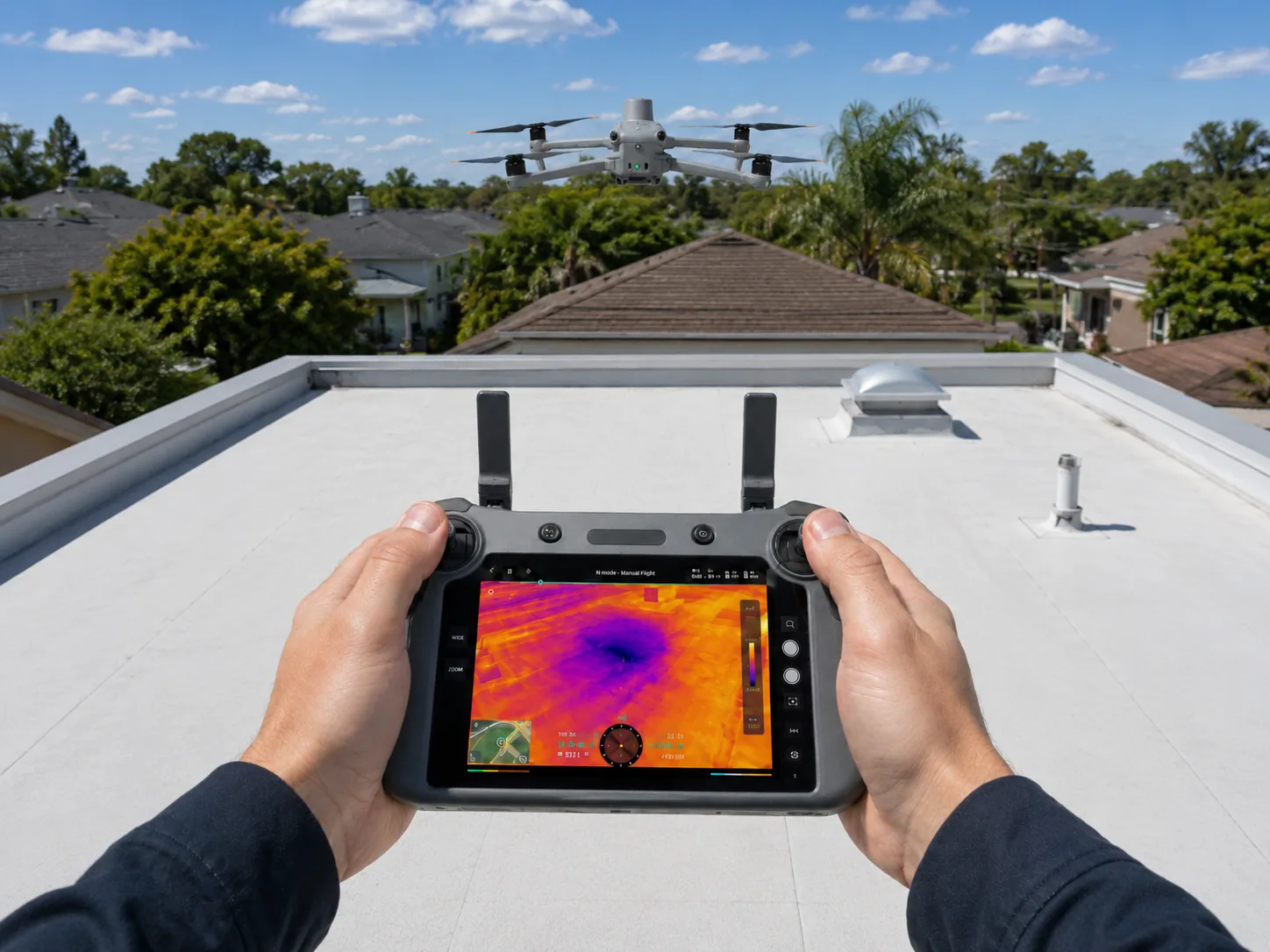
A targeted thermal assessment may assist where the roof and conditions permit useful interpretation. Retained layers need their own evidence before the permanent repair is sized. Where damaged material must be removed, include the receiving deck, insulation and new waterproofing connection. A membrane-only patch can leave the owner with saturated material below a closed surface, so removal limits stay connected to findings rather than the size of the first visible tear.
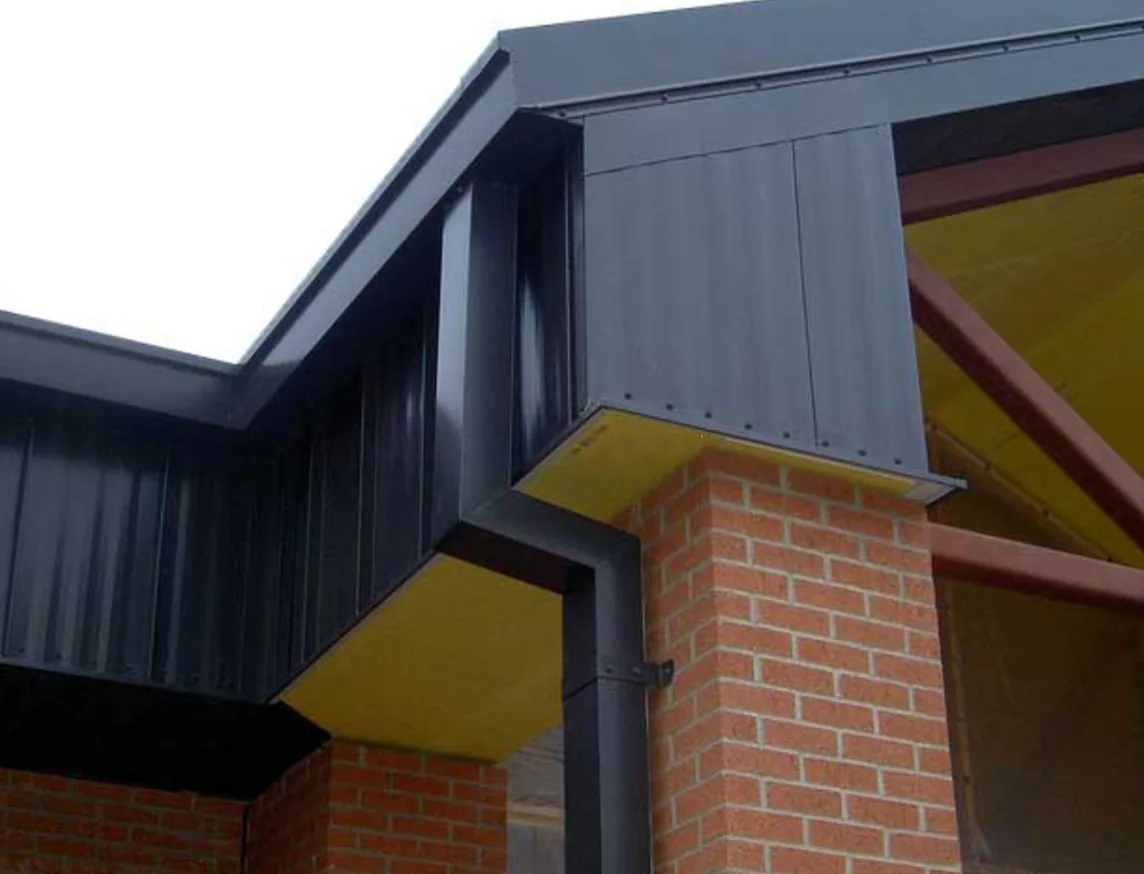
A detached edge can damage the membrane termination as well as the metal visible from the ground. We examine backing, attachment and the adjoining waterproofing before choosing a replacement profile. Permanent construction relies on applicable assembly and project requirements, with qualified design input where necessary. Reusing a damaged connection because it survived in one position is not a sufficient basis for the reconstructed detail.
Perimeter metal rebuilding includes preparation and receiving support. At a broken roof field, compatible membrane closure extends into sound surrounding material. We show each boundary and identify areas where closer examination could enlarge it. The asset manager receives a construction amount that accounts for removal, joining and finishing, with provisional concealed work distinguished from established field quantities.
A property in the Hawthorne Boulevard commercial corridor may require protection of pedestrian paths while material is lifted or loose debris is removed. Obtain the specific premises' opening periods, receiving movements and equipment restrictions. A district name does not supply those arrangements. We describe the access method, protected areas and communication route for changes during the work.
The Torrance Commerce Center development account provides industrial context without establishing today's occupants or roofing. For the assigned industrial building, confirm goods movement, exhaust operations and the locations that must remain protected. Temporary openings and tear-off quantities should fit the exposure the crew can close within the planned operation. Repeated handling or short permitted work periods can change the amount and duration, even where the permanent repair footprint is limited.
Finished images show the new details at the positions used in the initial assessment. Retain receiving-surface preparation, materials and approved scope changes with the actual checks performed. A controlled test has an identified area and method; it does not establish the performance of every inaccessible joint. Remove or assign remaining temporary treatments so the next reader can distinguish completed construction from continuing protection.
An updated condition baseline records the repair boundary and other roof findings that remain. Separate evidence supplied for insurance review from the insurer's coverage or settlement decision. The manager needs both the completed roofing and any continuing assessment clearly identified. A later event or renewed leakage receives fresh dates and observations compared with that baseline, rather than assuming the earlier storm repair explains all subsequent water entry.
After storm damage, document the observed condition and date before temporary measures alter the roof. Separate displaced edge metal, punctures, open seams and interior reports, and avoid assigning every finding to one event without supporting evidence. Stabilize exposed areas with a defined method and reinspection plan, then investigate the affected assembly for wet insulation or deck damage. Keep prior deterioration and inaccessible sections visible in the record. Permanent work should include complete transitions to sound material and a plan for restoring drainage. Provide dated photos, zone references and the limits of the survey; causation, coverage and claim decisions belong to the appropriate reviewers.
Include relevant older conditions and distinguish them from observed incident damage. We recommend retaining earlier inspection views where locations can be matched. Concealing pre-existing deterioration can make the proposed repair misleading, while assigning it automatically to the recent event exceeds what the roof observations establish.
Necessary exposure control and safety arrangements can be identified independently from the permanent construction decision. Keep dated findings, emergency materials and the reason for intervention together. Confirm required communications with the responsible insurance participants; roofing stabilization does not decide coverage or acceptance of a larger amount.
Examine surrounding attachment and moisture effects before using the tear dimensions as the construction quantity. We recommend suitable confirmation where concealed layers influence retention. The permanent scope should identify the sound receiving boundary and explain any allowance that remains contingent on opening the assembly.
Retain the initial condition, temporary intervention and completed construction under recognizable positions. Include materials, accepted changes and actual testing limits. Assign unrelated defects and unresolved investigations separately so a later review can distinguish the corrected event damage from another roof concern requiring its own decision.