Roof Systems

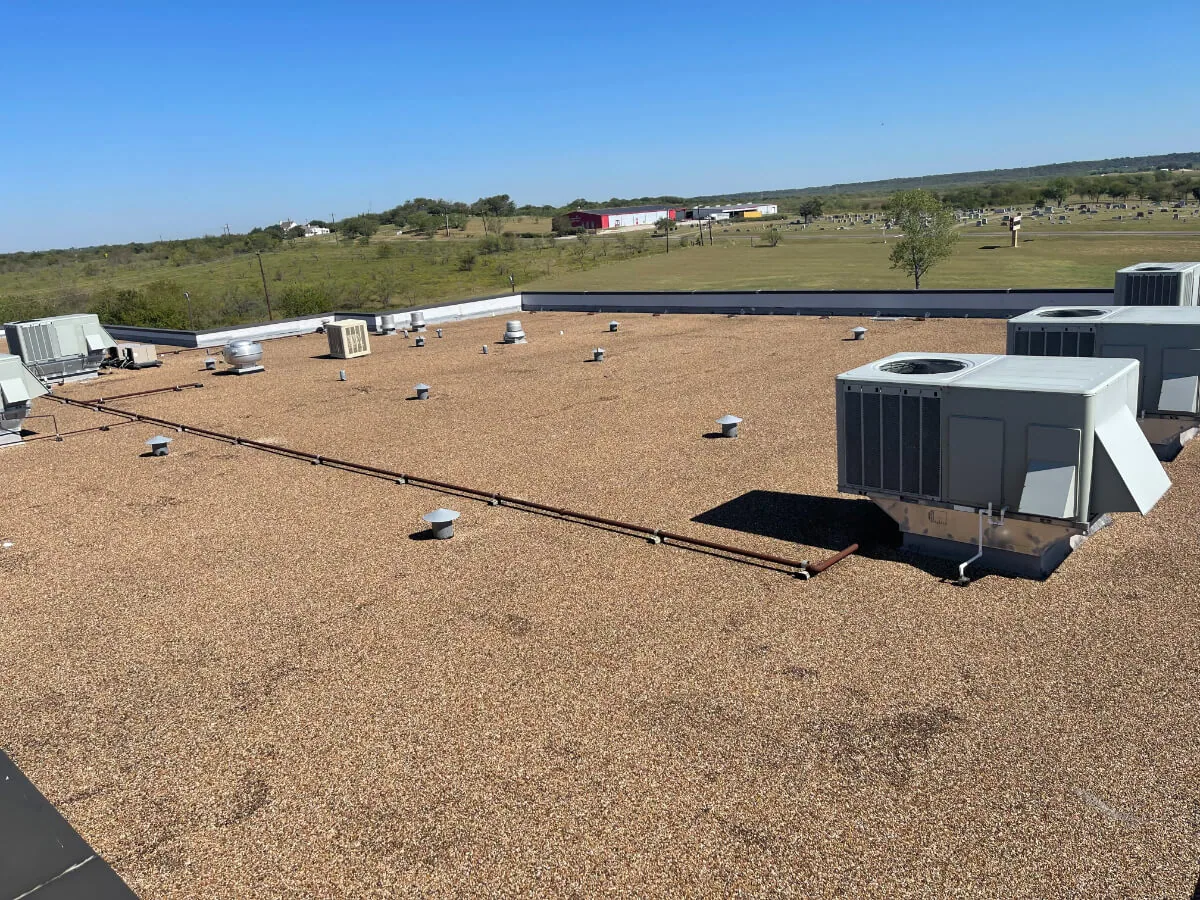
Assess built-up roofing in Torrance with located ply findings, moisture investigation, surfacing decisions and complete construction scopes.
An acquisition review of a built-up roof in Torrance, CA needs the allowance separated into surfacing, waterproofing plies and the material supporting them. Those parts can have different conditions. Commercial Roofing Torrance establishes accessible construction first, then explains which investigation or repair would support the asset manager's decision. A roof described simply as gravel-covered leaves too much unresolved for a defensible scope.
Del Amo Fashion Center is a local retail reference for the subject property's orientation. Its identity provides no evidence about another roof's plies. We establish the actual building, access and assignment before a retail operating restriction or material assumption changes the acquisition discussion.
Built-up roofing uses multiple reinforced layers joined with bituminous material, with a protective finish chosen for the assembly. Loose aggregate, embedded aggregate and coated surfaces provide different inspection access. We describe what can be seen through the finish and where additional preparation is needed to examine the waterproofing itself.
A loose stone at the surface is not proof of a failed ply. Conversely, an apparently even aggregate cover can conceal deterioration or previous patching. We establish the affected location before moving surfacing, use an appropriate controlled examination and plan restoration of the disturbed area. An unexamined section retains that limitation in the report.
The comparison with modified bitumen sheet assemblies should distinguish reinforcement, application and detail construction. Both are bituminous roofing approaches, but that relationship does not make repair materials or installation instructions interchangeable.
Water may travel between plies or through insulation before reaching an interior opening. We obtain leak timing, affected room references and relevant equipment activity, then compare those circumstances with accessible roof details. The entry investigation can identify more than one task where enclosure and equipment conditions intersect.
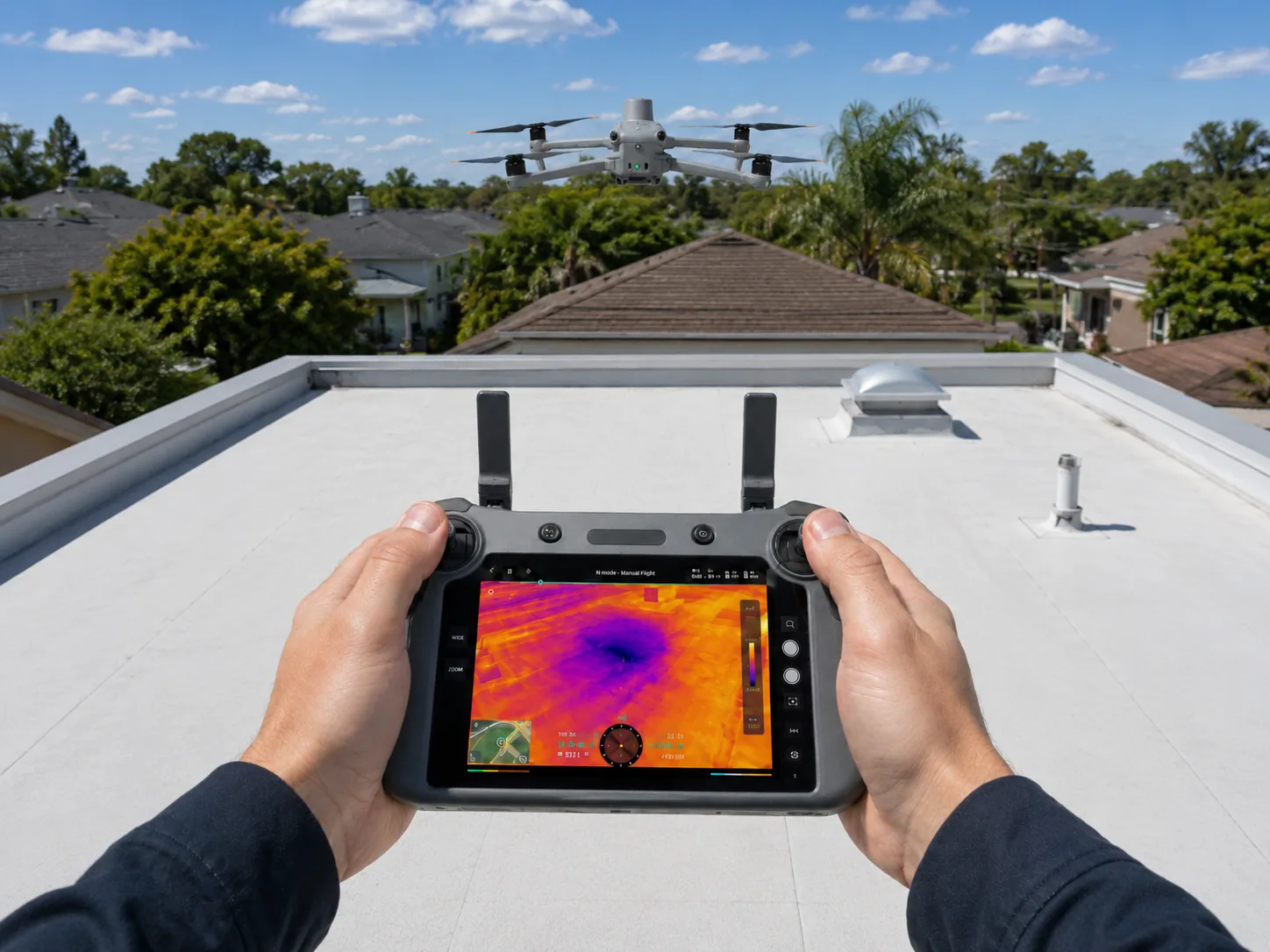
With thermal moisture investigation, surface and assembly characteristics affect interpretation. Appropriate confirmation and coverage are required for the decision under consideration. A localized sample establishes its position; it does not establish that every layer across an entire building is dry.
Retained wet insulation and unsuitable supporting material change the repair boundary. We show the removal supported by findings and identify another useful examination where a broader quantity remains uncertain. This distinction helps the asset manager compare alternatives without treating an incomplete investigation as a completed roof-wide condition assessment.
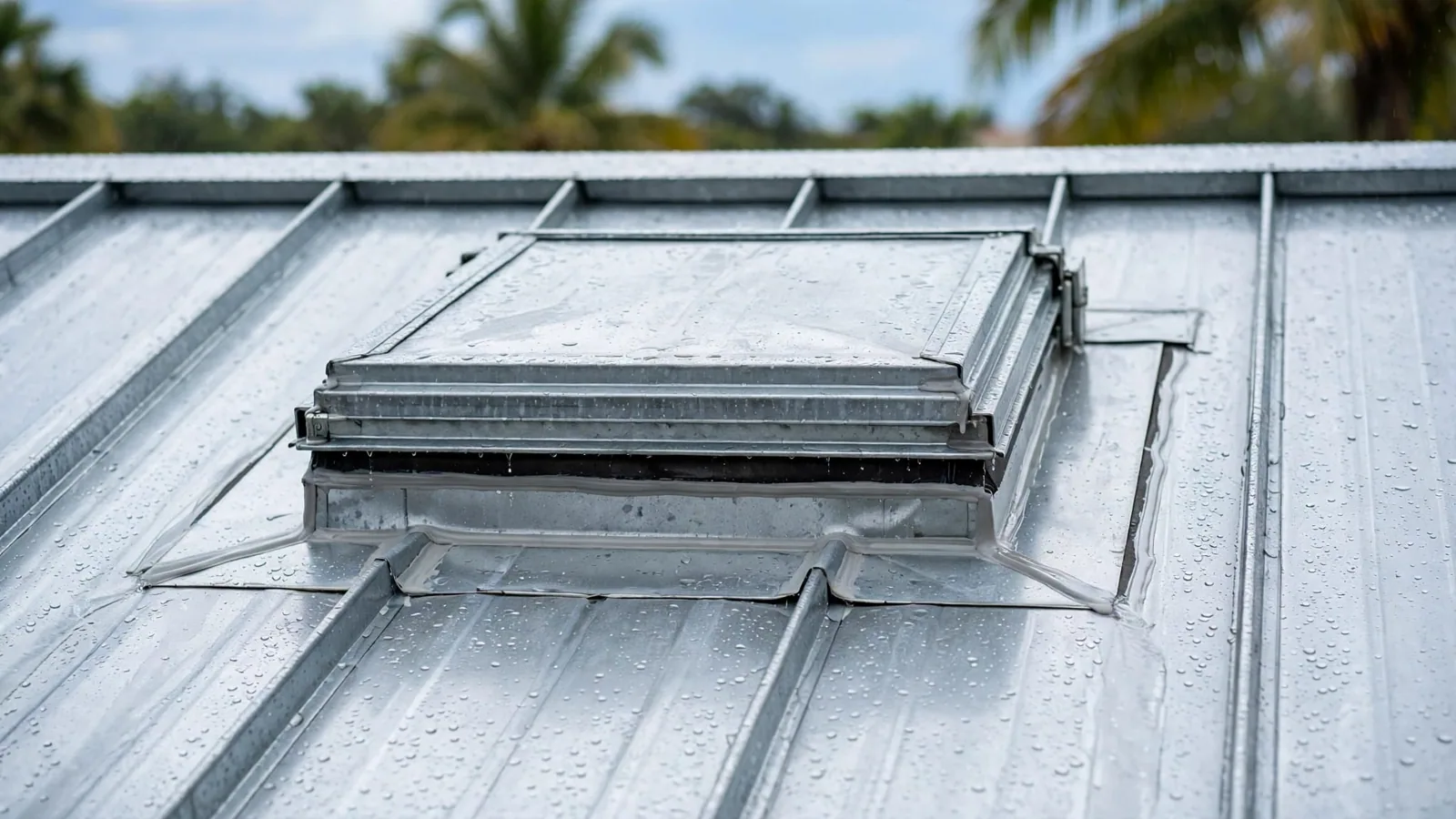
A vertical transition carries the waterproofing from the field to a curb, wall or edge. We examine reinforcement, accessible securement and the upper termination. Split material at a turn can reflect a detail that needs reconstruction, while an isolated surface blemish may need a different treatment. Photographs show the adjoining field so the reader can locate each recommendation.
Plan flashing reconstruction at the affected junction with compatible receiving material. A new field ply cannot compensate for a deficient upper connection, and a line of sealant cannot establish adequate backing. The scope assigns removal and receiver repairs before describing the finished transition.
Expansion joints and changes between roof portions need particular attention. Their movement and supporting arrangement influence the correct detail. Required design participation remains ahead of procurement, avoiding a field change that could affect the surrounding assembly or the intended daily closure.
An exposed finish may need renewal while the underlying plies remain serviceable. That option requires examination of the receiving surface, compatible materials and the existing detail condition. It cannot be selected from surface appearance alone. We identify cleaning, removal of unsuitable treatment and repairs that must precede a new finish.
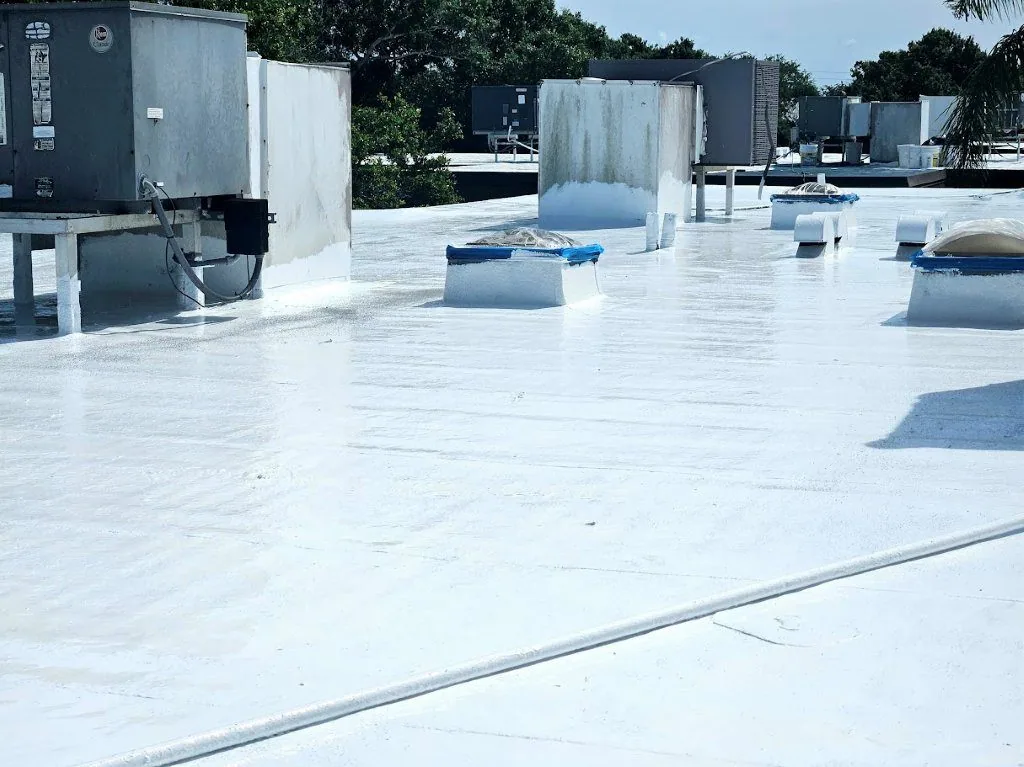
Where a coating is considered, silicone restoration eligibility receives its own adhesion and substrate assessment. The coating amount must include the supported repairs; coating a split or wet receiving assembly does not resolve those conditions. Other construction may be preferable where preparation would leave inadequate material to retain.
A replacement price should likewise identify the complete work. Disposal, insulation, drainage transitions and perimeter reconstruction can change the cost more than the choice of exposed finish. The recommendation shows those dependencies rather than offering a material-only comparison between an established scope and an unfinished alternative.
Torrance Commerce Center has a dated account of industrial development at the former Toyota campus. We use that history to orient a local industrial discussion, then obtain the operating requirements of the specific premises. A project announcement does not identify its present roofing or another building's construction.
For Torrance Industrial Area, the authorized contact establishes receiving movements, tenant restrictions and material routes. Application equipment, bituminous products and removed surfacing require task-specific staging and protection. We review air intakes and sensitive interior uses before a method is included in the work sequence.
Daily exposed limits must correspond to portions that can be closed correctly. Restricted hours can require repeated mobilization or smaller completed areas, which belong in the allowance. Applicable project review and required qualified inputs remain tied to the actual reroof or repair rather than the industrial identity of the district.
Photograph preparation before the new plies conceal it. Retain the installed sequence, materials and actual repair boundaries with useful dimensions and finished views. Those records help explain what a line item purchased and why a changed condition required additional work. A final photograph of the surfacing cannot provide that same layer information.
Acquisition roof assessment distinguishes supported findings from unexamined portions and another participant's remaining task. The resulting file can inform a transaction discussion while buyer, lender and underwriter acceptance retain their own requirements. A condition grade should explain its basis rather than imply an assured remaining term.
Care planning keeps outlets accessible and establishes appropriate routes for equipment maintenance. New service activity should be recorded where it changes a finished detail. A subsequent review compares fresh observations with completed construction and intervening work, preserving a useful baseline as the building's operations change.
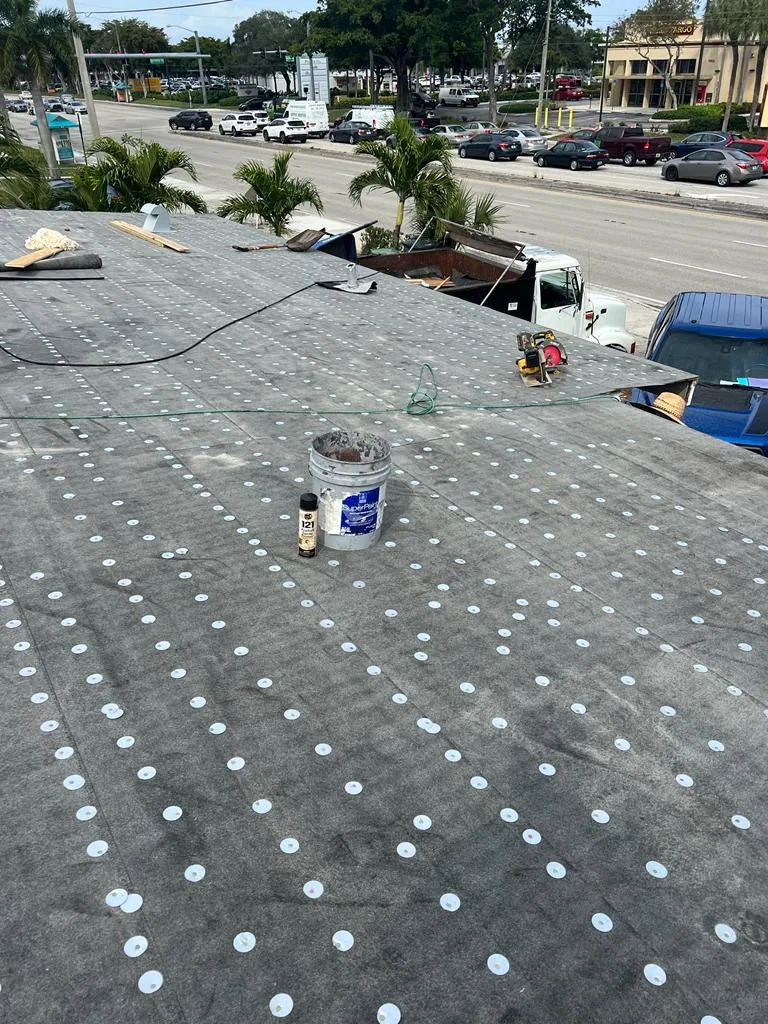
A built-up roof should be reviewed by layer and by the condition of the felts, surfacing, flashing and deck beneath. Identify whether the proposed work retains the existing assembly or removes it to a defined boundary. At a tie-in, establish how new plies connect with sound existing material and how the surface will be protected until the repair is complete. Where hot work is contemplated, confirm fire-watch responsibilities, combustible conditions and facility procedures before mobilization. Record exposed layers and any wet or deteriorated material found during removal. This evidence supports the selected repair or replacement scope without assuming every area of the roof has the same condition.
First distinguish displaced surfacing from condition of the waterproofing plies and supporting layers. We locate accessible concerns and identify appropriate examination where aggregate limits visibility. Replacement needs a supported assembly reason rather than the presence of loose material alone.
A preliminary allowance can identify its assumptions, but restoration eligibility needs the retained construction assessed. Confirm moisture, surface suitability and compatible repairs before treating coating as a complete alternative. Otherwise necessary removal and detail rebuilding may be absent from the comparison.
Read the exact position, layers observed and reason for the opening. Relate the sample to the investigation coverage and the pending decision. It supplies information about examined construction without independently proving condition throughout every unexamined roof portion.
The closeout should identify removed material, preparation, compatible replacement layers and the finished connection to sound roofing. We preserve those construction references before surfacing obscures them. A photograph of a darker area alone does not explain the waterproofing completed.