Roofing Manufacturers
Assess Johns Manville roofing in Torrance through layer examination, drainage levels, insulation retention and a measured repair or replacement recommendation.
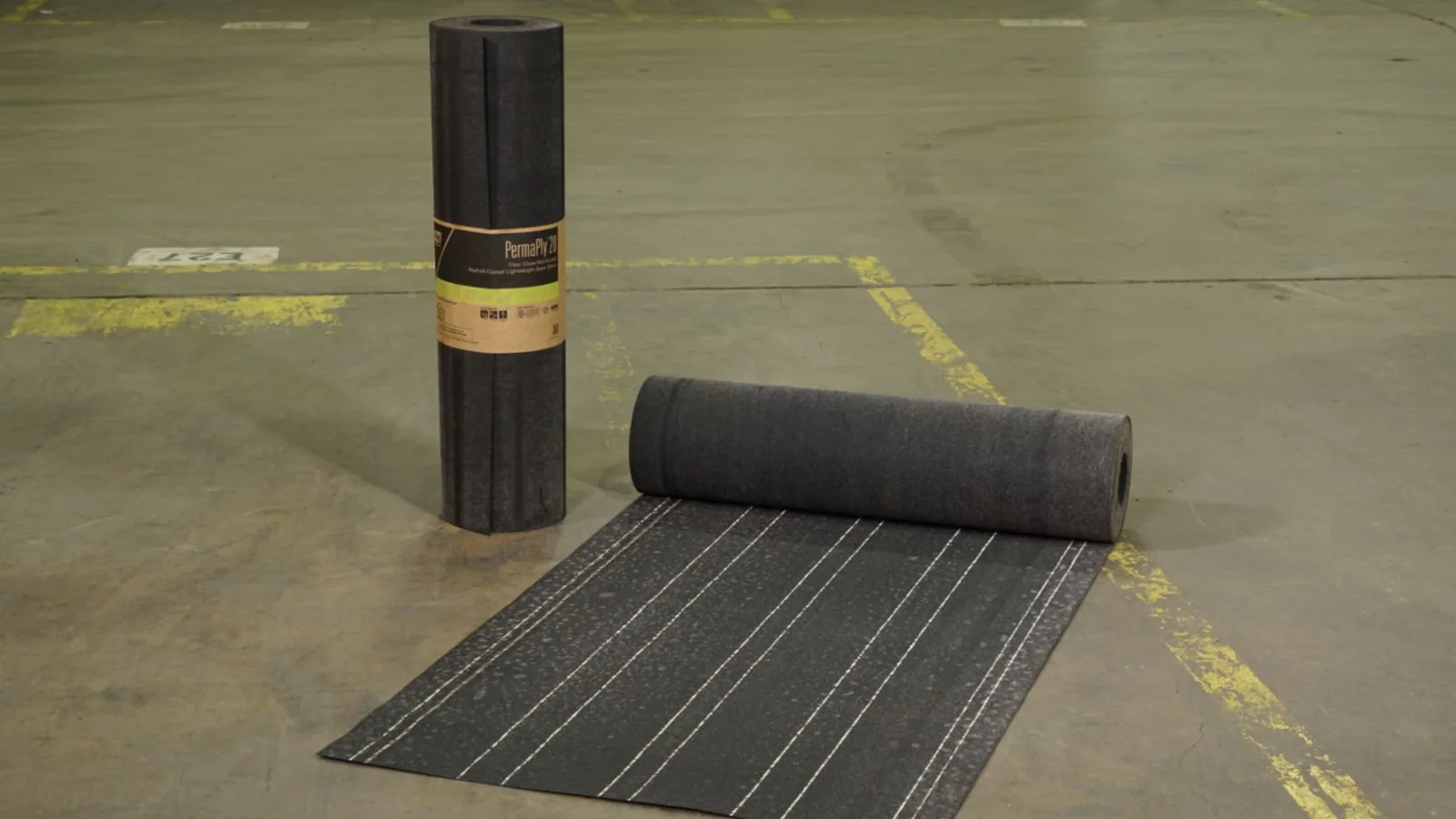
An acquisition comparison between a Johns Manville multi-ply roof and a single-ply replacement in Torrance, CA should begin with the layers that can actually remain. Johns Manville supplies both single-ply and bituminous commercial systems. Those product families provide different construction options, but the building's deck, insulation and drainage determine whether the proposed option has a suitable starting condition. We turn that examination into measured retention and removal decisions rather than selecting a roof from its surface appearance.
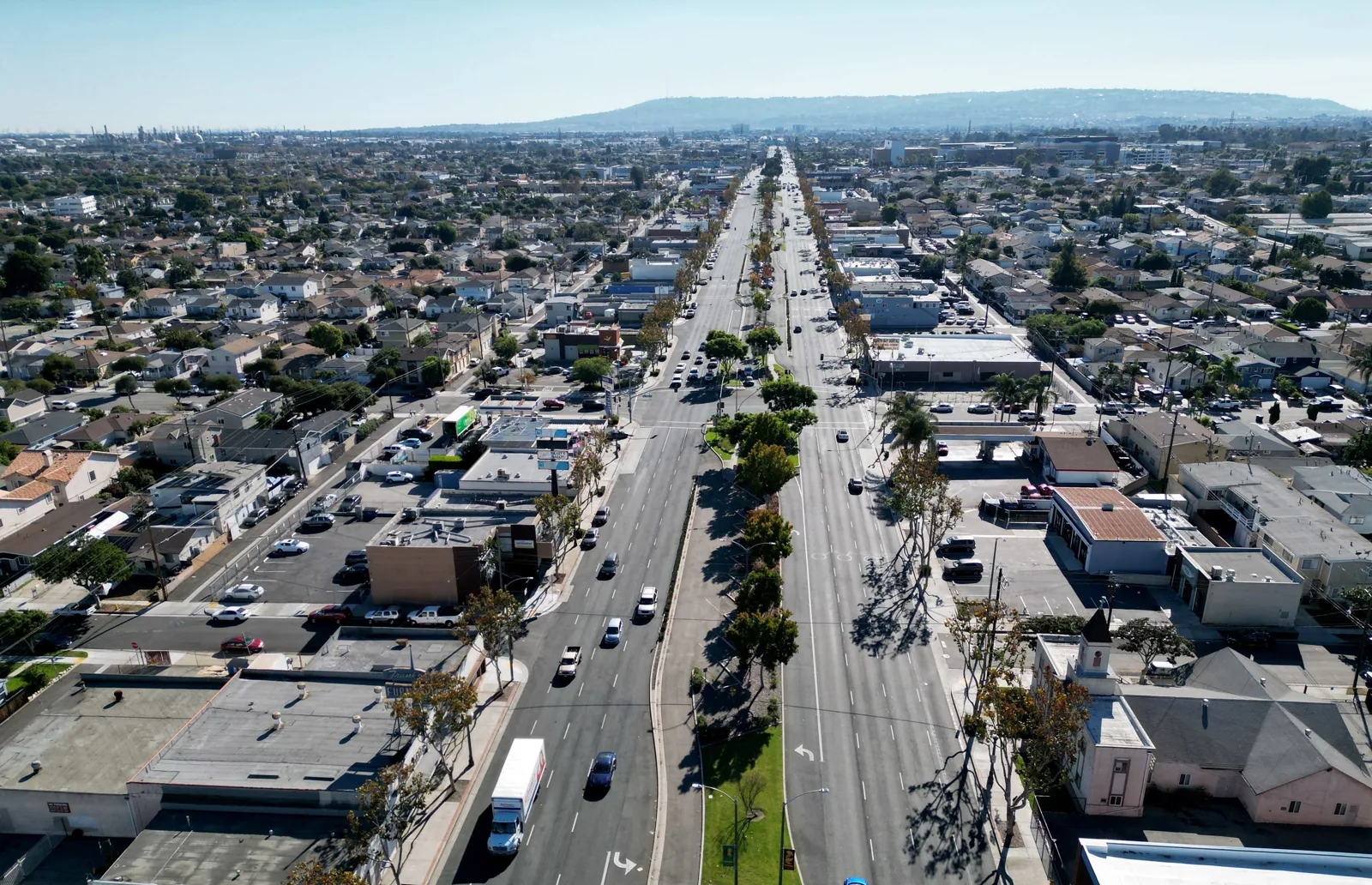
Del Amo Fashion Center identifies the Carson Street retail setting. An acquisition of a nearby commercial property needs its own roof baseline, including the relationship between tenant equipment and the layer changes proposed. A raised insulation profile can affect more than the field surface: drains, curbs, wall terminations and door thresholds may all need connected adjustments.
A blister in a bituminous roof can involve separation within the membrane or a problem below it. We locate the feature, examine surrounding laps and identify where a controlled opening would clarify the layer arrangement. The survey file records what the opening reveals, its limits and its completed closure. An isolated opening describes that location; broader conclusions need enough examination to support the proposed boundary.
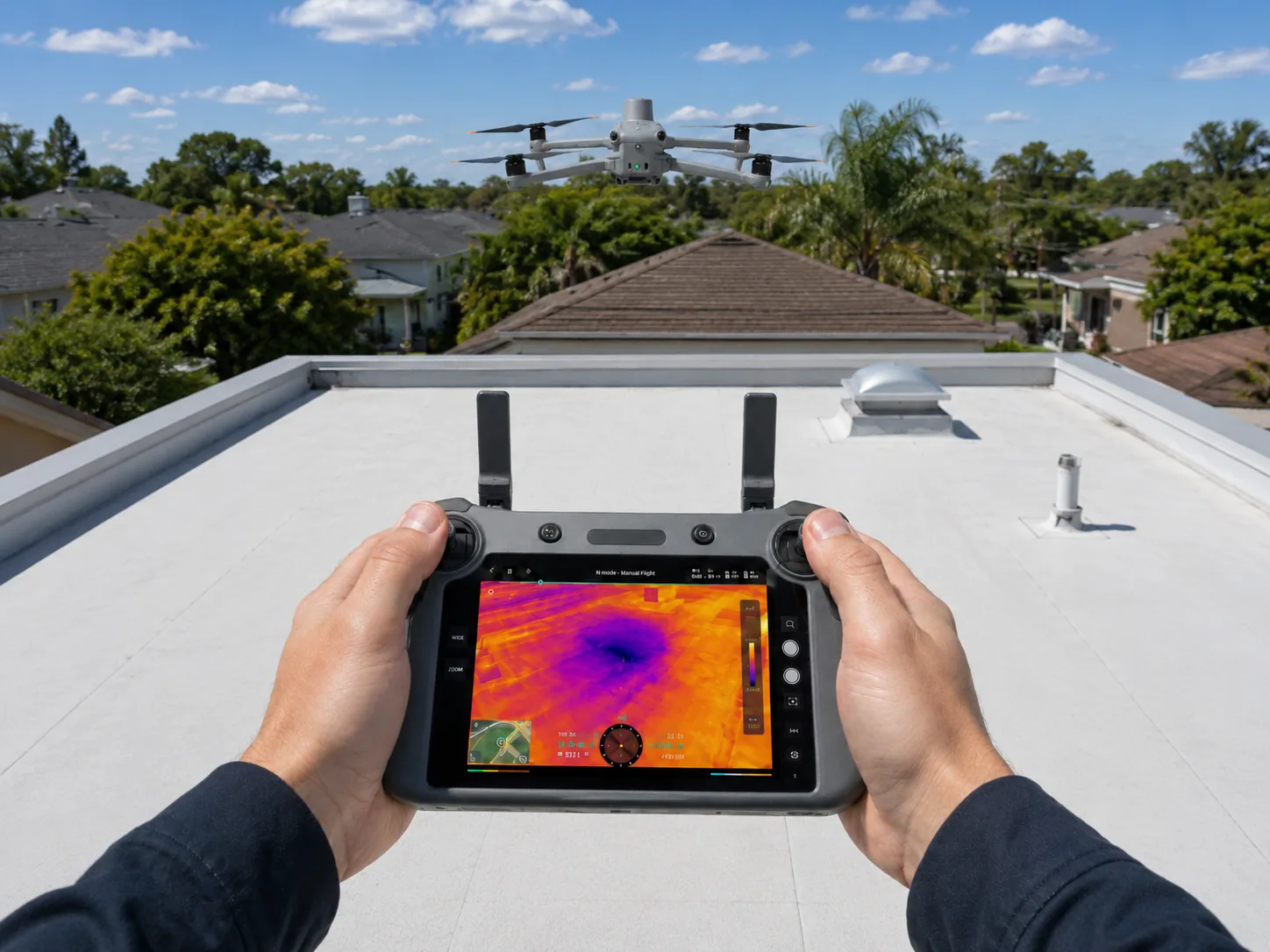
We assess whether accessible insulation is firm, whether the deck provides a sound receiver and whether moisture requires removal. Thermal observations used to select roof openings assist the investigation without replacing direct confirmation. A condition grade should explain the tested construction and remaining questions instead of presenting a rating that conceals the basis for retention.
Where the proposed work changes from a multi-ply system to single-ply, separation and compatibility requirements need specific review. The old top layer is not automatically a suitable bonding surface simply because it remains attached.
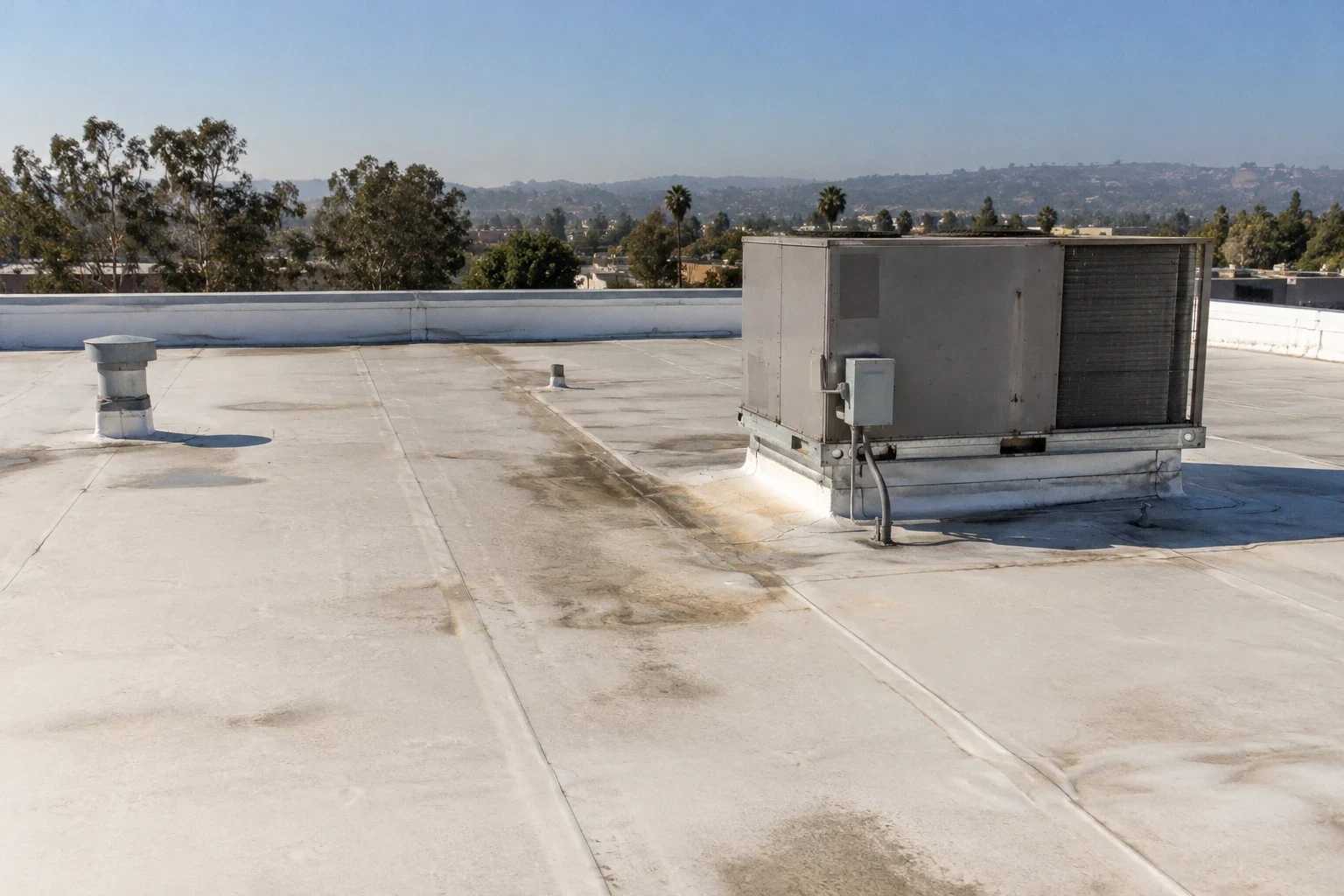
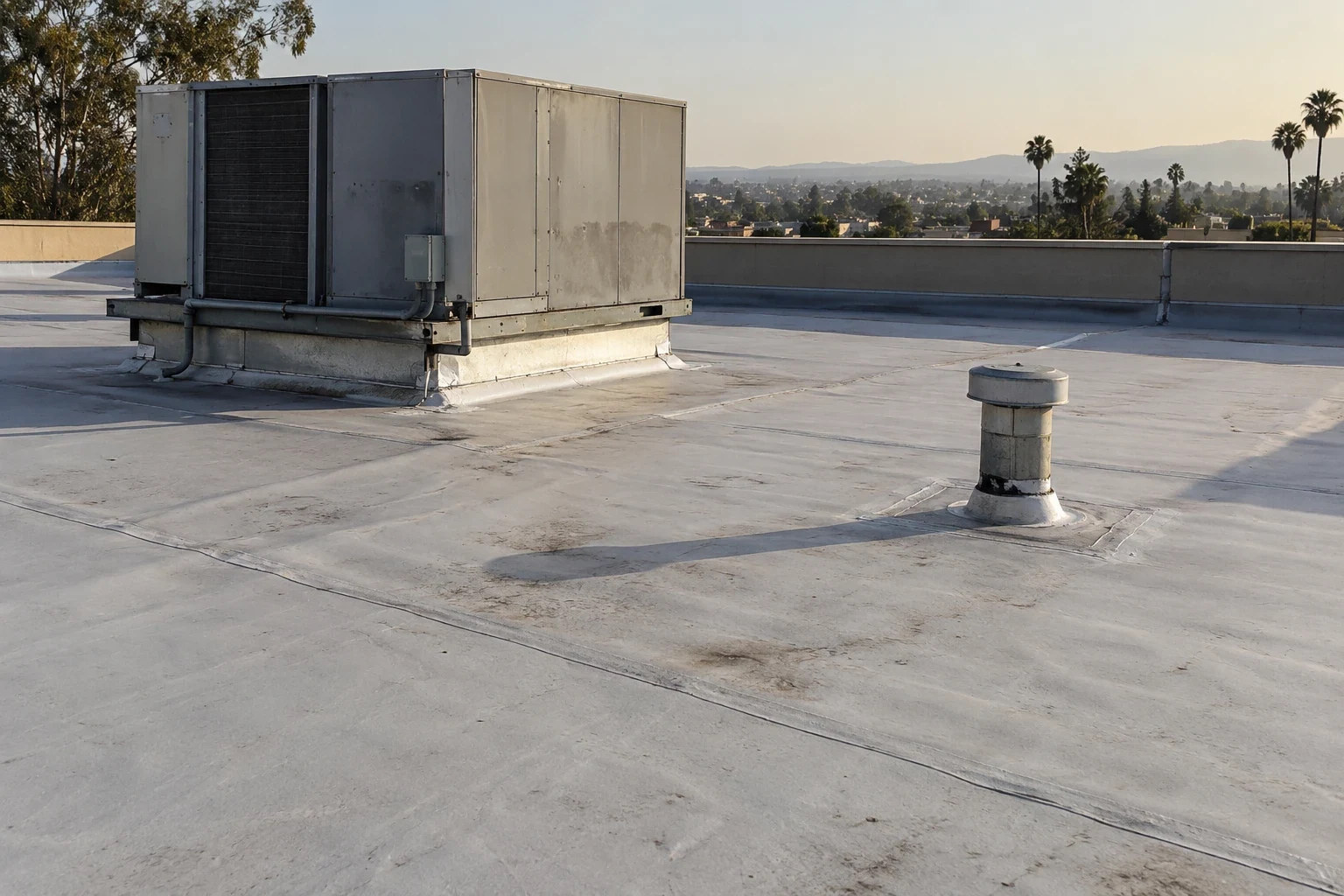
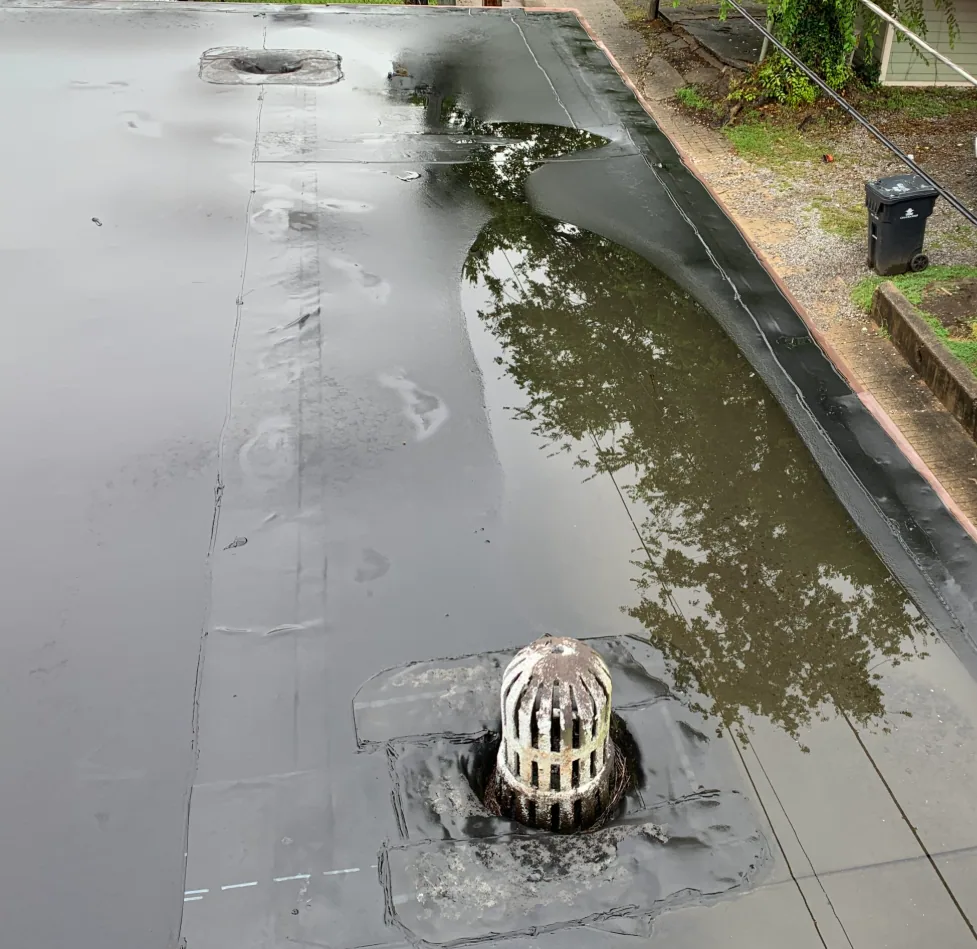
An outlet that sits above the adjacent insulation can retain water after a new membrane is installed. We measure the receiving level, examine the drain bowl and compare the local surface with the approach from surrounding roof areas. A drain cleaning operation and a level correction solve different problems. Both need to be described if the observed condition calls for them.
Insulation and cover-board layout changes can improve the transition to an outlet, but their height also affects nearby flashing. We trace the new profile through curbs and wall junctions before setting quantities. The taper arrangement must lead to a functioning discharge, with plumbing work assigned where the receiving connection or downstream system requires attention.
At an industrial asset in the Torrance Commerce Center area, delivery and equipment access should be coordinated with these detail changes. The subject building's measured drainage route supplies the design information, rather than a general description of industrial development.
Drain bowl dimensions also matter when a replacement clamping arrangement is proposed. We record the accessible receiver so membrane and plumbing components can be coordinated before the old detail is removed.
A multi-ply assembly may require a different work sequence from a mechanically attached single-ply roof. We review the selected installation method, substrate preparation and controls for the actual building. Heat use, adhesive handling and tenant ventilation require project-specific planning. Material family alone cannot settle whether a particular operation is suitable beside an intake or above an occupied room.
The comparison identifies what remains, what is removed and how the new assembly is secured. An owner considering Soprema bituminous and liquid-applied construction receives a comparison of connected details rather than a claim that all multi-ply products behave alike. Holcim Elevate single-ply assemblies require their own attachment and transition review if that option enters the budget.
Code and energy requirements depend on the accepted application basis and actual alteration scope. We coordinate the required design review and applicable compliance approach without applying a single reflectivity or roof-area rule to every Johns Manville proposal.
An isolated depression beside one outlet may be corrected without replacing an entire roof, provided the adjacent construction can receive the work. We examine the membrane and insulation outside the affected area, then show the proposed demolition boundary on the drawing. Retained material must allow dependable transitions to the reconstructed section. A small removal quantity is not a useful saving if it forces the new edge onto unsuitable support.
Correction of persistent water retention includes the receiving level and discharge route. Where wider moisture or deterioration is confirmed, the replacement recommendation describes why localized work would leave unresolved construction. These alternatives should carry different expected maintenance tasks and investigation needs so the asset manager can compare the actual decision.
Retail property roof work along Hawthorne Boulevard also needs the owner's access and protection arrangements. Removal bins, lifting operations and temporary closures have to fit the subject property without obstructing normal tenant routes.
A completed roof should leave a clear description of retained layers and newly installed components. We photograph exposed receivers, drainage adjustments and membrane transitions, then relate them to the as-built drawing. Later facility work can use that information to plan a curb alteration without guessing which layers lie beneath the surface. The closeout package also identifies outlets that need routine cleaning and any plumbing work completed by others.
Final walk sign-off confirms the roofing work examined at completion. Issued warranty requirements, registration status and recipient document requests receive separate attention where they apply. An acquisition team can distinguish the work finished from the assumptions still needing investigation, rather than treating a new top surface as proof that every concealed condition was renewed.
Before relying on a Johns Manville product reference, match the material to the layer being inspected. A roof can include products from different installation periods, and a brand name on one component does not establish the full assembly. Document accessible membrane markings, insulation type and prior treatment separately. If moisture or attachment testing is proposed, define its locations and the decision that results will support. When a detail is repaired, record the preparation and compatible transition used at the actual boundary. Keep product literature with the specific project record rather than treating a general data sheet as proof of installed conditions or warranty status.
The installed membrane family and its receiving condition determine material selection. We identify the layers and examine the affected detail before choosing a compatible repair. Single-ply and bituminous roofs require different preparations and connections. The recommendation states the identified construction and any examination needed to remove uncertainty.
New insulation can alter the relative levels at drains and curbs. We compare the proposed profile with the receiving outlet before selecting the layout. A sump, tapered transition or connected drain adjustment may be required. These items belong in the construction scope before purchasing a field membrane.
Name the examined layers, show where they were assessed and describe the conditions required for retention. We separate confirmed removal from investigation-dependent quantities. That lets the acquisition team understand the construction behind the allowance and the possible effect of additional findings without assigning remaining service life from a surface view alone.
Suitable adjacent membrane and support are necessary for that connection. We assess the receiving laps and underlying construction outside the depression, not merely the drain opening. Where they can remain, the scope explains the transition; where they cannot, the removal boundary expands to material capable of supporting a dependable repair.