Service Areas

Local weather advisory
The National Weather Service has issued a coastal flood advisory covering Torrance. Heavy rain and drainage loading can expose roof leaks, blocked drains, and ponding water. This is a weather exposure advisory; it does not establish damage to a specific roof.
Do not access a roof during hazardous weather. Protect people first, avoid water near electrical equipment, and request roofing help when conditions permit.
National Weather Service · Updated Oct 27, 2026, 1:54 PM UTC
Plan Lomita commercial roof drainage repairs from measured outlets and water paths. We document retained details, compare corrections and explain the work.
A drainage repair allowance for a Lomita, CA commercial property needs the roof's water route measured before an outlet is changed. We inspect low-slope and metal roofs, repair drainage and flashing connections, and undertake renewal where the examined system requires it. The asset manager receives located findings that explain whether the proposal clears an obstruction, changes a roof detail or needs plumbing and design participation. Those are different tasks with different effects on the building.
Pacific Coast Highway, Lomita Boulevard and Narbonne Avenue are commercial corridors in Lomita. They help identify the assignment and plan arrival, while the subject building establishes the actual outlet arrangement and access. We examine that construction before relating retained water to a particular cause. Drain bowl flashing and any depression along its receiving route are recorded as separate items because they may need different corrections.
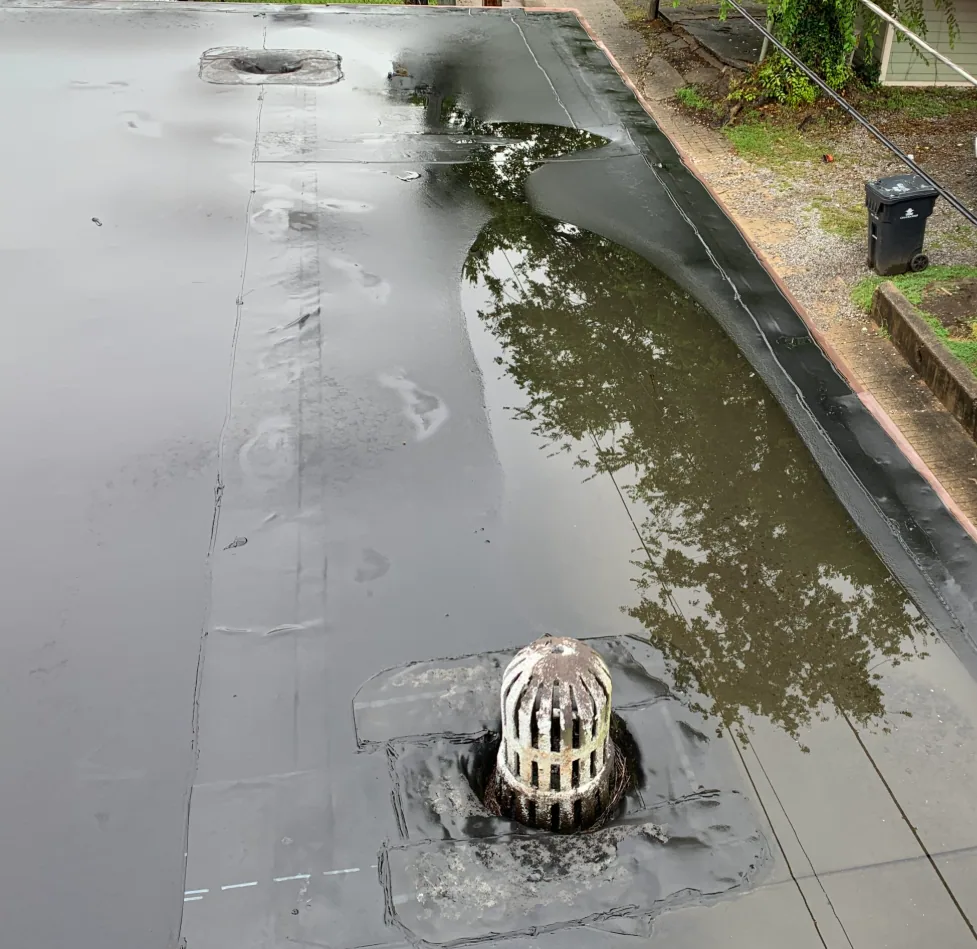
Water can remain behind a raised seam, a poorly placed support or a depression that a clean outlet does not correct. We inspect the path from the affected area to its receiving drain or scupper, record visible impediments and compare the route with interior leak locations. The survey file contains a broad view for orientation and closer photos of the transitions. Retained-water repairs are proposed for the observed roof condition rather than for the mere presence of a ceiling mark.
We distinguish debris removal from changes to slope or outlet construction. A maintenance visit may clear a blocked path, but a depression can require a different assembly correction. Measuring the affected route helps determine which question needs another participant's review. The resulting recommendation gives the asset manager a practical sequence: restore accessible flow, assess the remaining obstruction and design any required alteration to the water path.
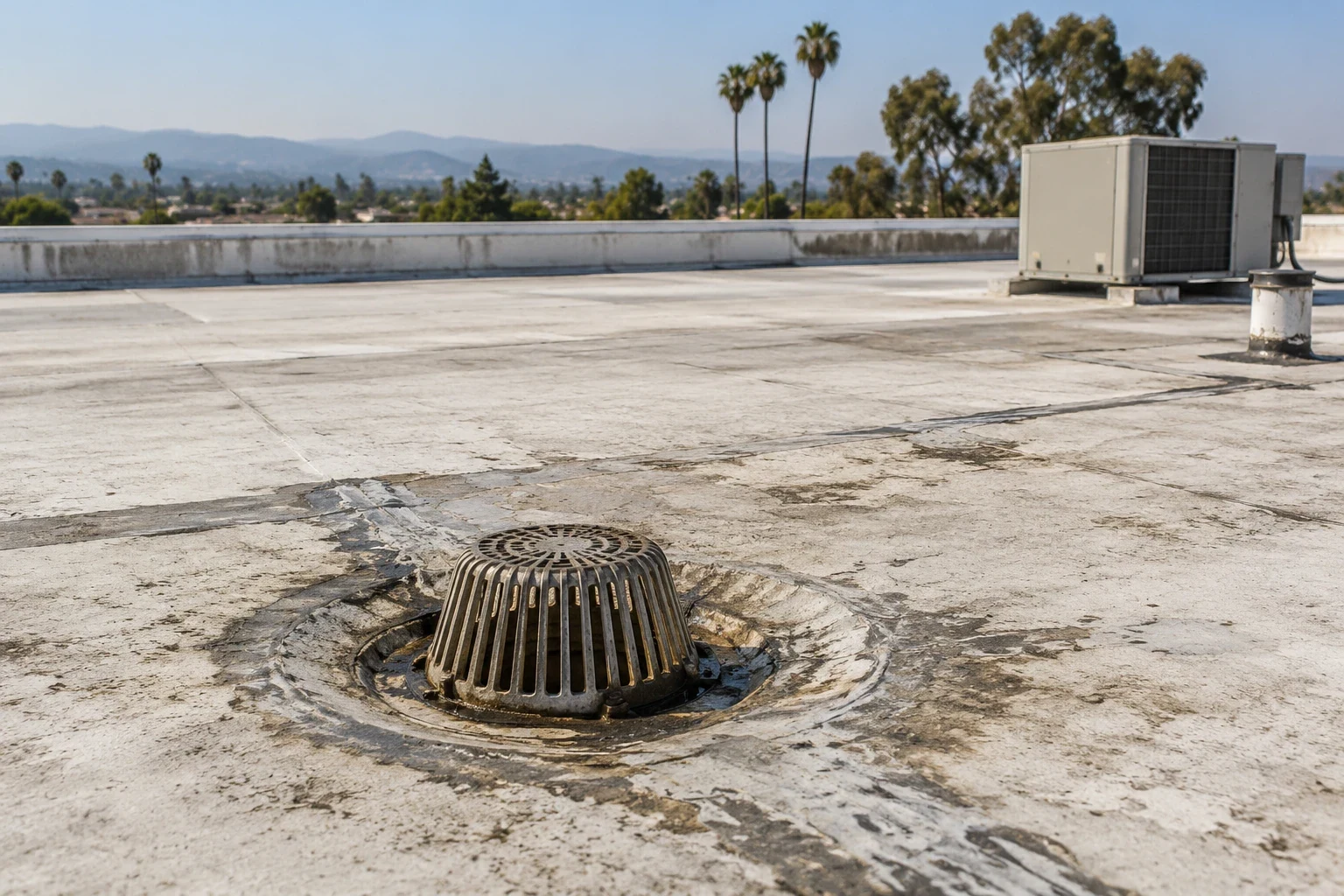
A drain connection can leak even when water reaches it freely. We inspect the membrane interface, accessible clamping parts and nearby repair layers, looking for an appropriate receiving surface and a complete connection. The drain piping and its capacity remain separate plumbing questions. Our drain and scupper work identifies the roofing tasks and the plumbing participation needed before an outlet replacement is scheduled.
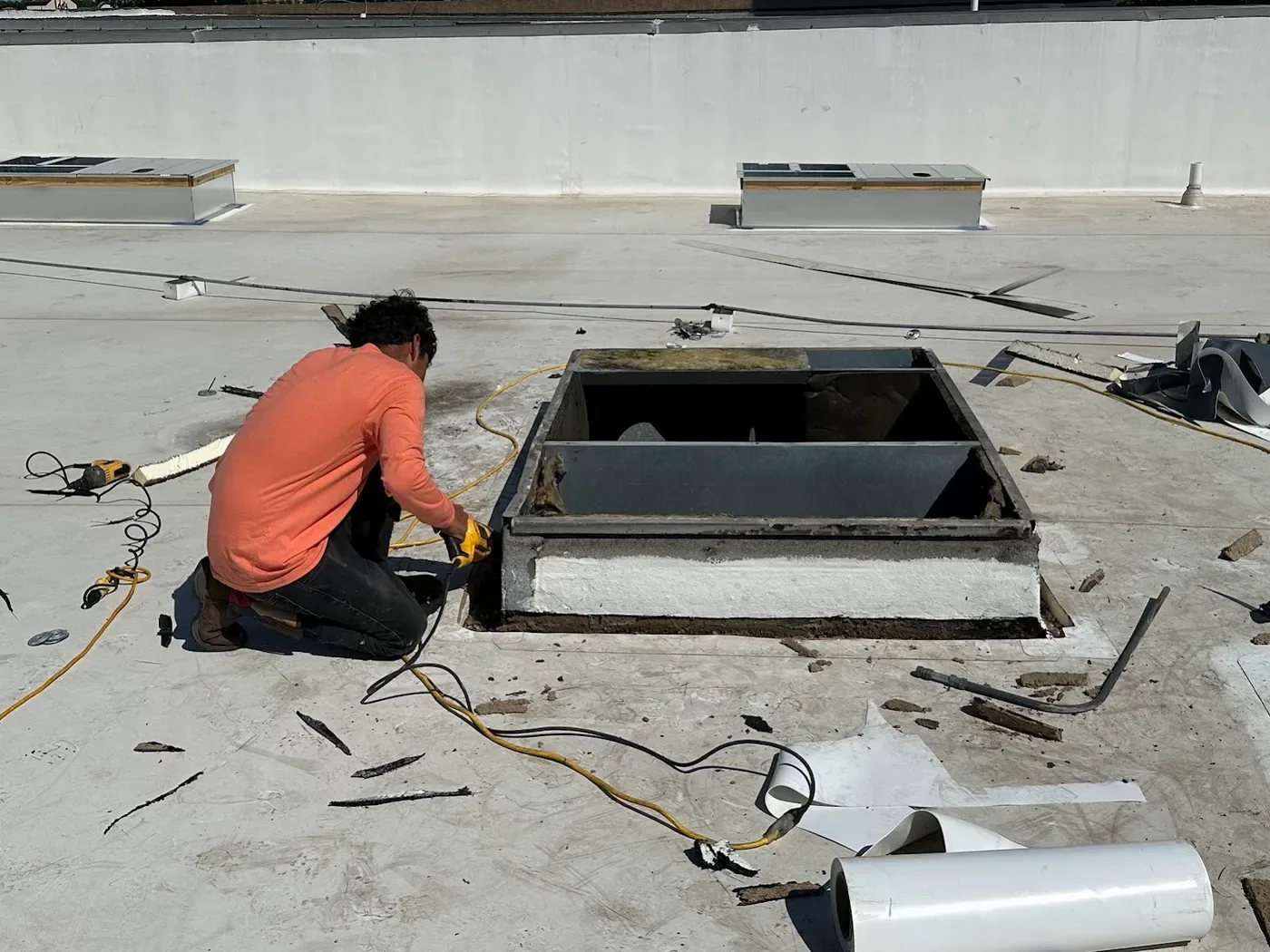
For a commercial property on Narbonne Avenue, we confirm the actual receiving entrance and where removed materials can be contained. Neither the corridor nor a neighboring building determines that arrangement. A drain repair can require controlled opening around the outlet, replacement of deteriorated insulation and temporary protection while another trade works below. We describe those interfaces in the scope so a small fitting replacement does not become an unassigned opening in the roof during occupied operations.
A primary outlet and an overflow connection serve different functions. We locate both where present, inspect their visible connections and identify any obstruction or uncertainty requiring further review. A roof plan should not assume that an opening in the wall provides suitable overflow protection merely because it is near the drain. The accepted design and actual construction need to be compared before modifying their relationship.
We document the outlet elevation relative to adjacent roof details to the extent the assessment measures it. Any proposed change involving drainage design is assigned to the appropriate participant. Written roof condition reporting records the observed facts and the action still needed, allowing the manager to separate a roofing repair from a drainage adequacy question. A photographed clear opening can establish what was visible on the inspection date; it cannot by itself prove performance during an unobserved rainfall event.
A depressed area can contain saturated insulation or other deterioration beneath the membrane. We investigate suspect construction using suitable testing and authorized openings, then explain the extent actually confirmed. If removal is needed, the scope identifies the material depth and the restored surface. A coating applied across the area does not change a depressed substrate or establish that retained moisture has been removed.
Properties in Harbor City and Redondo Beach can receive comparable water-path assessments without carrying one property assessment into another. At the Lomita assignment, Lomita Boulevard orientation assists delivery planning, but permit and design review follow the actual parcel and proposed alteration. We confirm the accepted scope with the responsible authority rather than treating a Torrance roofing requirement as applicable throughout the South Bay. The construction recommendation explains the observed need and the review needed to resolve any proposed change.
A cleared outlet needs a final observation that identifies what was removed and whether accessible flow was restored. A reconstructed drain detail needs a completion record of the receiving material and the installed connection. We photograph the finished work and distinguish any further plumbing or design task from completed roofing. This keeps the closeout package useful for the manager who will decide the next expenditure and the operator who will arrange continued access.
Our preventive roof maintenance can include checking these identified routes and removing accessible debris. Visit timing follows the property's observed needs and operating arrangements. Cost is influenced by access, outlet geometry, material removal and participation from another trade. For active water entry, emergency help is available through evenings, weekends and holidays. The response addresses safe immediate protection and develops the permanent correction, preserving a clear distinction between a controlled leak and a completed drainage alteration.
Cleaning restores the accessible opening, but it does not change a depression or an obstruction along the route to it. We inspect the affected area after debris is removed and identify what still prevents flow. The manager can then distinguish a maintenance result from a construction issue. Any proposal to change slope or outlet arrangement should explain its receiving detail and required design review.
Enlargement changes the wall opening and its flashing connection, and may require drainage or structural review. We assess the existing detail and explain the roofing work needed to connect a revised opening. The responsible design participant determines the intended arrangement, while applicable approvals are established for the actual property. Cutting a larger opening without resolving those interfaces can introduce another water entry path.
Observed deterioration, testing findings and authorized exploratory inspection can support a defined removal boundary. We locate each finding and describe the affected construction, including the method used to confirm moisture. The proposal explains the intended depth and restoration material. Adjoining concealed areas retain their own assessment question, and the scope includes a procedure for additional work if removal exposes deterioration beyond the examined boundary.
Inspecting the visible overflow connection can help distinguish its condition from the primary outlet problem. We record each connection separately and identify whether another review is required to evaluate the arrangement. A repair visit can correct an observed flashing defect without establishing overall drainage adequacy. The report should make that scope clear so a completed roofing item is not mistaken for resolution of a design question.
The finished condition provides a baseline for later observations. We mark the repaired route and outlet, describe the correction and identify what to report after subsequent rain, such as persistent water or renewed interior entry. A later inspection can compare those observations with the completed work. This creates a practical follow-through task while avoiding a claim that one dry-day photograph establishes future drainage performance.