Service Areas
Local weather advisory
The National Weather Service has issued a coastal flood advisory covering Torrance. Heavy rain and drainage loading can expose roof leaks, blocked drains, and ponding water. This is a weather exposure advisory; it does not establish damage to a specific roof.
Do not access a roof during hazardous weather. Protect people first, avoid water near electrical equipment, and request roofing help when conditions permit.
National Weather Service · Updated Oct 27, 2026, 1:54 PM UTC
Coordinate Harbor City roof renewal above occupied operations. We assess penetrations, protection and phase boundaries, with findings for asset managers.
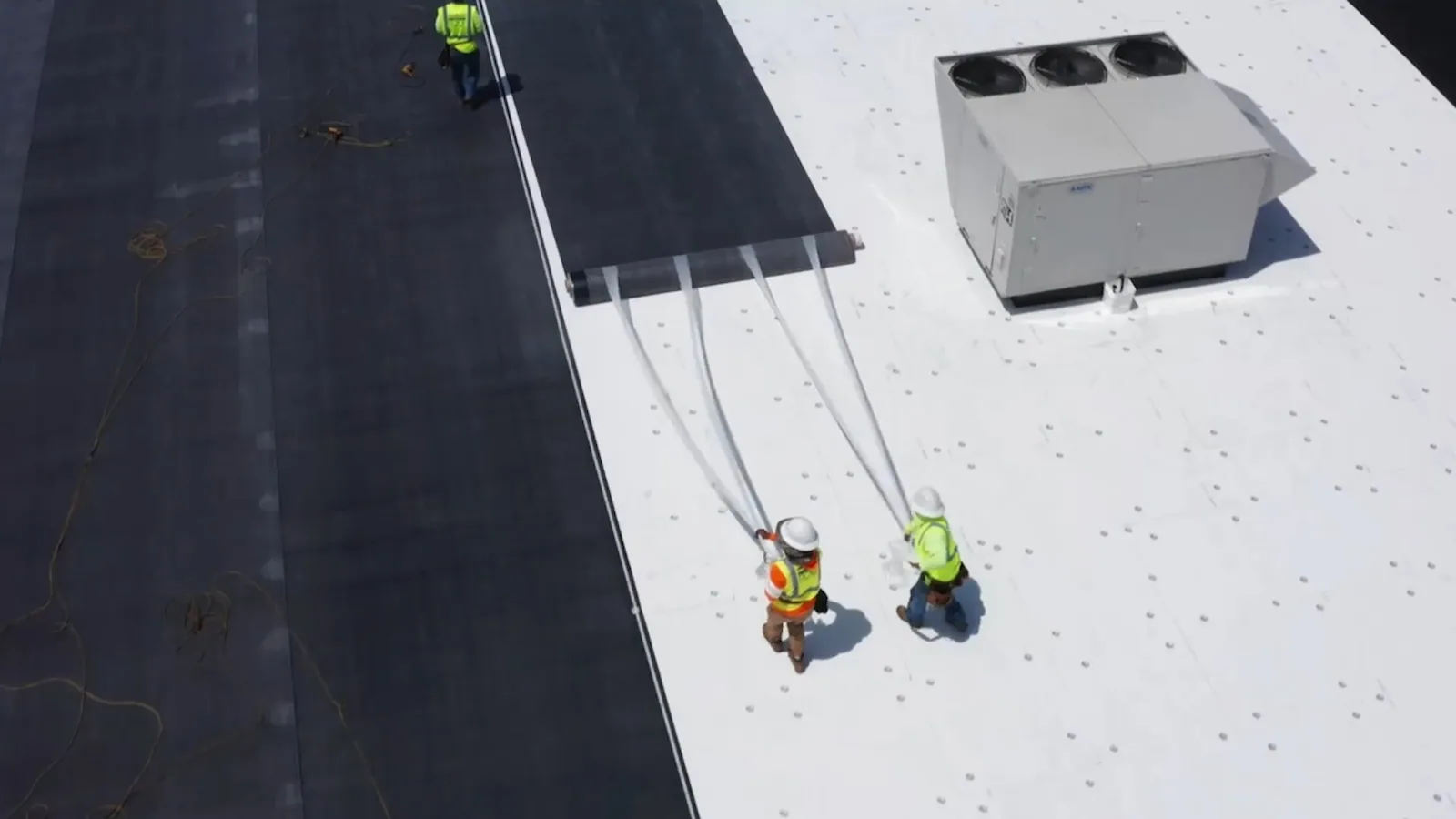
An occupied-building roof renewal in Harbor City, CA requires the protection sequence to be as explicit as the material scope. We inspect commercial roofs, correct leak and flashing defects, and carry out replacement or restoration work with the operator's activities accounted for. The asset manager receives an assessment of the construction and a description of how each phase will leave the affected area protected. Scheduling alone cannot compensate for an unresolved opening or unsuitable retained substrate.
Kaiser Permanente South Bay Medical Center is on Vermont Avenue, and its Normandie South Medical Office Building is on South Normandie Avenue. For a medical-office roof assessment in this setting, the operator needs equipment interfaces and sensitive interior areas located before removal. We examine the subject building's penetrations, intakes and interior constraints before proposing renewal above occupied operations.
An opening over a sensitive room requires protection planned for that room's actual use. We walk accessible interior areas with the property contact, locate reported water entry and compare the layout with roof details. The resulting roof plan identifies where preparation, removal or equipment work could affect occupants. Interior access limitations are recorded so an unexamined area does not quietly receive the same assessment as an inspected one.
Our occupied-building reroofing coordinates roof phases with the operator's required protections and activity schedule. Dust, noise and odors are considered according to the proposed installation method. The operator identifies ventilation or service restrictions, and participating trades address equipment controls. We describe the intended protection and the responsible party before construction begins. This gives the asset manager a scope that can be evaluated by both the construction team and the people responsible for the occupied space.
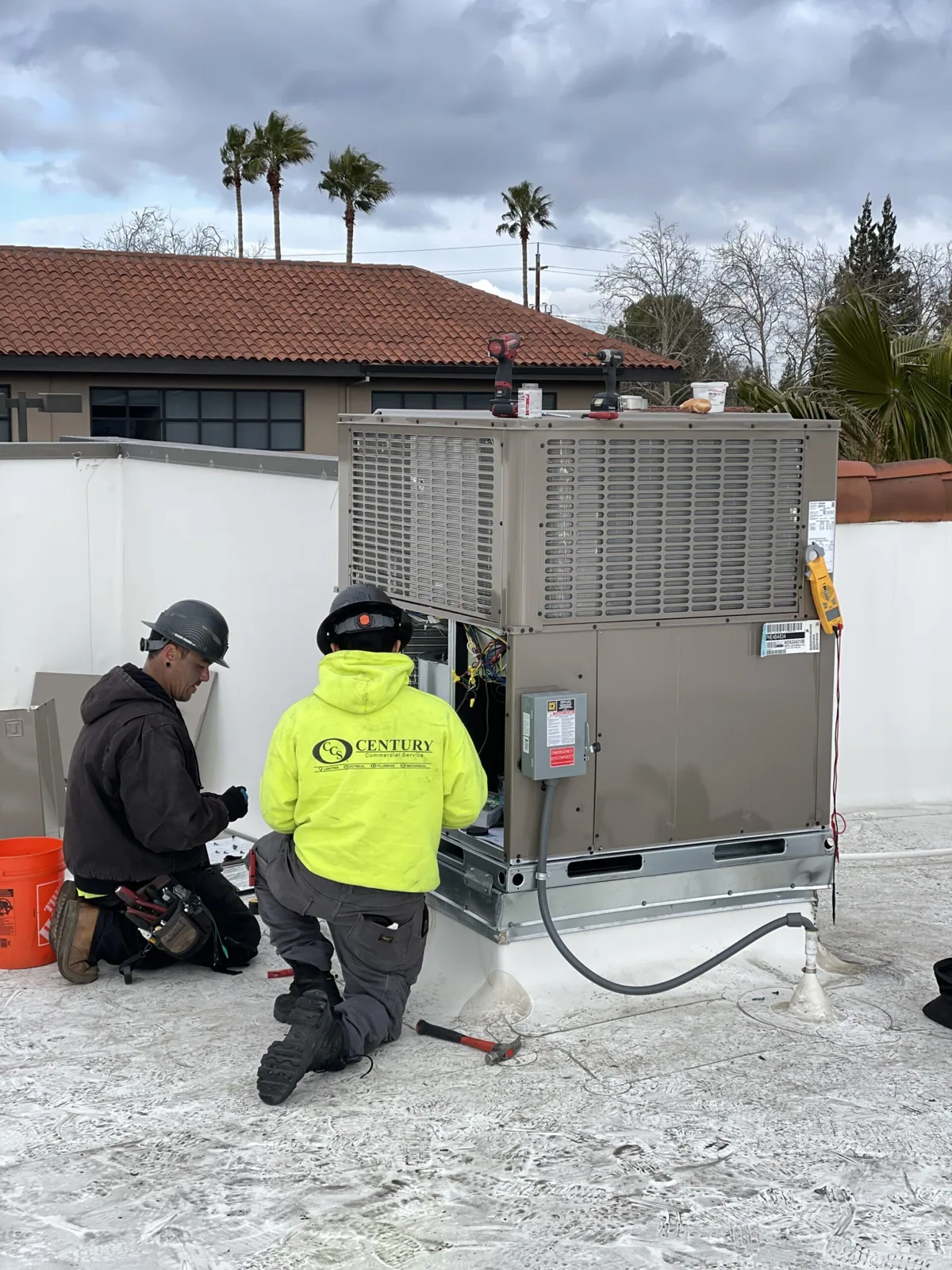
The proposed roof thickness can change the usable flashing height around an intake or mechanical unit. We measure accessible curbs, inspect their membrane connections and identify where equipment obstructs a suitable termination. Curb and equipment support corrections can require mechanical participation when lifting or disconnecting a unit is necessary. The roofing proposal states that interface instead of leaving it implied by a finished membrane quantity.
At a building reached from Vermont Avenue, we also confirm the actual equipment delivery and removal route. Arrival orientation does not identify a suitable crane location, and an adjacent parking area is not automatically available for staging. The property contact and required participants establish those arrangements for the subject building. We account for the route from unloading to installation, including protection of occupied entrances, so material handling does not conflict with the operator's circulation or the next roof phase.
A phase should end at construction that can be made secure against water entry. We inspect roof divisions, wall transitions and the path to outlets before proposing daily removal areas. Temporary closures are selected for the exposed construction and the expected interval before final installation. We explain how the open area will be protected if weather or another trade delays the planned return, rather than assuming every started area will finish on the original schedule.
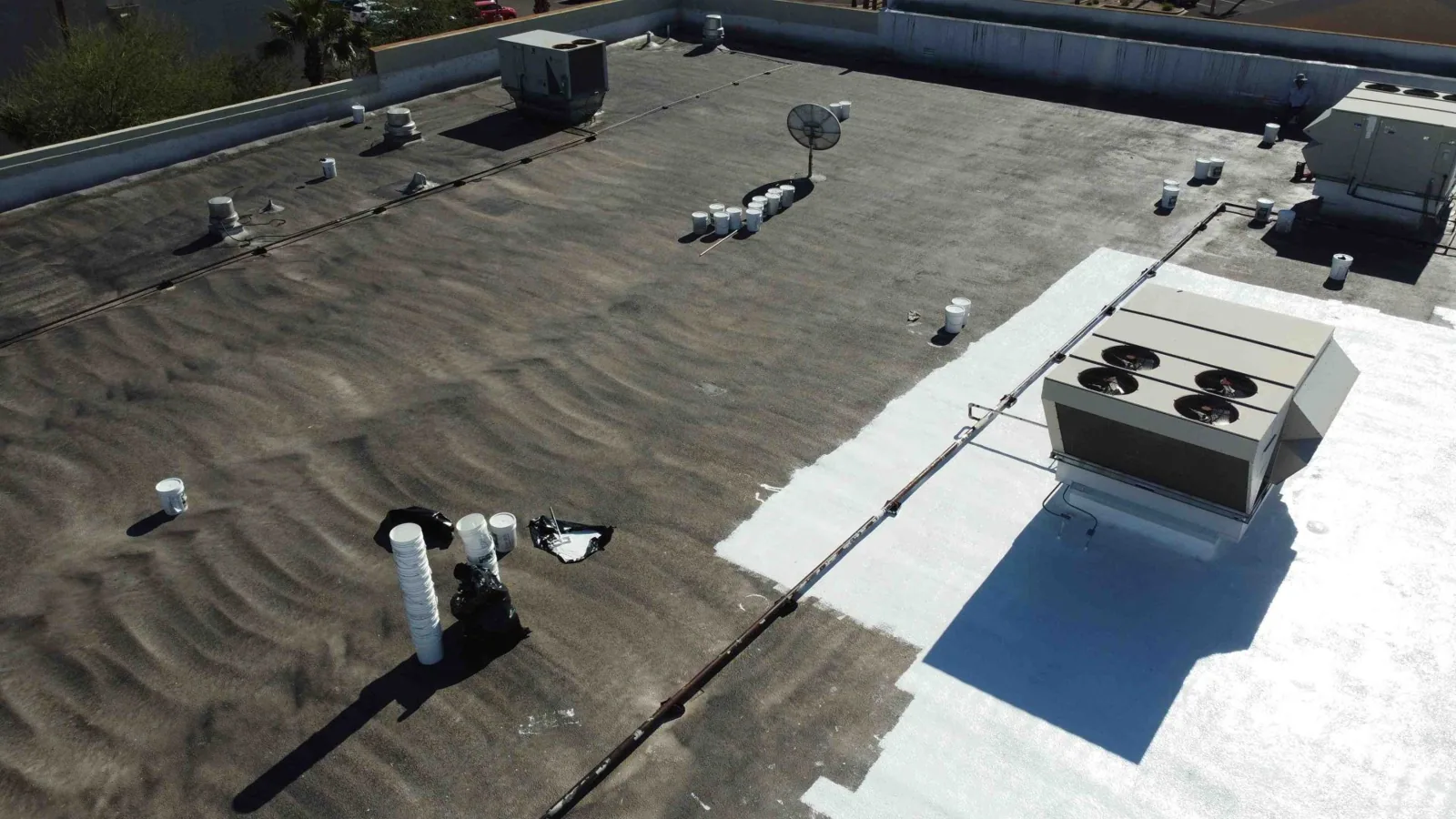
Replacement and restoration have different phase requirements. Removal may expose wet insulation or a deteriorated deck, while restoration requires suitable surface preparation and application conditions. Commercial roof replacement planning identifies those exposure and receiving-substrate questions before a removal allowance is selected. The survey file locates tested areas and states what remains concealed. A bounded phase is useful only when its receiving details, temporary protection and permanent connections can actually be completed in the intended sequence.
An intake near roof preparation may need operational controls that the roofer cannot decide independently. We identify the equipment location and describe the proposed method, materials and affected area to the building operator. The operator and responsible mechanical participants determine the controls needed for their system. The roofing schedule then incorporates the confirmed arrangement and any restriction on the work period or application method.
A property team with another assignment in Lomita or a renewal in Carson can keep comparable phase records while assessing each operator's requirements separately. South Normandie Avenue helps locate the Harbor City assignment; it does not define those requirements. Harbor City is within the Los Angeles planning context, so the actual property authority and accepted scope must be established for the work. We do not apply a Torrance permit basis simply because the commercial property is nearby.
A finished field membrane can still have an incomplete curb, wall termination or drain connection. We inspect those phase edges with the applicable scope in hand and photograph the completed details. Any temporary work is identified as such, with the next permanent task explained. The closeout package describes the renewed area, installed construction and retained conditions that continue to require attention. Equipment work receives its own completion status where another participant controls it.
Our located roof condition records give the asset manager a baseline for future maintenance and renewal decisions. Cost and timing follow the removal depth, protection method, access equipment and coordinated operating restrictions. For an active leak before or during the renewal decision, emergency response remains available overnight, on holidays and throughout weekends. We assess safe immediate protection and develop the corrective scope. A stabilized interior problem and a fully completed roof phase are recorded as separate outcomes.
Interior divisions are useful for planning operations, but the roof also needs suitable weathering boundaries and drainage continuity. We compare both layouts and identify where a proposed phase would interrupt flashing, expose retained construction or require temporary closures. The final sequence should account for the occupied activity below while leaving a technically complete roof connection above. Some interior divisions may therefore require a different roofing boundary.
The building operator and responsible mechanical participants control that decision. We identify the intake relative to the work and provide the planned method and materials for their review. Confirmed controls are incorporated into the construction sequence. A roofer should not assume that turning off a visible unit provides appropriate protection for the entire system, particularly where operating functions or interconnected equipment require a separate assessment.
We identify the affected rooms, accessible routes and proposed removal method before describing protection line items. The operator supplies its use restrictions and any special requirements that influence the arrangement. The scope states which protections are included and which tasks require another participant. This makes the allowance reviewable without assigning a generic protection method to every occupied space or treating the operator coordination as an incidental courtesy.
Restoration may change the work sequence when the examined roof is suitable, but it cannot correct all concealed deterioration or inadequate receiving construction. We assess moisture, adhesion, seams and detail condition before comparing it with replacement. The operator can then evaluate the different activity impacts alongside the technical findings. Disruption is a cost and scheduling consideration, while system suitability still decides whether restoration is appropriate.
That connection needs a stated temporary condition and a defined permanent task. We locate it, describe the protection present and identify the participating work required to complete the roof interface. The remainder of the phase can be recorded according to what is actually finished, but the incomplete connection should remain visible in the completion account. The manager can then arrange the next trade return without confusing field installation with whole-phase closure.