Service Areas

Local weather advisory
The National Weather Service has issued a coastal flood advisory covering Torrance. Heavy rain and drainage loading can expose roof leaks, blocked drains, and ponding water. This is a weather exposure advisory; it does not establish damage to a specific roof.
Do not access a roof during hazardous weather. Protect people first, avoid water near electrical equipment, and request roofing help when conditions permit.
National Weather Service · Updated Oct 27, 2026, 1:54 PM UTC
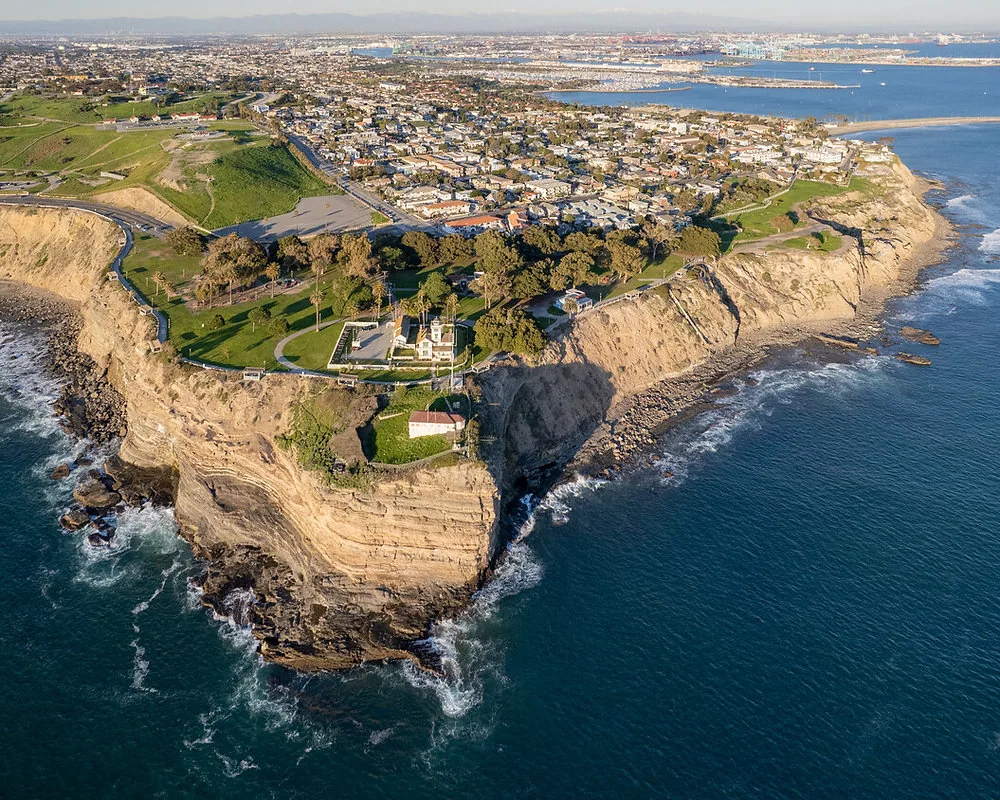
Evaluate San Pedro roof and wall transitions before acquisition. We locate movement, inspect flashing and explain corrective scopes and access requirements.
Evaluating a San Pedro, CA acquisition requires examination of roof-to-wall connections alongside the field roofing at the assigned commercial property. We inspect, repair, restore and replace commercial systems, documenting the construction that supports the proposed allowance. For the asset manager, a useful assessment distinguishes a flashing defect from movement or deterioration in the receiving wall. A membrane repair can correct its own connection without resolving an independent wall condition.
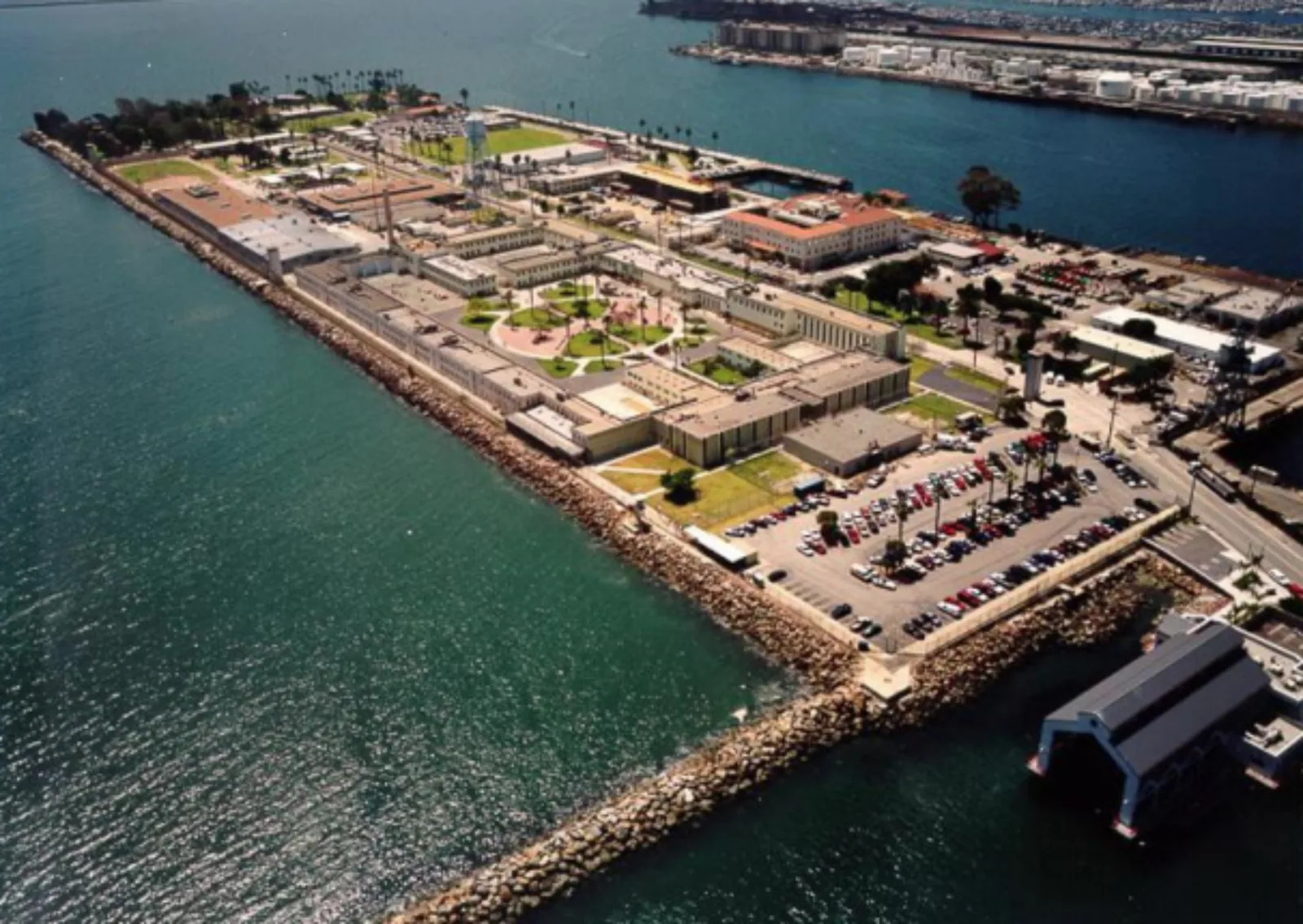
The Port of Los Angeles operates in the Harbor District, which includes property in San Pedro, Wilmington and Terminal Island. For a property in this harbor setting, inspection access and project review need to follow the actual assignment. We confirm the responsible property contact, permitted access and inspection boundaries before connecting observed roof transitions to acquisition decisions.
A separation at a vertical flashing can involve the membrane, its termination or the substrate behind it. We examine the accessible connection, photograph the whole wall segment and then record the specific discontinuity. Interior observations are compared where access permits. The assessment states which material was examined and which receiving construction remains concealed, preventing a wall-related question from disappearing inside a general roof repair allowance.
Our wall flashing corrections identify the removal, preparation and termination required for the examined detail. A new strip over an unsound receiving surface can leave the underlying problem active. Where masonry, wall panels or another building element needs separate work, the proposal assigns that interface to the appropriate participant. The asset manager receives an explanation of what the roofing correction will finish and what adjoining construction still requires attention before the connection can be completed.
A split beside a joint can reflect movement, unsuitable restraint or deterioration, but the visible split alone does not resolve the cause. We inspect its location relative to building joints, fixed penetrations and prior repairs, then describe the observed geometry. Where the connection requires a movement-capable detail, the proposed assembly needs to accommodate the actual joint rather than bridge it with a rigid patch.
An acquisition inspection may need another participant to review structural or wall movement. We identify that need and keep it separate from a roofing installation recommendation. Acquisition roof surveys give the buyer located photographs, inspected details and unresolved receiving questions. That allows the allowance to include a specific next assessment instead of implying that a repaired surface resolves every building movement issue. A construction date, district identity or surface stain does not determine the cause or the remaining service life of the roof.
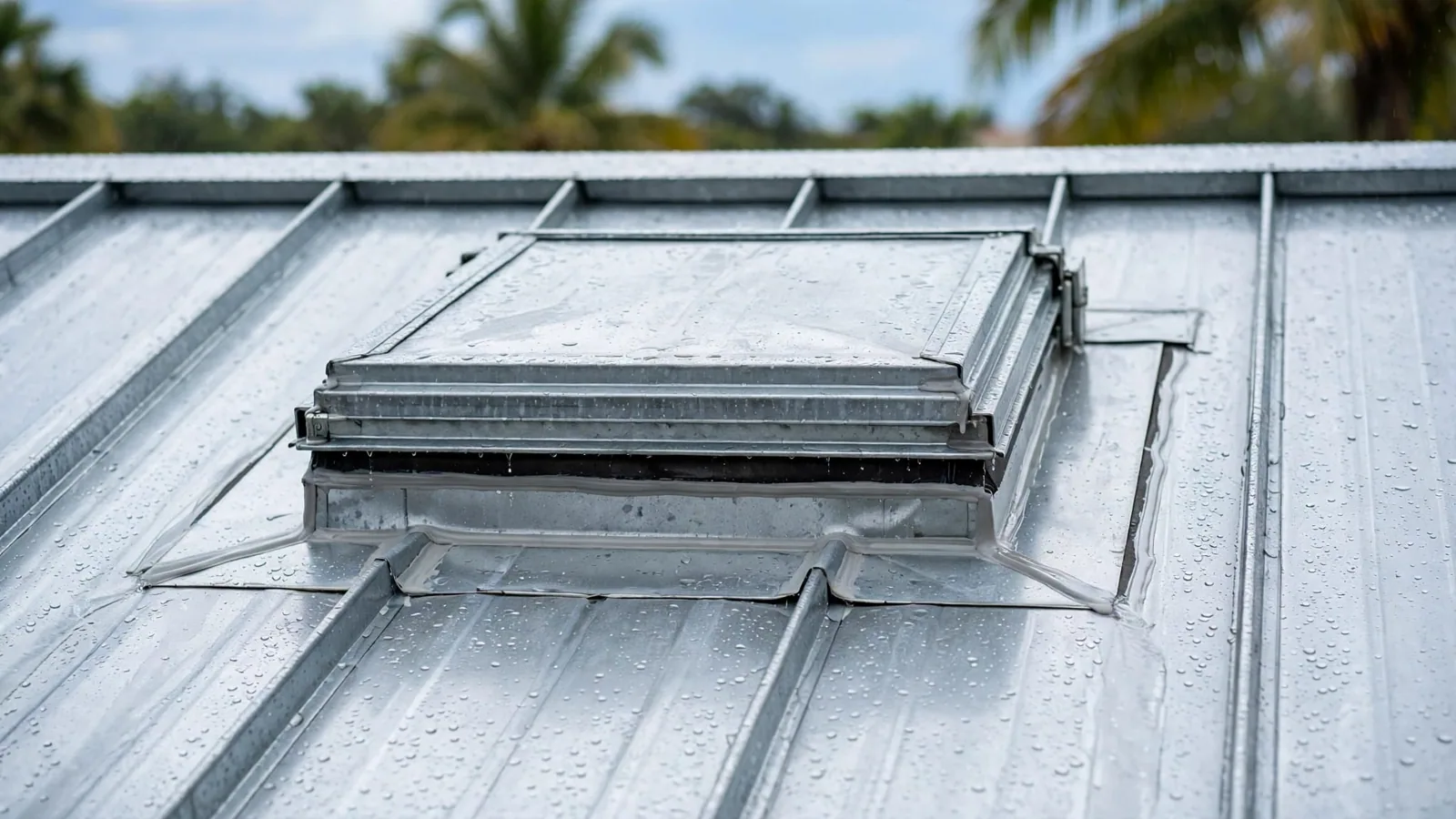
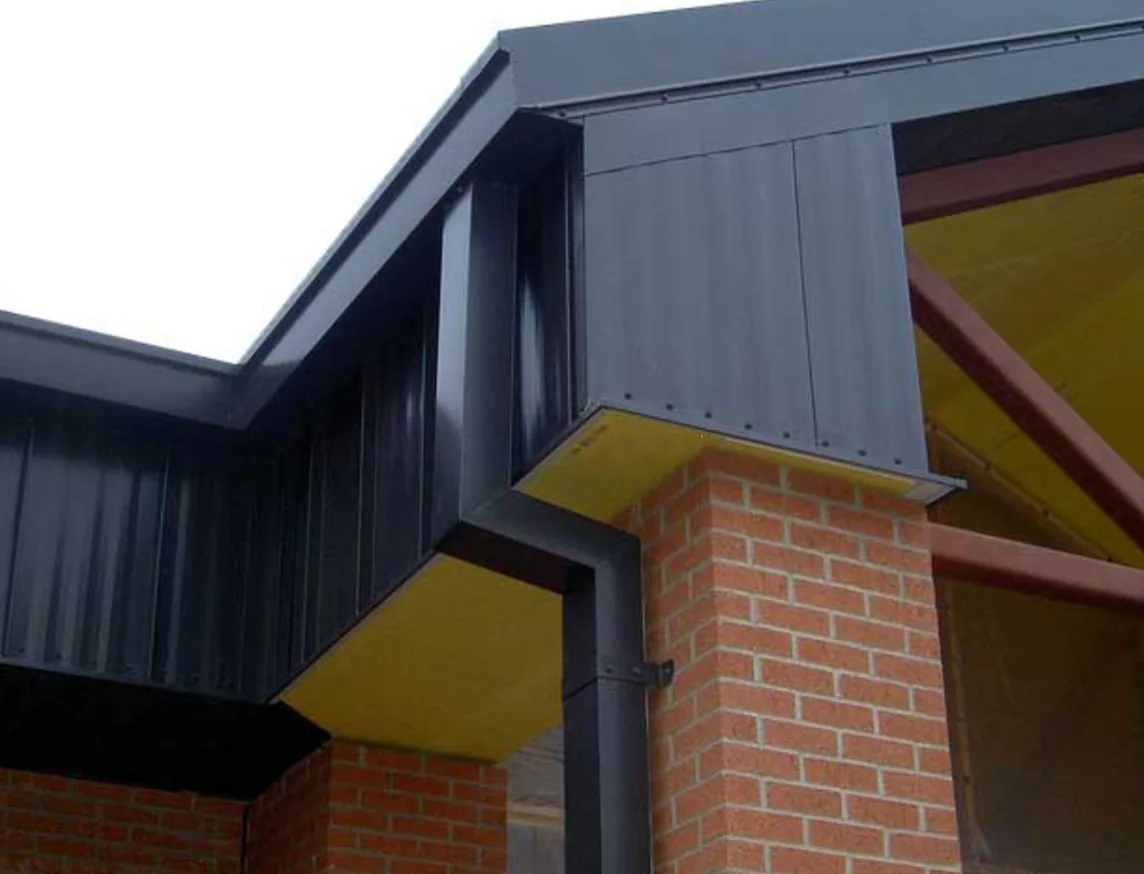
A wall termination can include coping, counterflashing and exposed fasteners that need their own condition assessment. We examine joints, coating loss and accessible attachments, locating observed deterioration in a corrosion log where relevant. Discoloration receives a different description from section loss or an unsound connection. Material selection for a proposed repair follows the actual exposure and receiving assembly, with compatible components specified for the project.
We provide metal edge and counterflashing repairs that coordinate with the membrane connection. In the San Pedro harbor setting, location warrants attention to exposure but does not prove corrosion at the property. The report records what was found and how that finding changes the scope. This distinction matters to an acquisition allowance because cleaning, local replacement and broader reconstruction have different construction depths, access needs and implications for retained wall details.
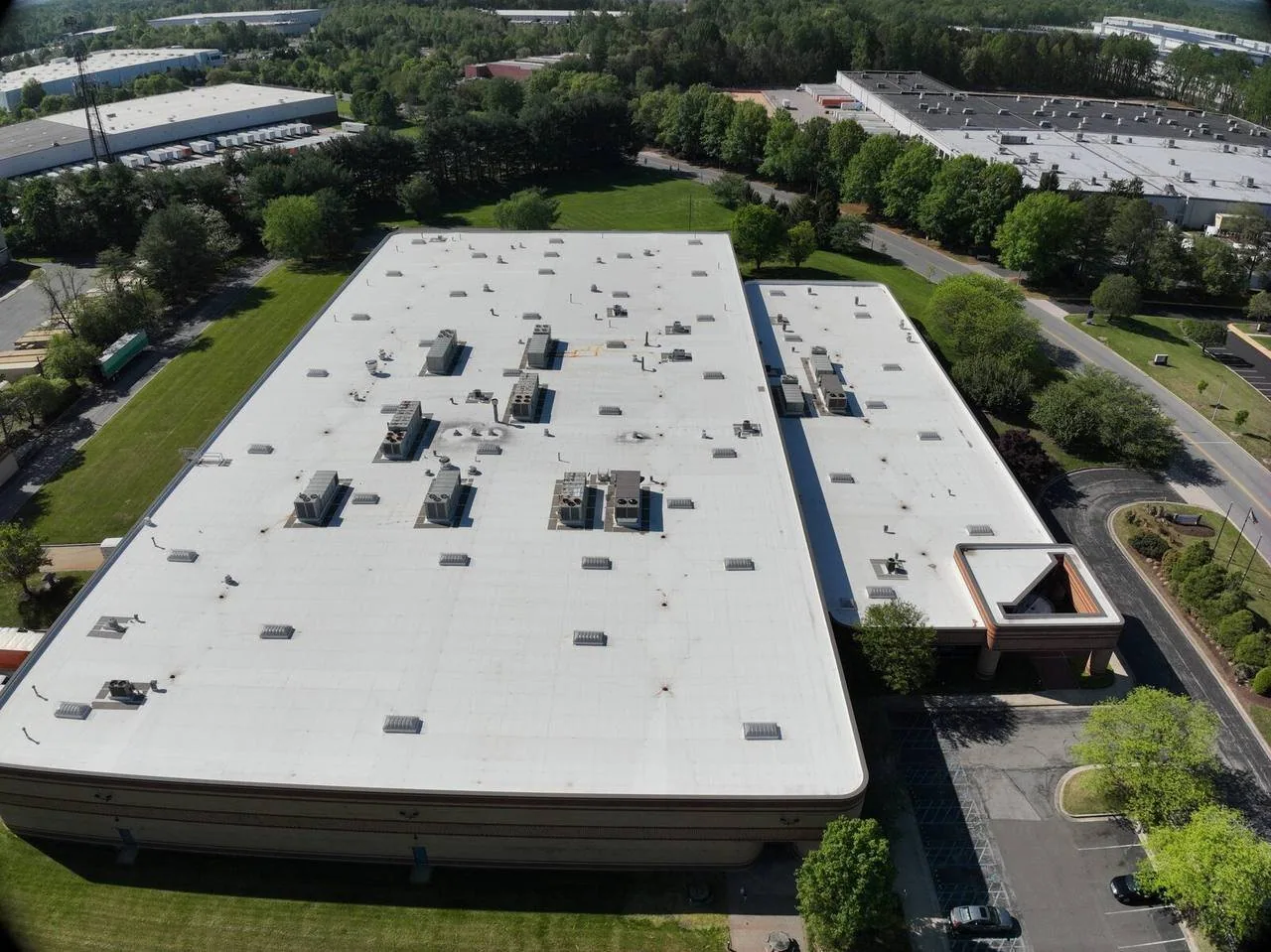
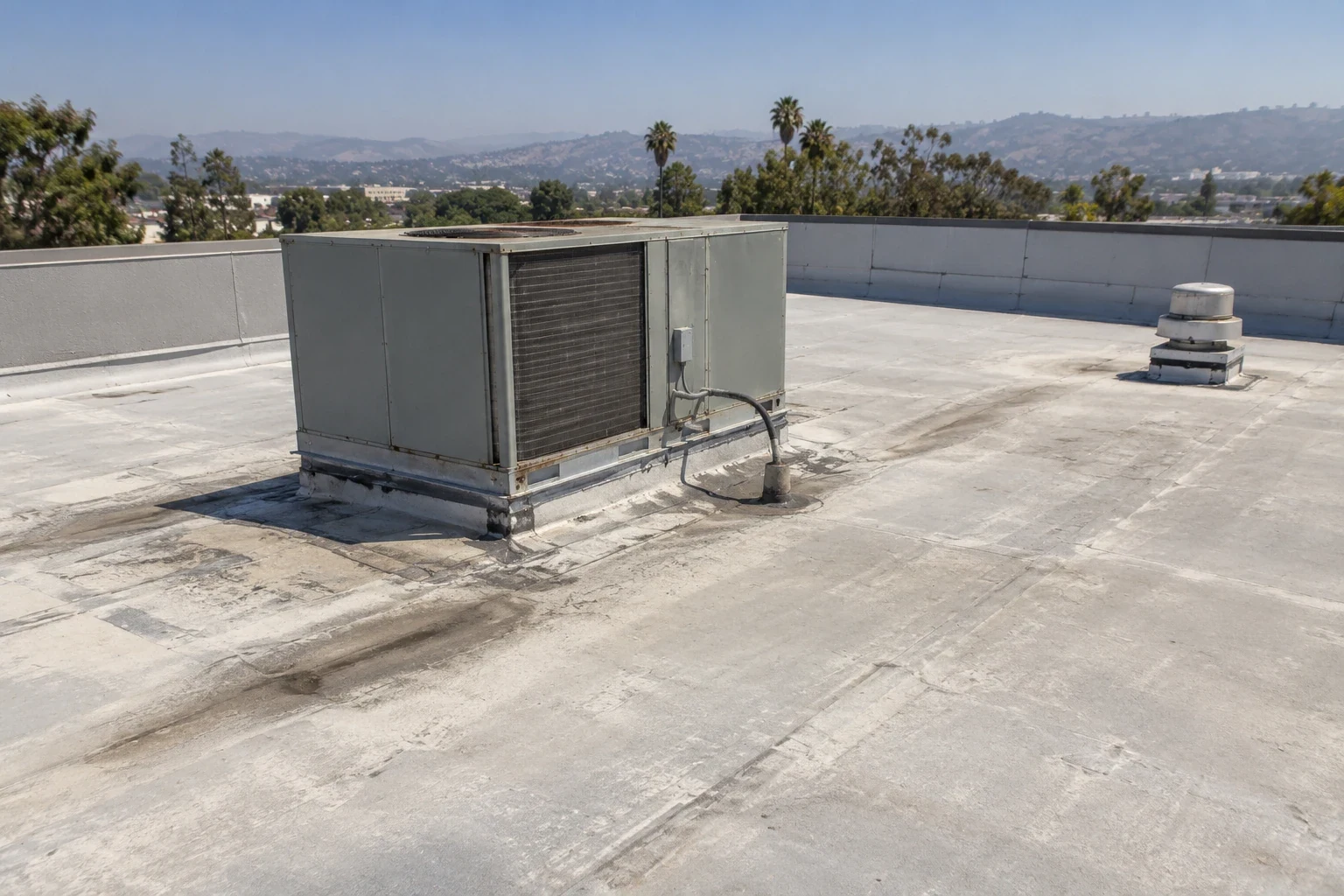
A visible roof area and an accessible roof area are not necessarily the same. We confirm the authorized entry, safe inspection route and any restricted portion with the property contact. Drone observations can supplement a survey where appropriate, while hands-on examination and testing still have distinct roles. The survey file identifies the inspection method for each finding so a distant image does not become proof of attachment or concealed material condition.
Another asset in Harbor City or an assignment on Terminal Island requires its own access and authority review. For the San Pedro subject property, a Port location may involve property-specific permission or project review that must be established before construction. We confirm the responsible participants and accepted scope for the actual parcel. Nearby Torrance requirements do not decide a San Pedro project, and a general harbor identity does not supply permission to inspect or alter a particular building.
Each repair item should describe its boundary and the receiving construction needed to finish it. We distinguish a local flashing replacement from substrate repair, joint reconstruction or further investigation. Our commercial roof inspection can support that comparison with measured locations and photographs. The acquisition team retains its own review criteria; the roofing record explains observed construction and proposed work without assigning acceptance to a buyer or lender.
Access equipment, removal depth, wall participation and temporary protection influence both cost and timing. We coordinate the proposed sequence with occupied activity and identify which connection can be made complete at each phase. For urgent entry, response is available after hours, during weekends and on holidays. Immediate protection is followed by an explained permanent scope. At completion, the closeout package identifies installed flashing and retained adjoining conditions, giving the asset manager a construction baseline against which later observations can be compared.
It can identify the related wall task and its effect on the roofing connection, provided the responsible scope and participant are clear. We describe the examined interface and explain what receiving condition is needed for final flashing. Work outside the roofing discipline receives its own assessment and construction responsibility. This prevents a membrane allowance from silently absorbing an unresolved wall question or leaving it unassigned.
The crack is an observation that needs examination in context. We compare its location with joints, attachment and adjacent construction, then identify whether another review is appropriate. A repair recommendation should not assign a structural cause from the surface alone. The asset manager receives the observed geometry and the next useful task, allowing the acquisition team to evaluate the roofing correction and any independent building concern separately.
A drone image may locate displaced covers or visible discontinuities, but concealed attachment and receiving condition usually require another inspection method. We state which finding came from imagery and what hands-on review remains necessary. The survey can help prioritize access without converting a distant view into confirmation of hidden construction. A repair allowance should reflect that distinction before fabricated components or attachment details are ordered.
They should retain a defined assessment task and a clearly explained planning assumption. We locate the portion that was not examined, state why access was limited and identify what inspection would resolve the construction question. The allowance can then distinguish observed work from an unresolved area. Assigning the same condition grade to accessible and inaccessible portions would make the budget appear more settled than the inspection supports.
The record connects the observed defect to a located detail, explains preparation and receiving requirements, and shows the completed connection. Any related wall or design task retains its actual status. We also identify adjoining material that remains outside the repair. A later reviewer can then see why the work was proposed and what it changed without assuming that every roof or wall condition was included.