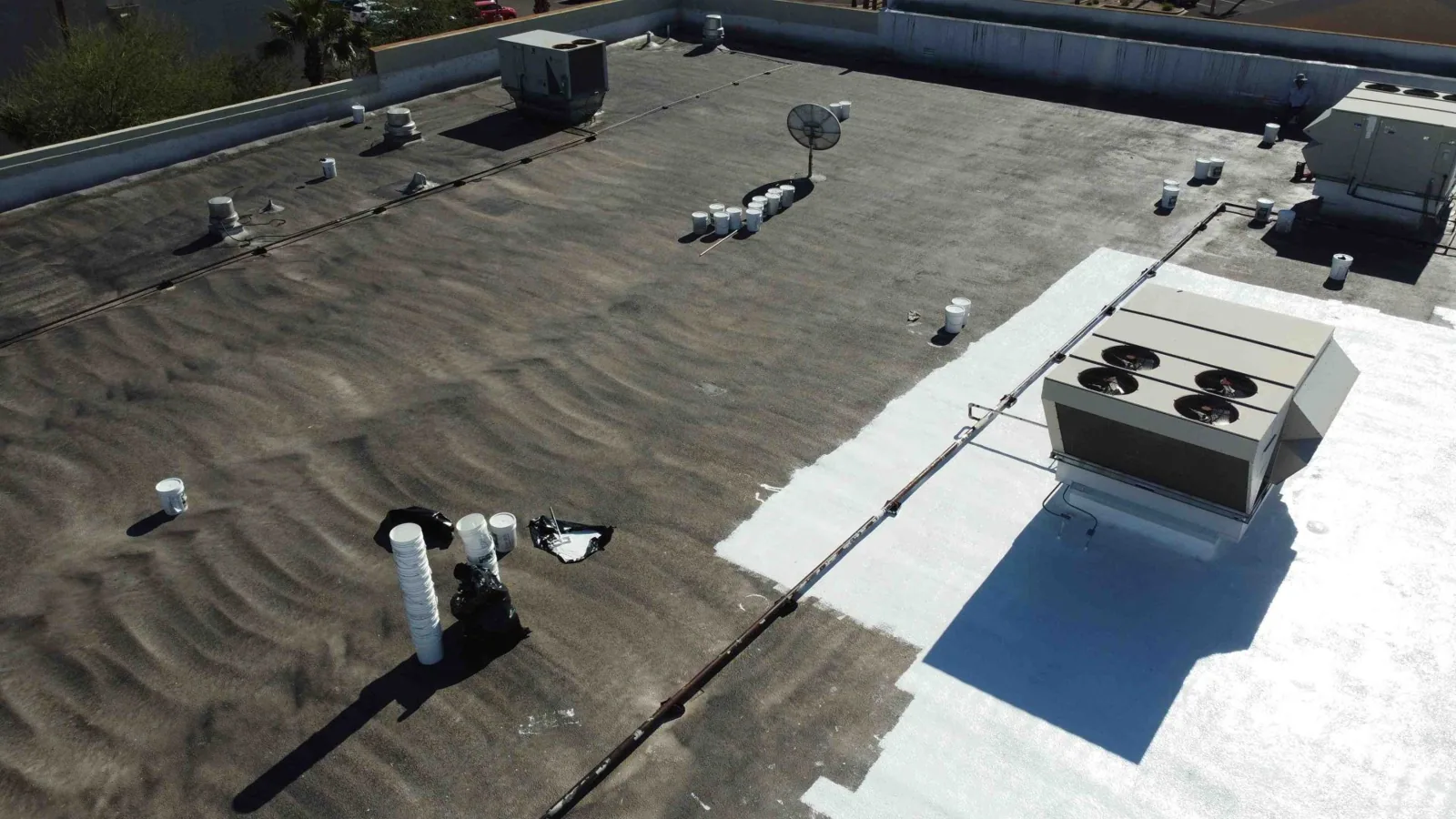
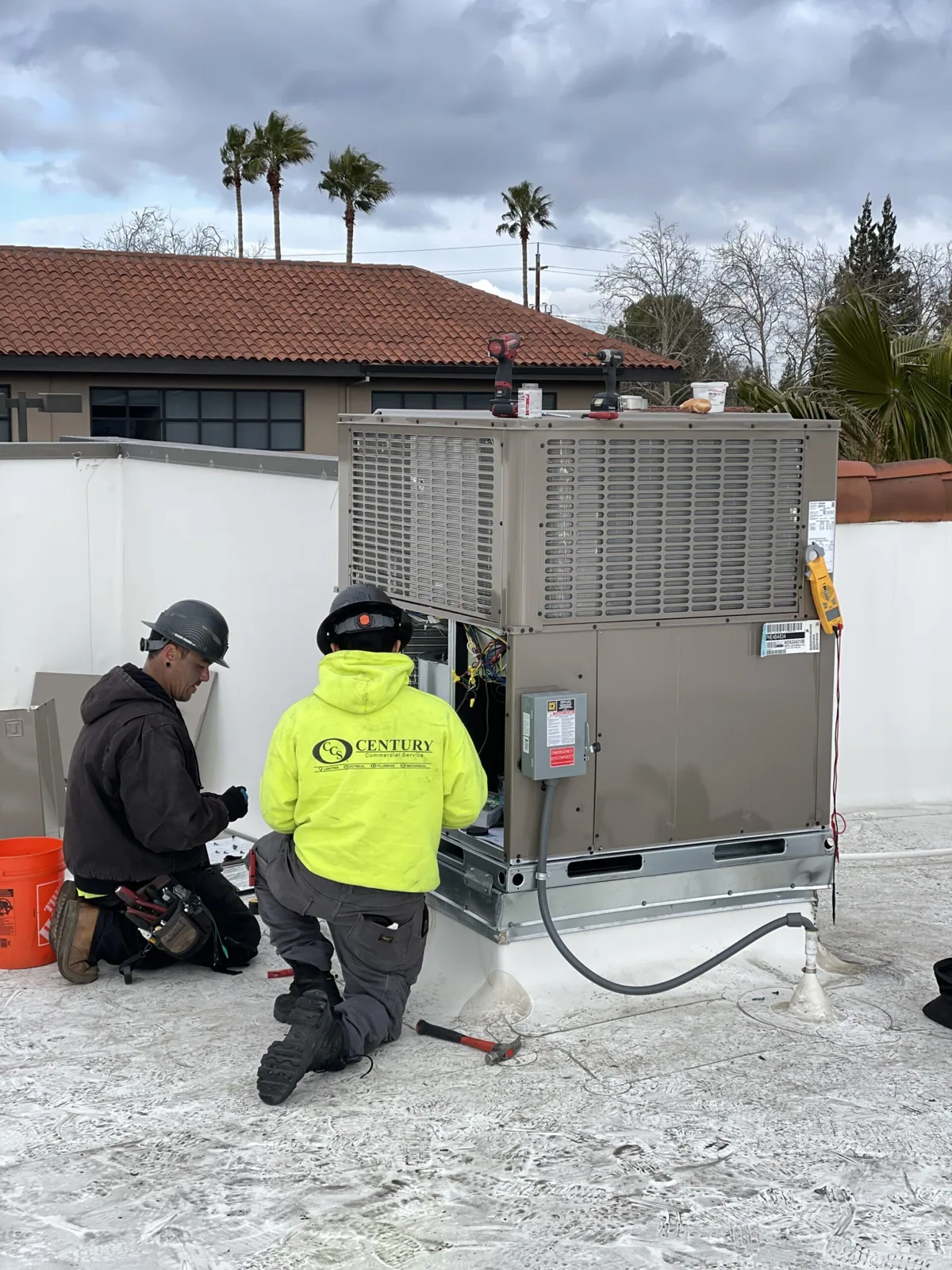
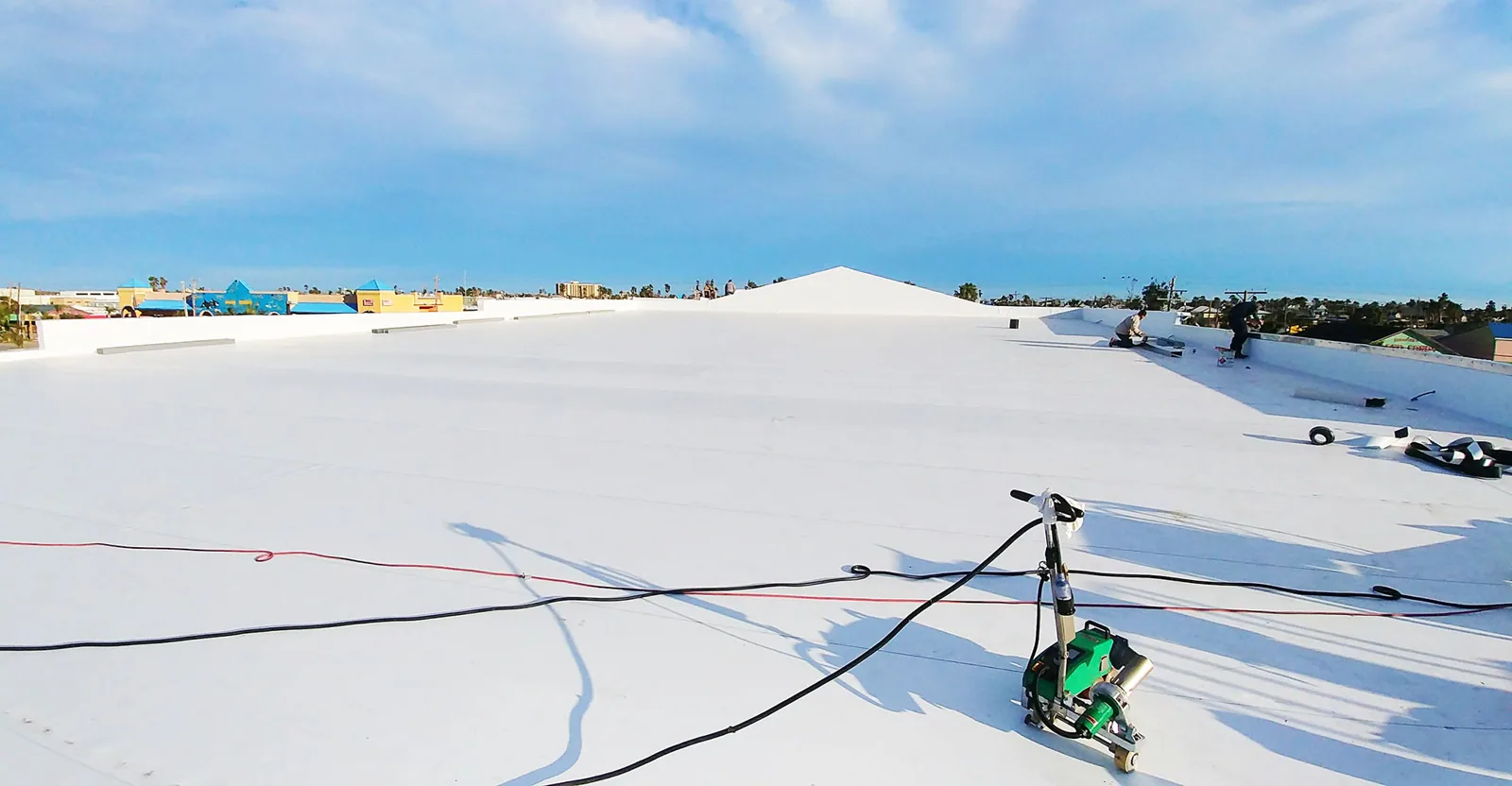
Commercial Roofing Services
Prepare a Torrance commercial roof for a proposed solar installation with assembly checks, coordinated support details and a defined maintenance route.
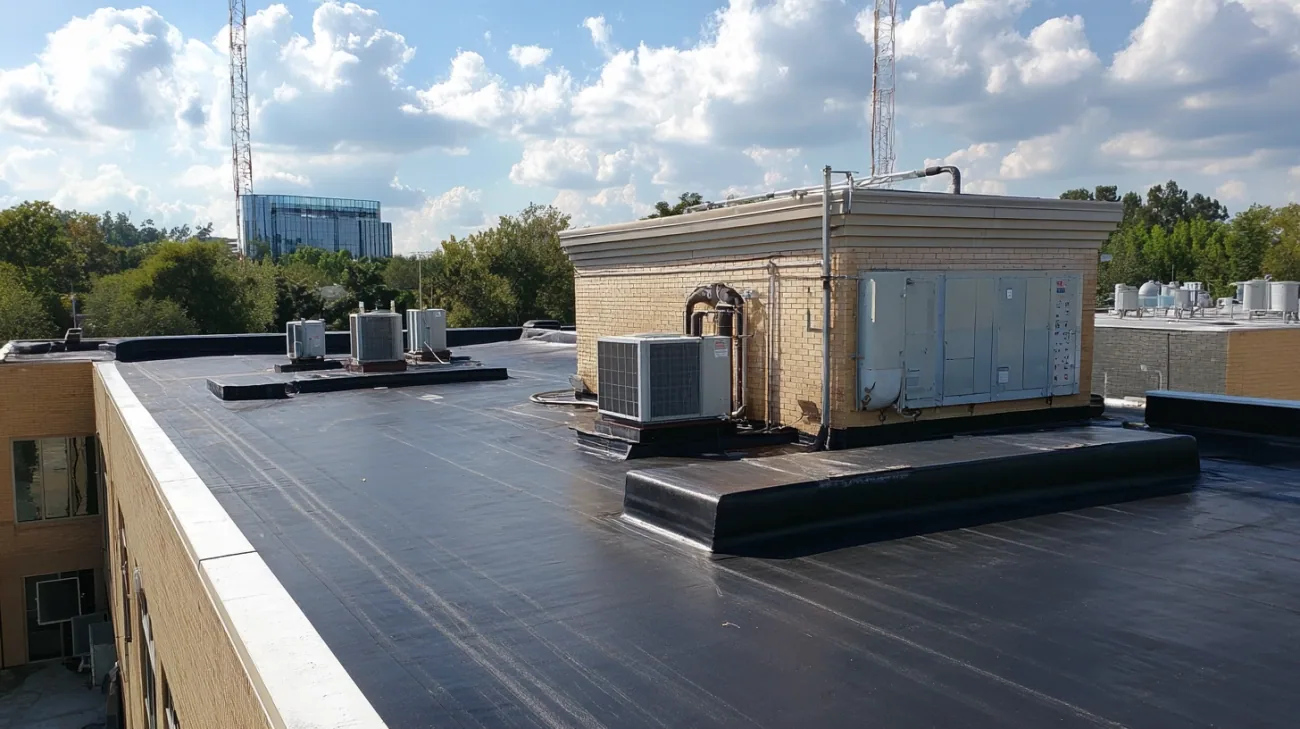
A refinancing plan that includes rooftop solar in Torrance, CA needs a roof allowance connected to the proposed array. The membrane may be serviceable today yet need disruptive repairs before the solar equipment reaches its own replacement point. We assess the roof area, examine available construction information and describe the roofing work required before the array design is finalized. Electrical output and financing assumptions remain with their responsible reviewers.
The historical industrial development account for Torrance Commerce Center gives the proposal a local industrial setting, without establishing solar suitability at any particular building. Suitability comes from the actual deck, roof layers, drainage and proposed equipment layout. We record those inputs so the asset manager can compare retaining the roof with rebuilding it before installation. A solar-ready scope defines the receiving roof work; it does not itself approve the array, its loads or its electrical connection.
A membrane assessment begins with its accessible seams, transitions and surface condition. We examine service records where available and locate areas needing further investigation. Remaining service life is an estimate with stated limits, not a date assigned from appearance alone. We explain whether the proposed array would make later repair access more difficult and whether removing modules would become a necessary part of a future roof replacement.
That comparison can justify replacing the roofing before installation even where some repairs could extend short-term service. It can also support retaining a sound assembly where the solar layout preserves access and the supporting assessments are complete. We separate those choices in the proposal. The asset manager receives the construction differences and unresolved conditions, rather than an automatic recommendation to replace a roof merely because a solar proposal exists. Array duration and the owner holding period remain inputs to the decision.
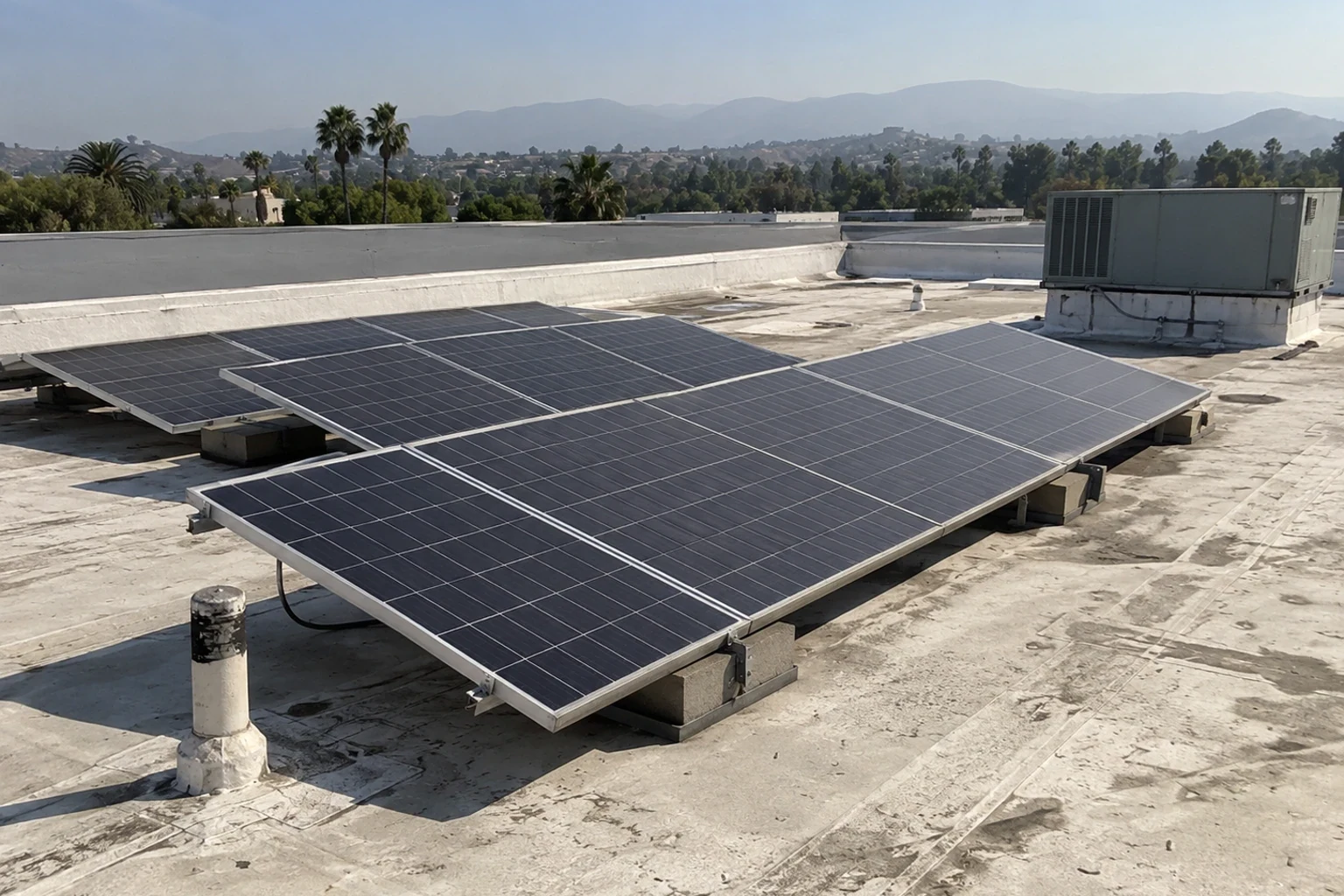
A proposed ballast tray or attached support changes more than the surface protection requirement. Its loads, attachment and wind behavior need assessment by the responsible structural and solar designers. We identify the roof assembly at the proposed support locations and describe the waterproofing interfaces. Protective pads, cover boards and walkway materials can address roof contact, but they do not establish the capacity of the deck or its supporting frame.
For penetrating supports, we coordinate the attachment elevation, flashing access and movement allowance before the details are issued. Equipment support and curb work may overlap with existing rooftop utilities, particularly where array routes cross service paths. We place each interface on the roof plan. The structural connection and its waterproofing treatment remain separately described so neither task disappears into a general solar installation allowance. Approval of one does not establish completion of the other.
An array layout can leave a drain visible while blocking the route needed to clean it. We compare proposed module rows with outlets, scuppers, low channels and equipment access. Maintenance paths need usable width and a surface suitable for the membrane. Material staging must also avoid creating a new obstruction before the permanent system is complete. These access dimensions are checked against the actual proposed layout rather than assigned from an empty roof photograph.
Del Amo Fashion Center supplies a current retail identity for the local market, where a roof alteration also calls for coordination with the space below. For a subject retail asset, we identify routes for roof and equipment service independently of customer circulation. Shopping center roofing work and solar staging may need different delivery arrangements. The proposal states which route serves each task, and the final plan shows the areas that must remain accessible after modules and cable paths are installed.
A support pad, adhesive or cable mounting component can be incompatible with the existing membrane. We compare proposed contact materials with the selected roofing system and inspect the receiving surface. Aged repairs may need rebuilding before a mounting component can be seated reliably. Compatibility review should happen before the array purchase locks the project into a particular detail. Where testing is needed, the tested location and preparation are recorded.
TPO membrane construction requires different repair components from EPDM rubber roofing. The solar scope must preserve those distinctions. Issued warranty requirements may also address alterations and access, so we review the required process with the actual documents. A building in Torrance Industrial Area receives an assembly-specific assessment, not a material choice inferred from its industrial setting. The selected detail remains subject to its responsible design and product reviews.
Some roof details will become difficult to examine once the array is installed. We identify hold points for checking support penetrations, repaired seams, drainage corrections and protected service paths while they remain accessible. The construction schedule states who releases those areas for the next trade. Unfinished waterproofing cannot be resolved by covering it with a module row and planning a later inspection from the perimeter.
The closeout package shows the roof construction before and after the array interfaces are added. Locations, material identification and outstanding responsibilities allow future service to distinguish roof repairs from electrical or support changes. Managing the roof asset includes keeping that altered layout current. We explain which roof inspections remain practical with the array in place and which require coordination with the solar operator. The completed file describes the roof work performed without substituting for structural approval, electrical commissioning or an issued warranty decision.
Solar readiness is a coordination review, not a promise that a roof can carry a future array. Confirm the roof's expected service life, assembly, drainage and warranty terms before locating attachments. Structural capacity, electrical layout, fire access and utility approval require review by the professionals responsible for those systems. Reserve paths for maintenance and future membrane repairs, and avoid placing supports where they block drains or conceal critical seams. If a roof renewal is planned, coordinate its completion and documentation before modules cover the surface. The deliverable should identify assumptions and required approvals so the owner can decide whether roofing and solar schedules should proceed together.
Finalize the receiving assembly early enough to prevent incompatible support purchases or repeated equipment handling. We assess the roof and identify remaining structural, drainage and warranty questions. The array designer can then work with the selected roof construction. A preliminary layout can assist the discussion, but ordering equipment before those interfaces are resolved can narrow practical roofing choices.
Ballast can reduce penetrations in an appropriate design, but it introduces bearing loads and membrane contact points. Drainage access, movement and wind behavior still need review. We describe the roofing protection needed at those locations, while the responsible designer confirms structural capacity and array restraint. The absence of a hole does not settle those other construction questions.
Module removal, storage and reinstallation become part of the future work when access cannot otherwise be maintained. We identify that consequence during the initial assessment. The owner can compare earlier roof reconstruction with the disruption of later array handling. The future cost also depends on the actual equipment arrangement and the parties available to disconnect it.
Assign that responsibility expressly in the operating arrangements. We identify the roof tasks and access needed, then coordinate them with the solar service restrictions supplied for the project. Damage caused during equipment work should be located and evaluated promptly. Clear responsibility for access and compatible repairs is more useful than assuming the solar operator will perform roofing maintenance.