Service Areas
Local weather advisory
The National Weather Service has issued a coastal flood advisory covering Torrance. Heavy rain and drainage loading can expose roof leaks, blocked drains, and ponding water. This is a weather exposure advisory; it does not establish damage to a specific roof.
Do not access a roof during hazardous weather. Protect people first, avoid water near electrical equipment, and request roofing help when conditions permit.
National Weather Service · Updated Oct 27, 2026, 1:54 PM UTC
Evaluate Compton commercial roof acquisition risks through measured roof findings, repair priorities and construction alternatives for your property review.
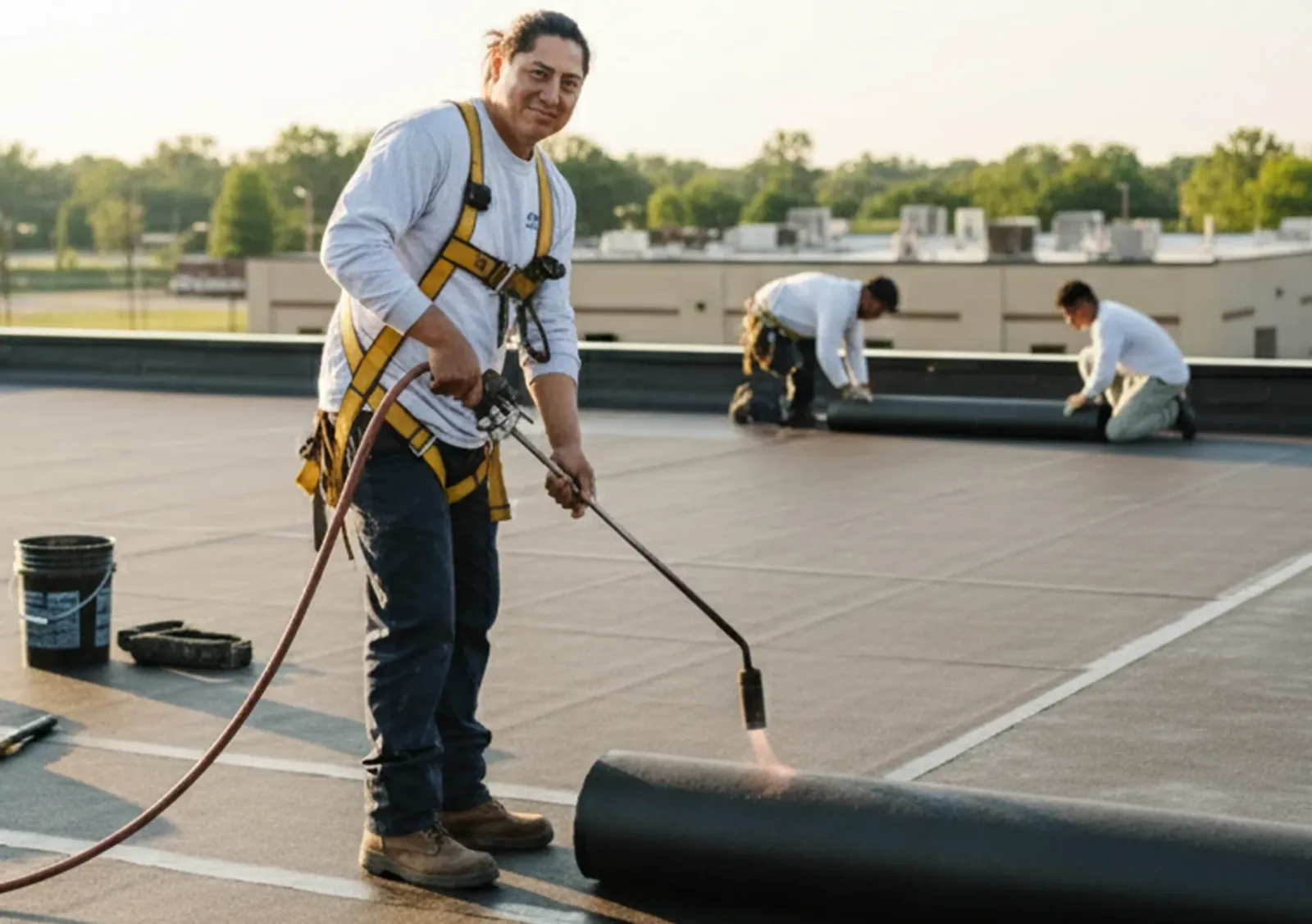
An acquisition review in Compton, CA needs commercial roof findings connected to the construction allowance. We inspect low-slope and metal roofing, document visible deficiencies and explain repair, restoration or replacement choices. The asset manager receives a located assessment of the assigned roof portion rather than a general impression of the property. The recommendation identifies the condition that drives immediate work and the examination needed before a larger commitment.
Gateway Towne Center and South Willowbrook Avenue offer local reference points for assigning a Compton property assessment. Those place references help establish local context, but the roof assignment still requires the subject property’s address and access. For acquisition work that also includes Rancho Dominguez assets, each building retains its own scope, authority and construction findings.
The assigned roof portion must be clear before the assessment begins. We identify access, visible transitions and the extent that can be examined safely. Shared walls, separate roof elevations or restricted equipment areas may affect that boundary. Located photographs and a roof sketch record the examined area so the acquisition reviewer can distinguish its findings from construction outside the assignment.
Our due diligence roof surveys compare accessible construction with the decision under review. The inspection explains membrane deterioration, flashing condition and drainage concerns without presuming that a sales drawing establishes the installed assembly. Available records can help identify details for examination, but the recommendation states what was observed and what remains dependent on additional access or exposure.
An open flashing joint and a worn surface do not carry the same repair priority. We locate each finding and explain the path by which it can affect water protection or attachment. Active entry, insecure material and a deteriorated receiving surface receive distinct recommendations. The asset manager can then separate an immediate corrective item from a condition that needs monitoring or a future capital decision.
A commercial roof leak repair can address a specific failed detail while leaving adjoining construction unchanged. We describe that boundary and any moisture investigation it requires. A cleared interior symptom is useful service information, but the acquisition allowance should also reflect the remaining roof’s condition. Waiting on a demonstrated water entry problem can allow concealed materials and interior finishes to deteriorate further.
A patch proposal needs a compatible surface beyond the failed area. We examine the surrounding membrane, repair layers and accessible substrate before identifying the permanent method. Where sound material can receive the connection, a confined repair may be sufficient. Where deterioration extends across the intended tie-in, broader removal needs an explained boundary rather than a larger patch applied over weak material.
For commercial roof replacement, we describe removal, insulation and flashing changes separately. Deck questions and drainage alterations are identified for the appropriate review. The comparison shows what each alternative would leave behind and the likely service responsibilities afterward. That makes a repair-to-replacement discussion useful to an asset manager assessing construction obligations during the purchase decision.
A receiving party can require information beyond a roofing condition assessment. We state the examined construction, methods used and remaining limitations so the buyer, lender or underwriter can judge whether another review is needed. The roof report does not presume their acceptance. A requirement for structural evaluation, environmental testing or another specialist is kept distinct from the roofing findings.
Our written roof condition reports attach observations to roof locations and proposed corrections. A condition grade is explained by the observed detail rather than standing alone as a score. Where the budget depends on concealed material, the report names the useful next examination. That lets the asset manager carry a reasoned allowance while keeping its uncertain component visible to the acquisition team.
Inspection access is different from construction access. A repair may require material handling, temporary closures or overhead protection beyond the inspection route. We discuss those needs with the property contact before installation and define how the work will affect occupied areas. A larger removal project needs a daily protection boundary and a sequence that accounts for the actual tenant schedule.
Urgent roofing response remains available around the clock, including weekends and holidays, if a leak requires stabilization while the acquisition work is being reviewed. We retain the temporary measure and subsequent permanent recommendation separately. For another holding in Gardena, the asset manager can use a similar comparison format without importing the Compton building’s access arrangement or roof construction.
An acquisition assessment remains useful after the transaction only if the construction recommendation can be traced to its findings. We retain the examined roof area, located photographs and explanation of each scope alternative. Follow-up access or selected openings can refine the allowance as information becomes available. The resulting update identifies which decision changed and why, keeping earlier assumptions distinguishable from new observations.
Approved repairs receive their own closeout description. We identify the completed perimeter, adjoining materials and continuing maintenance items. A later condition visit can compare those same details rather than treating the purchase assessment as permanently current. This gives the asset manager a practical baseline for future service decisions while preserving the original reason for each construction priority.
Commercial properties in Compton can have different roof assemblies and operating needs even when they share a nearby corridor. A useful service-area assessment begins with the actual building, the assigned roof sections and the owner contact who can authorize access. For warehouses, retail properties or public facilities, confirm loading, tenant and safety constraints before estimating a repair window. Document roof-to-wall transitions, drains and equipment curbs by location so the estimate is not based on one symptom alone. The inspection record should distinguish visible findings from questions that need testing and give the local manager a clear next step for each condition. This city page describes reach and workflow; it does not imply a particular property's roof inventory.
A grade should be accompanied by the conditions that produced it and the construction needed to address them. We explain each significant finding with its location and proposed response. The allowance also needs to distinguish inspected quantities from concealed-material questions. That combination is more useful for the purchase review than a grade presented without repair boundaries or examination limits.
The acquisition team decides how an access limitation affects its transaction requirements. We identify the roof portion that could not be examined and explain the construction question it leaves unresolved. A further visit, safe access arrangement or selected exposure may reduce that uncertainty. The roofing report gives the team a precise issue to evaluate without deciding the transaction on its behalf.
It records the correction completed at that detail. It does not establish that separate roof areas or concealed layers are in the same condition. We retain the repair location and compare it with broader inspection findings when preparing the allowance. The asset manager can then distinguish completed service from remaining capital concerns and schedule the next review against the relevant roof portion.
Compare the receiving conditions, preparation and components each proposal addresses. A coating can be appropriate on a suitable assembly after necessary repairs, but it cannot provide sound insulation or correct detached construction by appearance alone. We explain those suitability questions and describe the replacement alternative’s removal and reinstatement. The buyer can evaluate construction scope instead of comparing only surface treatments or headline prices.